
The core difference in one sentence
Wa says: here is what we are talking about, now I will say something about it. Ga says: this is the specific thing that does the action or answers the question. Wa points backwards to shared knowledge. Ga points forwards to new information.
The classic illustration is zō wa hana ga nagai (象は鼻が長い): as for elephants, the nose is long. Zō is the topic, framed by wa. Hana is the subject of nagai, marked by ga. Both particles appear in a single natural sentence, each doing its own job.
Rule 1: wa marks a known topic
Use wa when the thing you are talking about is already known to both of you: yourself, the person you are speaking to, something you both just mentioned, or a general category. What follows wa is the comment: new information about that topic.
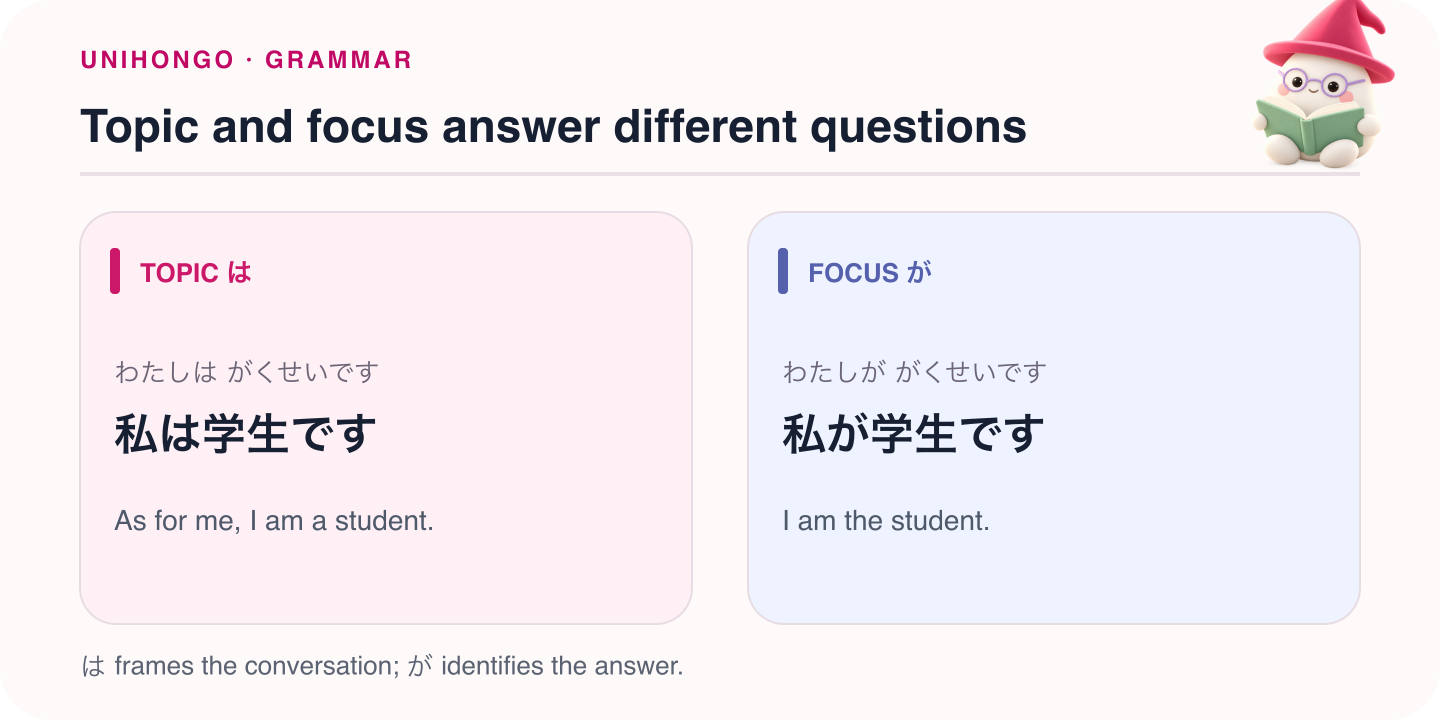
| Japanese | Romaji | Meaning |
|---|---|---|
| 私は学生です。 | Watashi wa gakusei desu. | As for me, I am a student. |
| この店はおいしいです。 | Kono mise wa oishii desu. | This restaurant is delicious. (we can both see the restaurant) |
| 週末は何をしましたか? | Shūmatsu wa nani o shimashita ka? | As for the weekend, what did you do? |
Rule 2: ga marks new or focused information
Use ga when the thing before it is the answer, the surprise, or the specific item being singled out. This is why question words always take ga: dare (who), nani (what), dore (which) are asking for new information. The answer uses ga too.
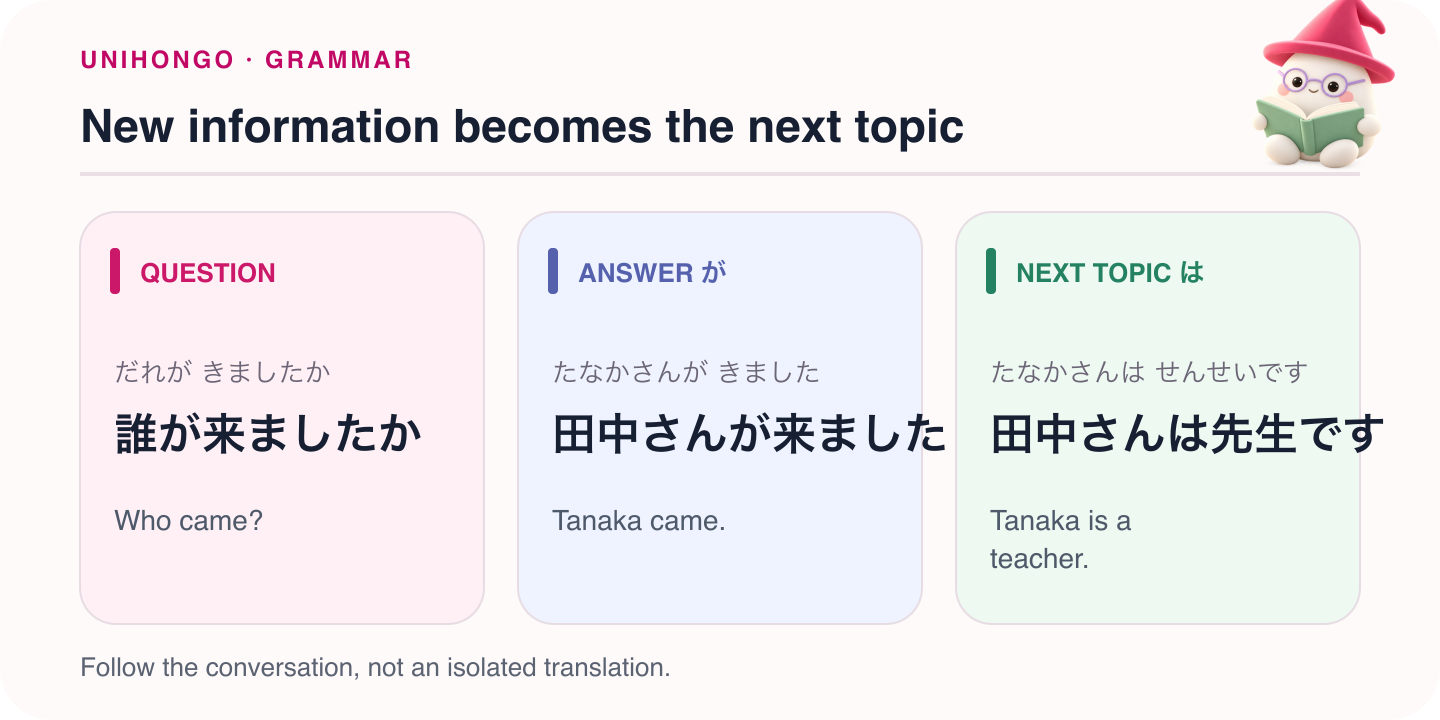
| Japanese | Romaji | Meaning |
|---|---|---|
| 誰が来ましたか? | Dare ga kimashita ka? | Who came? |
| 田中さんが来ました。 | Tanaka-san ga kimashita. | Tanaka came. (Tanaka is the answer) |
| どれがいいですか? | Dore ga ii desu ka? | Which one is good? |
| これがいいです。 | Kore ga ii desu. | This one is good. |
| あ、バスが来た。 | A, basu ga kita. | Oh, the bus is here. (new information) |
Rule 3: some predicates almost always take ga
A group of common adjectives and verbs describe a state rather than an action, and the thing being described is their grammatical subject. Learners often reach for o here because the English uses an object. Memorise these as ga words.
| Word | Meaning | Example |
|---|---|---|
| 好き / 嫌い | like / dislike | 猫が好きです。 Neko ga suki desu. |
| 分かる | understand | 日本語が分かります。 Nihongo ga wakarimasu. |
| できる | can do | 運転ができます。 Unten ga dekimasu. |
| ある / いる | exist, have | 時間があります。 Jikan ga arimasu. |
| 欲しい | want | 新しい靴が欲しいです。 Atarashii kutsu ga hoshii desu. |
| 上手 / 下手 | good at / bad at | 彼は料理が上手です。 Kare wa ryōri ga jōzu desu. |
| 必要 | necessary | パスポートが必要です。 Pasupōto ga hitsuyō desu. |
Rule 4: wa shows contrast
When you put wa on two things in one sentence, or on something unexpected, Japanese hears a contrast. This is useful when you want to soften an answer or signal that something else is different.
| Japanese | Romaji | Meaning |
|---|---|---|
| コーヒーは飲みますが、紅茶は飲みません。 | Kōhī wa nomimasu ga, kōcha wa nomimasen. | I drink coffee, but I do not drink tea. |
| 肉は食べません。 | Niku wa tabemasen. | I do not eat meat. (implying other things are fine) |
| 今日は忙しいです。 | Kyō wa isogashii desu. | Today I am busy. (implying other days are not) |
Rule 5: subordinate clauses use ga
Inside a clause that modifies a noun or sits before conjunctions like node, kara, toki, or to, the subject takes ga, not wa. Wa belongs to the main sentence. This is the rule that separates intermediate speakers from beginners, and it is easy once you notice it.
| Japanese | Romaji | Meaning |
|---|---|---|
| 雨が降っているので、家にいます。 | Ame ga futte iru node, ie ni imasu. | Because it is raining, I am staying home. |
| 友達が作ったケーキはおいしかったです。 | Tomodachi ga tsukutta kēki wa oishikatta desu. | The cake my friend made was delicious. |
| 先生が来たとき、みんな静かになりました。 | Sensei ga kita toki, minna shizuka ni narimashita. | When the teacher came, everyone went quiet. |
A quick decision checklist
- Is it a question word or the answer to one? Use ga.
- Is it inside a clause before node, kara, toki, or a noun? Use ga.
- Is the predicate suki, wakaru, dekiru, aru, iru, hoshii, jōzu, or hitsuyō? Use ga.
- Am I contrasting this with something else? Use wa.
- Is it something we both already know about and I am about to comment on it? Use wa.
- Still unsure? Wa is the safer default for the first thing you mention in a sentence.
Making it automatic in conversation
Reading these rules will not stop you saying watashi ga gakusei desu under pressure. Only corrected practice does that. Have short conversations where someone asks you who and which questions, describe things you like and can do, and explain reasons with node and kara. Then look at exactly which particles were flagged.
That is what Unihongo's session reports are for. After each spoken conversation with your AI Sensei, the report lists the sentences you said, the corrected version, and a short reason. Particle mistakes are the most common correction for beginners, and seeing your own sentence next to the fix, while you still remember trying to say it, is what finally makes wa and ga stick.