

Keep the first entry small enough to control
Choose an ordinary event such as reading a book, watching a film, or meeting a friend. A single completed action gives the lesson a clear target. You do not need an interesting story to practice tense. If you spend most of the session searching for specialized vocabulary, simplify the event and return to the grammar decision you intended to work on.
Tell Mocchi what the sentence is supposed to mean before asking for a correction. A time expression alone does not explain every possible narrative use of Japanese tense. For a beginner diary exercise, make the intended completed event explicit so the feedback can focus on that straightforward context.
Connect the time clue to a completed event
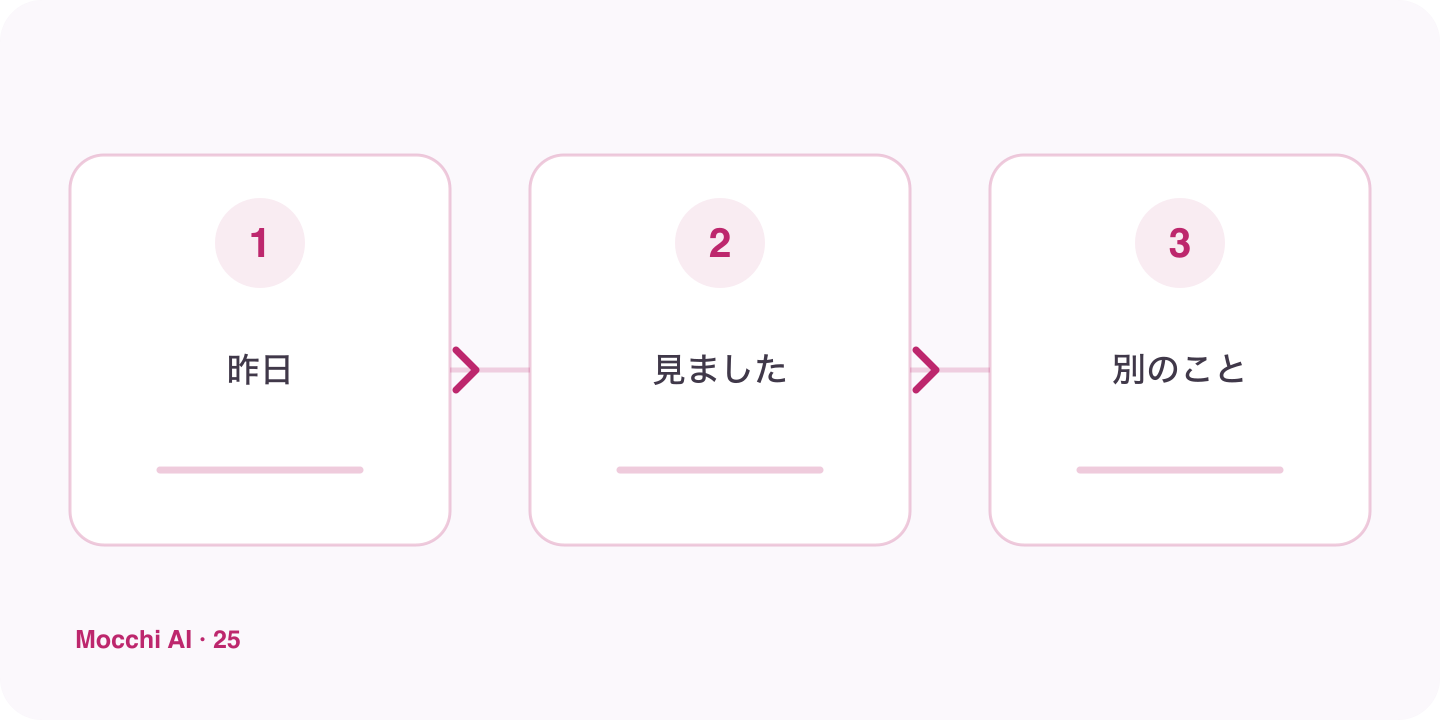
昨日、映画を見ました reports that you watched a film yesterday. Keep that relationship clear, then change the activity to reading or studying. Ask Mocchi to explain the form in the new sentence instead of only approving it. This checks whether you noticed how the event and time frame fit together rather than matching a familiar ending to a memorized whole sentence.
| Japanese | Romaji | Meaning |
|---|---|---|
| 昨日、映画を見ました。 | Kinō, eiga o mimashita. | I watched a film yesterday. |
| 昨日、日本語を勉強しました。 | Kinō, Nihongo o benkyō shimashita. | I studied Japanese yesterday. |
Separate tense feedback from optional polishing
A tutor may suggest a more natural word or a different way to connect ideas, but not every suggestion is the tense correction you requested. Ask Mocchi to identify the change that makes the intended time relationship accurate and label other edits as optional where appropriate. This prevents a beginner exercise from turning into a rewrite whose many changes are difficult to understand.
Change one part before adding a longer paragraph
After correcting the first sentence, replace the activity while keeping the time frame. Then change the intended time and compare the wording. A controlled change makes the decision easier to see. Only add another sentence once you can explain the first one, otherwise a longer diary may conceal the same unresolved error under more content.
Use the next visit for a fresh diary prompt
At your next session, write a new short entry before opening the earlier correction. If you repeat the error, name the clue you missed and ask for another small contrast. If the form is reliable, expand the diary with a reason or sequence. Mocchi's memory and review support can help connect sessions, but your independent attempt provides the evidence for choosing that next step.