

The core meaning
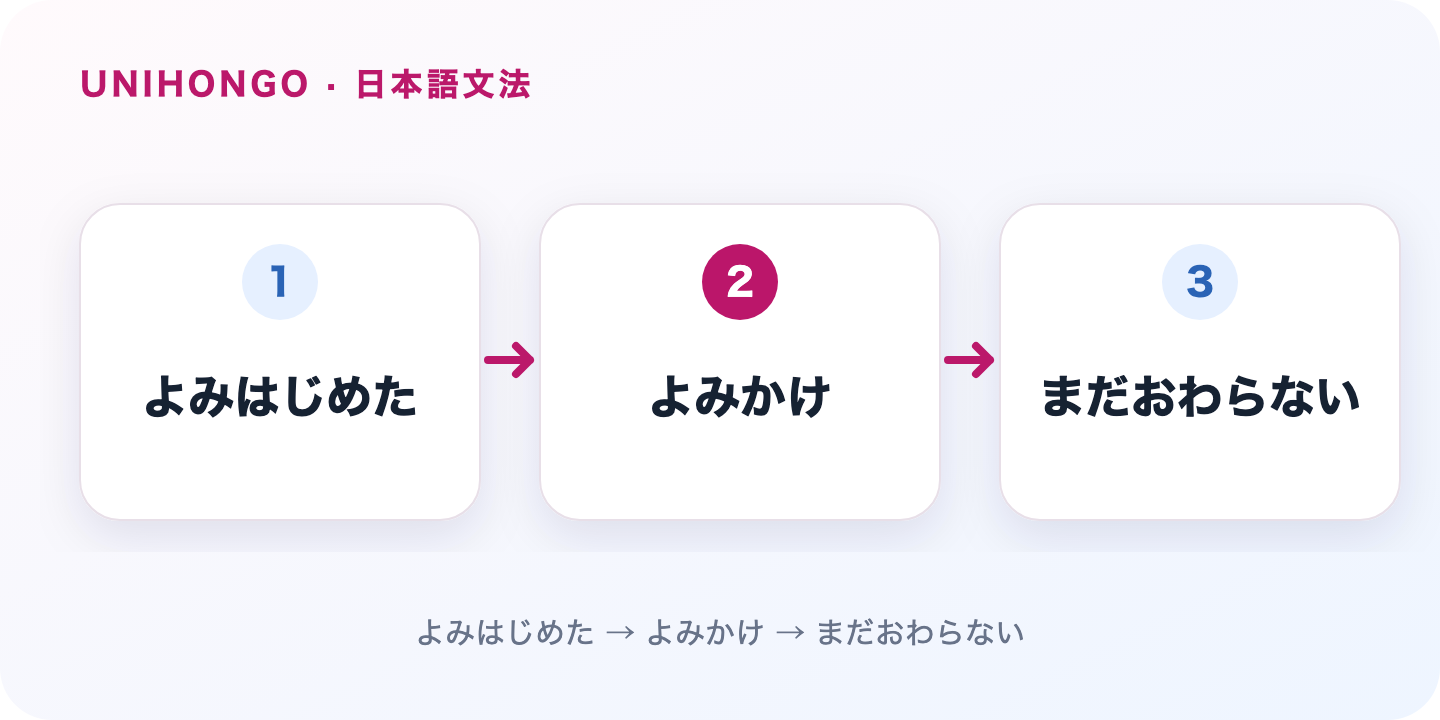
読みかけの本 is a book you began reading and have not finished. 食べかけのパン is bread someone started eating. The action is already under way or has begun; its end has not been reached. This makes かける useful for objects left mid-action, interrupted work and processes that were about to cross a threshold.
| Japanese | Romaji | Meaning |
|---|---|---|
| 読みかけの本を机に置きました。 | Yomikake no hon o tsukue ni okimashita. | I left a half-read book on the desk. |
| 言いかけて、やめました。 | Iikakete, yamemashita. | I started to say it, then stopped. |
How to form it
Remove ます from the polite form and add かける: 読みます → 読みかける. Before a noun use かけの: 読みかけの本. The noun-like かけ can stand after a stem in everyday descriptions, as in 食べかけを残す. Not every verb sounds equally natural with this suffix; choose actions with a recognizable beginning and end.
| Use | Japanese form | Meaning |
|---|---|---|
| Verb | 読みかける | Begin reading but not finish |
| Before noun | 読みかけの本 | A half-read book |
| Change | 切れかける | Be close to running out |
Natural examples
Read each sentence for the relationship between the first idea and the second. The English translation gives a natural meaning, while the Japanese wording shows exactly where the pattern attaches.
| Japanese | Romaji | Meaning |
|---|---|---|
| 食べかけのパンは冷蔵庫にあります。 | Tabekake no pan wa reizōko ni arimasu. | The partly eaten bread is in the fridge. |
| 電池が切れかけています。 | Denchi ga kirekakete imasu. | The battery is close to running out. |
Compare the nearby pattern
言いかけた suggests you began to speak but stopped before completing the words. 言いそうになった means you nearly said it, perhaps before any word came out. The boundary between those two meanings is whether the action actually began. For a finished action, use the ordinary past form.
| Japanese | Romaji | Meaning |
|---|---|---|
| 名前を言いかけた。 | Namae o iikaketa. | I started to say the name but stopped. |
| 名前を言いそうになった。 | Namae o iisō ni natta. | I almost said the name. |
The two examples may describe similar situations, but they lead the listener to different conclusions. Choose the form that matches the claim you really intend to make.
Common mistake to avoid
Do not attach かける to the dictionary form: 読むかける is incorrect. Use the ます stem 読み. Nor does 食べかけ mean food you merely plan to eat; it has already been started. A future intention needs 食べようと思っている or another planning expression.
- The action began but is unfinished
- Attach かける to the ます stem
- かけの describes an unfinished object
- そうになる may stop before the action begins
Try it yourself
Look around for something unfinished: a book, meal, draft or battery. Describe it with the appropriate ます stem plus かけ, then contrast it with something you only nearly started.
Say your sentence once slowly while looking at the Japanese pattern. Then say it again without reading. If your second clause changes from a possibility to a fact, or from advice to a requirement, revise it so the grammar still matches your meaning.