
Four meanings from two words
Think of a moment of change: starting to eat, arriving, getting better. Mō says the change has happened. Mada says it has not. Whether the verb after them is positive or negative then gives you four combinations.
| Japanese | Romaji | Meaning |
|---|---|---|
| もう食べました。 | Mō tabemashita. | I have already eaten. |
| もう痛くないです。 | Mō itakunai desu. | It does not hurt anymore. |
| まだ雨が降っています。 | Mada ame ga futte imasu. | It is still raining. |
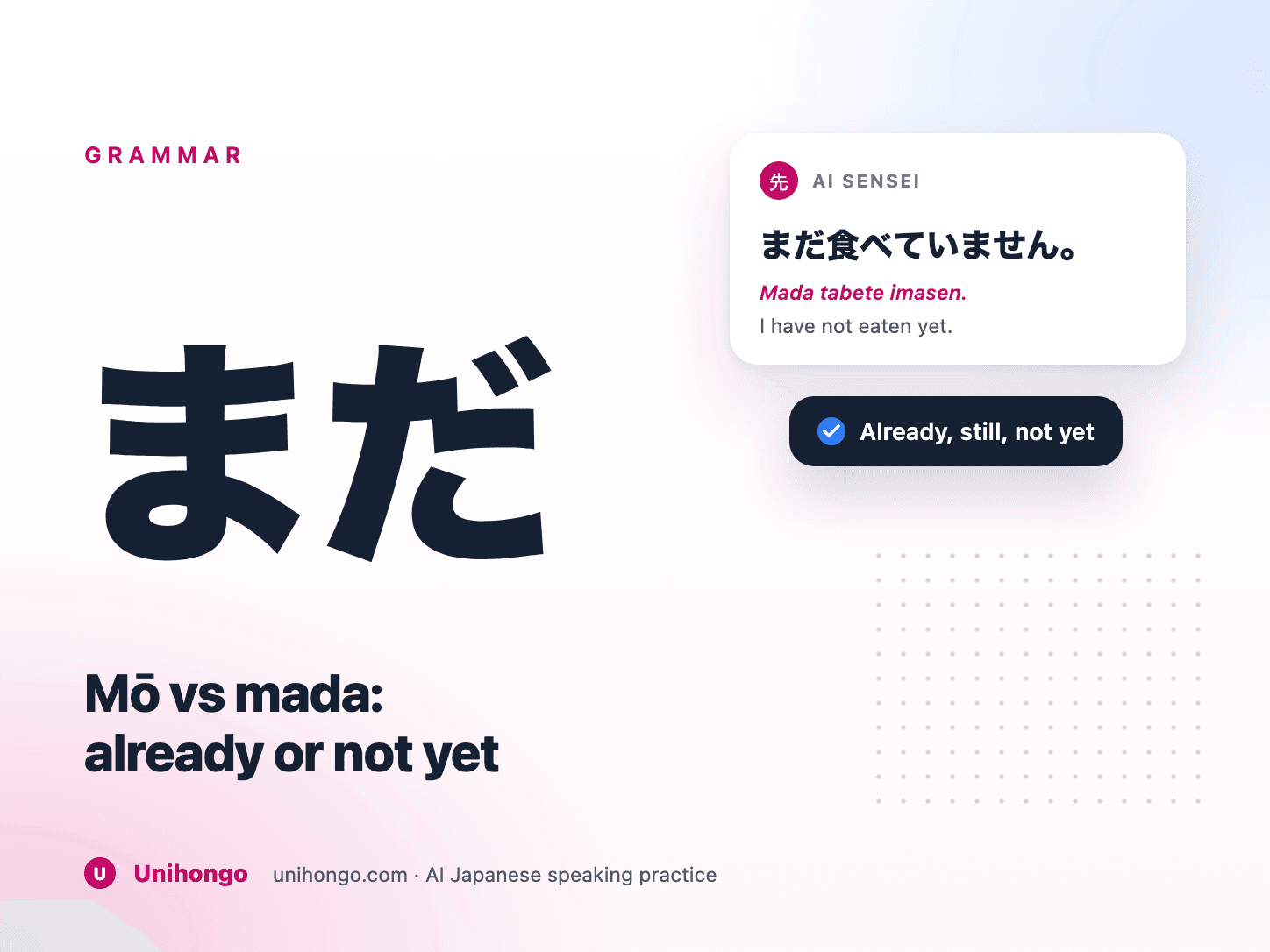
| まだ食べていません。 | Mada tabete imasen. | I have not eaten yet. |
| Adverb | Verb | Meaning |
|---|---|---|
| Mō | Positive, usually past | Already |
| Mō | Negative | No longer, not anymore |
| Mada | Positive | Still |
| Mada | Negative, usually te imasen | Not yet |
Already with mō
Mō with a past verb says something has happened sooner than expected or is simply done. It is also the standard way to ask whether something has happened yet: mō … mashita ka.
In a question, mō does the job of English yet, which is why learners sometimes look for a separate word and do not find one.
| Japanese | Romaji | Meaning |
|---|---|---|
| もう宿題、終わりましたか。 | Mō shukudai, owarimashita ka. | Have you finished your homework yet? |
| もう始まっていますよ。 | Mō hajimatte imasu yo. | It has already started. |
| もう十時ですね。 | Mō jūji desu ne. | It is already ten o'clock. |
| え、もう帰るんですか。 | E, mō kaeru n desu ka. | What, you are going home already? |
Not yet needs te imasen
When someone asks mō tabemashita ka, the natural negative answer is iie, mada tabete imasen, or simply mada desu. Learners often answer iie, tabemasen deshita, which sounds like you are describing a specific past occasion when you did not eat, not saying the eating is still to come.
The te imasen form works because not yet is a continuing state: up to now, the change has not happened, and it still may. Mada tabemasen, with the plain non-past negative, means something different again: I am not going to eat yet.
| Japanese | Romaji | Meaning |
|---|---|---|
| いいえ、まだ食べていません。 | Iie, mada tabete imasen. | No, I have not eaten yet. |
| まだ決めていません。 | Mada kimete imasen. | I have not decided yet. |
| メール、まだ読んでいません。 | Mēru, mada yonde imasen. | I have not read the email yet. |
| まだ食べません。 | Mada tabemasen. | I am not going to eat yet. |
Still and no longer
Mada with a positive verb or adjective means still: a situation continues. Mō with a negative means no longer: a situation has ended. They are natural opposites and often appear together in the same conversation.
| Japanese | Romaji | Meaning |
|---|---|---|
| まだ熱がありますか。 | Mada netsu ga arimasu ka. | Do you still have a fever? |
| いいえ、もう熱はありません。 | Iie, mō netsu wa arimasen. | No, I do not have a fever anymore. |
| まだ東京に住んでいますか。 | Mada Tōkyō ni sunde imasu ka. | Do you still live in Tokyo? |
| もうあの店には行きません。 | Mō ano mise ni wa ikimasen. | I do not go to that shop anymore. |
| まだ時間がありますよ。 | Mada jikan ga arimasu yo. | There is still time. |
Mō for more, and other everyday uses
Before a quantity, mō means more or another. This is one of the most useful words in shops, restaurants and lessons, because it lets you ask for another item or a repeat without any new grammar.
Mō sugu means soon, and it is common for arrivals, events and seasons.
| Japanese | Romaji | Meaning |
|---|---|---|
| もう一度お願いします。 | Mō ichido onegaishimasu. | Once more, please. |
| もう少しゆっくり話してください。 | Mō sukoshi yukkuri hanashite kudasai. | Please speak a little more slowly. |
| ビールをもう一杯ください。 | Bīru o mō ippai kudasai. | Another beer, please. |
| もうすぐ着きます。 | Mō sugu tsukimasu. | We will arrive soon. |
| もういいです。 | Mō ii desu. | That is enough, thank you. |
Mō ichido onegaishimasu is the single most useful phrase for a learner in a real conversation. It buys you a second chance to understand.
The short replies you will actually hear
Much real use of mō and mada happens in one or two words, with the meaning carried by intonation. A rising mō? is surprise that something happened so soon. A rising mada? can be surprise that something has not happened, or impatience. Mada desu and mō desu ka are the polite versions.
Mō on its own with a falling, exasperated tone is a complaint, roughly honestly or come on.
| Japanese | Romaji | Meaning |
|---|---|---|
| もう?早いね。 | Mō? Hayai ne. | Already? That was quick. |
| まだ? | Mada? | Not yet? or Still? |
| まだです。 | Mada desu. | Not yet. |
| もうですか。 | Mō desu ka. | Already? |
| まだまだです。 | Mada mada desu. | I still have a long way to go. |
| もう! | Mō! | Oh, come on! |