

The core meaning
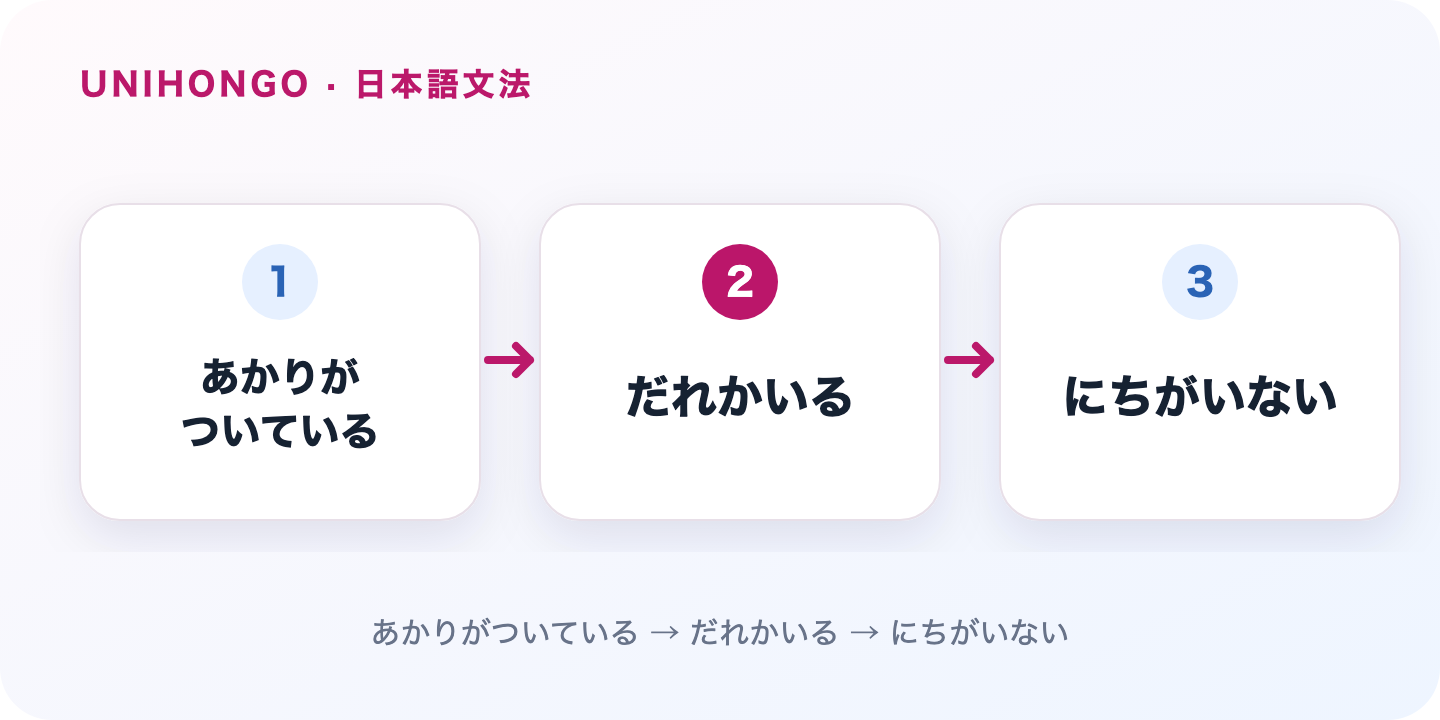
明かりがついているから、誰かいるに違いない means the light is on, so someone must be there. The speaker did not directly confirm the conclusion; they inferred it. The pattern often appears in written narration and careful speech. It expresses a high degree of confidence, but it remains a judgment, not a report of certain observation.
| Japanese | Romaji | Meaning |
|---|---|---|
| 明かりがついている。誰かいるに違いない。 | Akari ga tsuite iru. Dareka iru ni chigai nai. | The light is on. Someone must be there. |
| かばんがあるから、彼は戻るに違いない。 | Kaban ga aru kara, kare wa modoru ni chigai nai. | His bag is here, so he must be coming back. |
How to form it
Attach に違いない to a plain clause: 忘れたに違いない, 高いに違いない. Nouns and な adjectives connect without だ in standard usage: 学生に違いない, 静かに違いない. The polite form is に違いありません. Be careful not to insert a second に after a full verb clause.
| Use | Japanese form | Meaning |
|---|---|---|
| Verb | 戻るに違いない | They must be coming back |
| Noun | 先生に違いない | They must be a teacher |
| Polite | 戻るに違いありません | Strong polite inference |
Natural examples
Read each sentence for the relationship between the first idea and the second. The English translation gives a natural meaning, while the Japanese wording shows exactly where the pattern attaches.
| Japanese | Romaji | Meaning |
|---|---|---|
| こんなに練習したのだから、自信がついたに違いありません。 | Konna ni renshū shita no da kara, jishin ga tsuita ni chigai arimasen. | After practicing this much, they must have gained confidence. |
| 足跡が新しい。誰かが通ったに違いない。 | Ashiato ga atarashii. Dareka ga tōtta ni chigai nai. | The footprints are fresh. Someone must have passed by. |
Compare the nearby pattern
はずだ can express what should be true based on an expectation, plan or known rule. に違いない is a strong inference from evidence. に決まっている sounds more emphatic and subjective, sometimes dismissing disagreement. If you need to report a confirmed fact, do not use an inference marker at all.
| Japanese | Romaji | Meaning |
|---|---|---|
| 予定では、彼はもう着いているはずです。 | Yotei de wa, kare wa mō tsuite iru hazu desu. | According to the schedule, he should be here already. |
| 靴がある。彼はもう着いているに違いない。 | Kutsu ga aru. Kare wa mō tsuite iru ni chigai nai. | His shoes are here; he must have arrived. |
The two examples may describe similar situations, but they lead the listener to different conclusions. Choose the form that matches the claim you really intend to make.
Common mistake to avoid
Avoid presenting direct knowledge as a deduction: a person you have just met is not 'a teacher に違いない' if they introduced themselves as one. Use 先生です. Reserve に違いない for what you reasonably conclude but have not verified.
- It expresses a strong inference
- Evidence is usually available
- Nouns attach without だ
- A confirmed fact needs a plain statement
Try it yourself
Look at a visible clue and infer something you cannot directly see. State the clue first, then the conclusion with に違いない. Check that your conclusion remains an inference rather than a confirmed fact.
Say your sentence once slowly while looking at the Japanese pattern. Then say it again without reading. If your second clause changes from a possibility to a fact, or from advice to a requirement, revise it so the grammar still matches your meaning.