

The core meaning
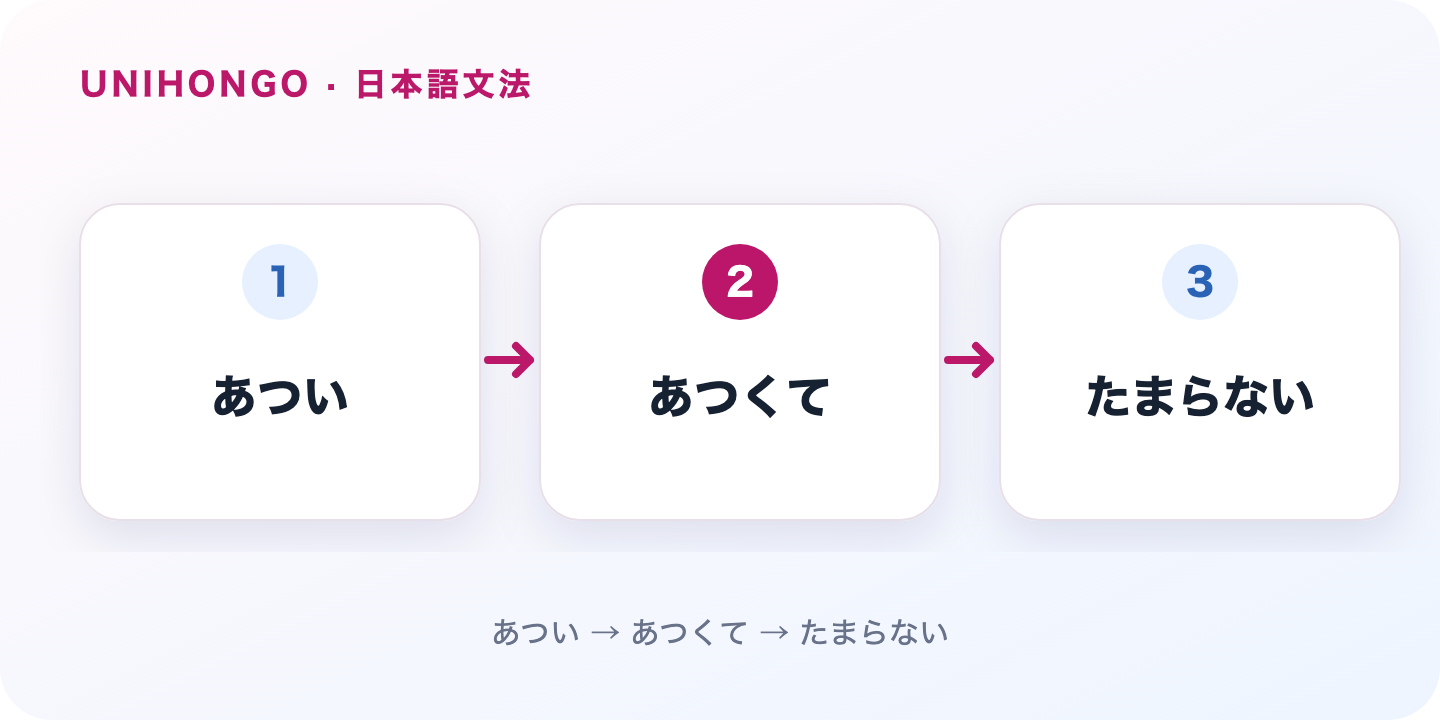
暑くてたまらない means 'It's unbearably hot.' The speaker is describing how the sensation feels, not simply rating it as very hot. The construction also works with emotions and desires: 会いたくてたまらない means wanting to see someone desperately. It is expressive and personal, so it fits conversation and first-person narrative especially well.
| Japanese | Romaji | Meaning |
|---|---|---|
| 今日は暑くてたまらない。 | Kyō wa atsukute tamaranai. | It's unbearably hot today. |
| 結果が気になってたまりません。 | Kekka ga ki ni natte tamarimasen. | I can't stop thinking about the result. |
How to form it
Use the て form of an い adjective: 暑い → 暑くてたまらない. With a な adjective use で: 心配でたまらない. For desire, たい becomes たくて: 会いたくてたまらない. A close form is てしょうがない, which often sounds a little more conversational.
| Use | Japanese form | Meaning |
|---|---|---|
| い adjective | 暑くてたまらない | Unbearably hot |
| な adjective or noun | 心配でたまらない | Beside oneself with worry |
| Desire | 会いたくてたまらない | Desperate to see someone |
Natural examples
Read each sentence for the relationship between the first idea and the second. The English translation gives a natural meaning, while the Japanese wording shows exactly where the pattern attaches.
| Japanese | Romaji | Meaning |
|---|---|---|
| 家族のことが心配でたまらない。 | Kazoku no koto ga shinpai de tamaranai. | I'm terribly worried about my family. |
| 早く友達に会いたくてたまらない。 | Hayaku tomodachi ni aitakute tamaranai. | I can hardly wait to see my friend. |
Compare the nearby pattern
とても暑い simply says it is very hot. 暑くてたまらない says the heat is difficult for the speaker to bear. ずにはいられない describes an action the speaker cannot help doing; てたまらない describes the strength of a state or feeling itself.
| Japanese | Romaji | Meaning |
|---|---|---|
| 今日はとても暑いです。 | Kyō wa totemo atsui desu. | It's very hot today. |
| 今日は暑くてたまりません。 | Kyō wa atsukute tamarimasen. | I can hardly bear the heat today. |
The two examples may describe similar situations, but they lead the listener to different conclusions. Choose the form that matches the claim you really intend to make.
Common mistake to avoid
Do not attach たまらない directly to the dictionary form of an adjective: 暑いたまらない is wrong. Use 暑くて. Also do not use this expressive phrase in a neutral weather report; a report should state measurements or forecast conditions instead. It belongs to a speaker's felt experience.
- The sensation feels overwhelmingly strong
- い adjective takes くて
- な adjective and nouns use で
- たい changes to たくて
Try it yourself
Describe one physical sensation and one emotional feeling that is especially strong right now. Use the appropriate くて, で or たくて form, then make a calmer version with とても.
Say your sentence once slowly while looking at the Japanese pattern. Then say it again without reading. If your second clause changes from a possibility to a fact, or from advice to a requirement, revise it so the grammar still matches your meaning.