

The core meaning
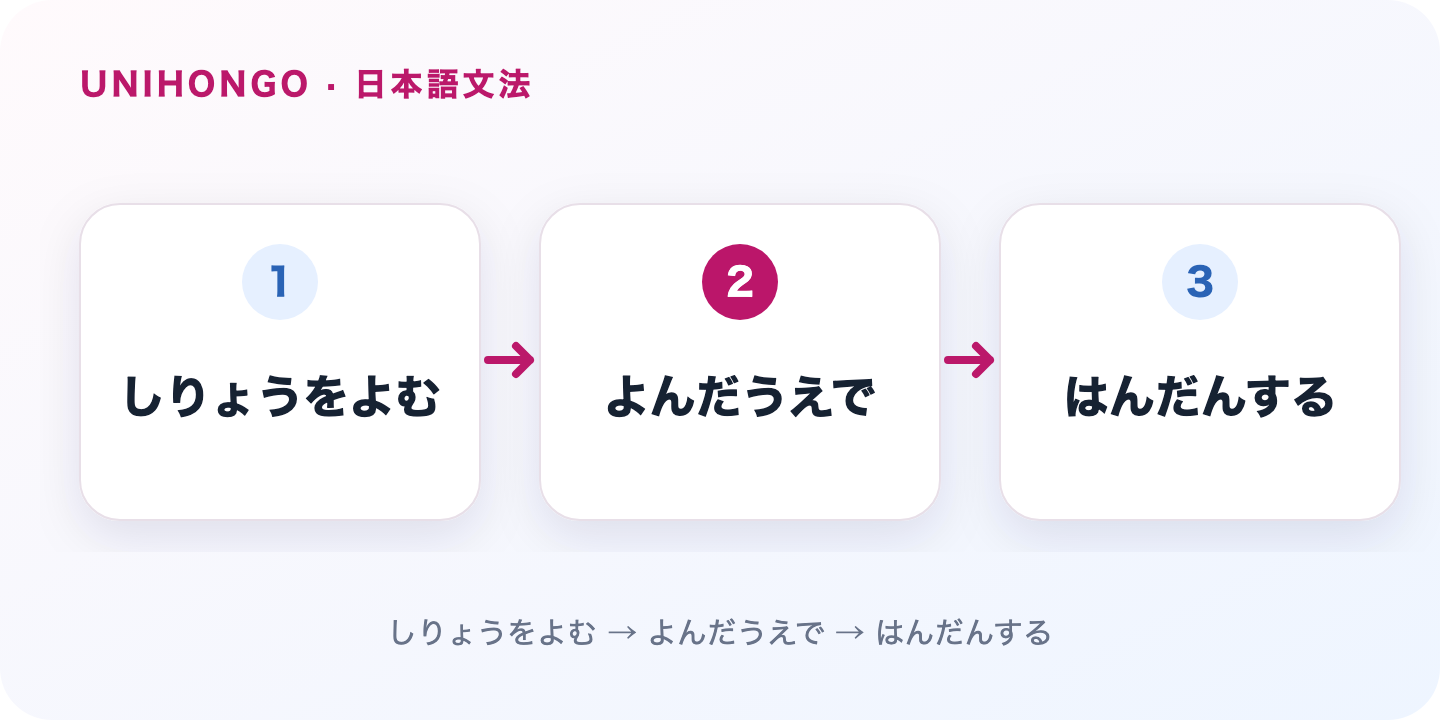
資料を読んだ上で判断します means the judgment will be made after reading the material and in light of it. The first step is not merely earlier; it informs the decision. This makes the pattern common in professional requests, careful advice and written instructions. It often sounds more deliberate than てから.
| Japanese | Romaji | Meaning |
|---|---|---|
| 資料を読んだ上で判断します。 | Shiryō o yonda ue de handan shimasu. | I'll decide after reading the documents. |
| 家族と相談した上で返事します。 | Kazoku to sōdan shita ue de henji shimasu. | I'll reply after discussing it with my family. |
How to form it
For 'after doing,' use the plain past verb plus 上で: 読んだ上で. With a noun, add の: 検討の上で. A dictionary-form verb plus 上で has a different meaning, 'in doing' or 'for the purpose of doing': 働く上で大切なこと means something important in working. Keep these two attachments distinct.
| Use | Japanese form | Meaning |
|---|---|---|
| Completed step | 読んだ上で決める | Decide after reading |
| Process or purpose | 読む上で大切 | Important when reading |
| Noun | 検討の上で | After consideration |
Natural examples
Read each sentence for the relationship between the first idea and the second. The English translation gives a natural meaning, while the Japanese wording shows exactly where the pattern attaches.
| Japanese | Romaji | Meaning |
|---|---|---|
| 内容を確認した上で、契約してください。 | Naiyō o kakunin shita ue de, keiyaku shite kudasai. | Please check the terms before signing the contract. |
| 働く上で、休息も大切です。 | Hataraku ue de, kyūsoku mo taisetsu desu. | Rest is also important in working. |
Compare the nearby pattern
話してから決めます says 'I will talk and then decide.' 話した上で決めます emphasizes that the discussion informs the decision. Meanwhile, 話す上で大切なこと means 'what matters when speaking' and does not say that speaking is already finished.
| Japanese | Romaji | Meaning |
|---|---|---|
| 説明を聞いてから決めます。 | Setsumei o kiite kara kimemasu. | I'll listen to the explanation and then decide. |
| 説明を聞いた上で決めます。 | Setsumei o kiita ue de kimemasu. | I'll make an informed decision after hearing the explanation. |
The two examples may describe similar situations, but they lead the listener to different conclusions. Choose the form that matches the claim you really intend to make.
Common mistake to avoid
Do not swap 読んだ上で and 読む上で mechanically. One indicates a completed preliminary step; the other describes the situation or process of reading. In particular, 読む上で決める is usually not what you mean if the decision follows a completed reading.
- Past verb + 上で means after doing and considering it
- Dictionary verb + 上で means in doing or for doing
- Noun + の上で is also possible
- てから is simple chronological order
Try it yourself
Choose a decision you should make only after checking information. Make one sentence with た上で. Then describe something important while doing that activity with dictionary-form 上で.
Say your sentence once slowly while looking at the Japanese pattern. Then say it again without reading. If your second clause changes from a possibility to a fact, or from advice to a requirement, revise it so the grammar still matches your meaning.