

The core meaning
締め切りが明日なので、旅行どころではない means a trip is out of the question because the deadline is tomorrow. The activity may be desirable or expected, but a more pressing reality crowds it out. The construction often responds to a suggestion, contrasting an imagined normal situation with the speaker's actual one.
| Japanese | Romaji | Meaning |
|---|---|---|
| 締め切りが明日なので、旅行どころではありません。 | Shimekiri ga ashita na node, ryokō dokoro de wa arimasen. | The deadline is tomorrow, so a trip is out of the question. |
| 熱が高くて、仕事どころじゃない。 | Netsu ga takakute, shigoto dokoro ja nai. | My fever is so high I can't even think about work. |
How to form it
Put a noun or dictionary-form verb before どころではない: 旅行どころではない, 遊ぶどころではない. In casual speech どころじゃない is common. The negative part is not an ordinary denial that the noun exists; it says the speaker has no capacity or opportunity for it now.
| Use | Japanese form | Meaning |
|---|---|---|
| Noun | 旅行どころではない | No time or headspace for travel |
| Verb | 遊ぶどころではない | No room for playing |
| Casual | 旅行どころじゃない | Same meaning in speech |
Natural examples
Read each sentence for the relationship between the first idea and the second. The English translation gives a natural meaning, while the Japanese wording shows exactly where the pattern attaches.
| Japanese | Romaji | Meaning |
|---|---|---|
| 試験前で、遊ぶどころではありません。 | Shiken mae de, asobu dokoro de wa arimasen. | With the exam coming up, I have no time for fun. |
| 財布をなくして、買い物どころではなかった。 | Saifu o nakushite, kaimono dokoro de wa nakatta. | After losing my wallet, shopping was the last thing on my mind. |
Compare the nearby pattern
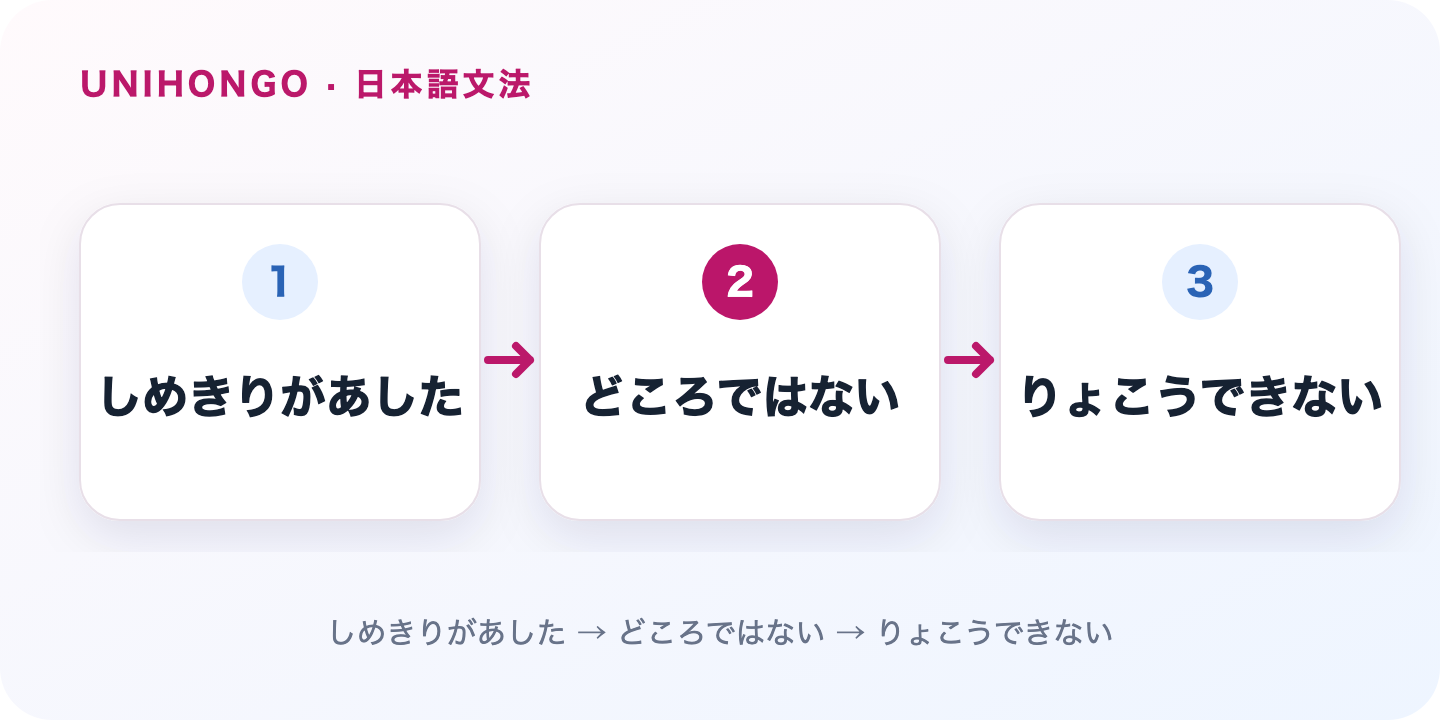
旅行できない states simple inability, perhaps because tickets sold out. 旅行どころではない says travel is not even a realistic topic given the circumstances. どころか means 'far from' and can introduce an even stronger reality, but it is a different connector with a second clause.
| Japanese | Romaji | Meaning |
|---|---|---|
| 今週は旅行できません。 | Konshū wa ryokō dekimasen. | I can't travel this week. |
| 今週は旅行どころではありません。 | Konshū wa ryokō dokoro de wa arimasen. | Travel is out of the question for me this week. |
The two examples may describe similar situations, but they lead the listener to different conclusions. Choose the form that matches the claim you really intend to make.
Common mistake to avoid
Do not use どころではない to mean merely 'I would rather do something else.' It implies conditions make the proposed action inappropriate or impossible to focus on. If you only prefer staying home, 旅行したくない is clearer.
- A serious situation crowds out an activity
- Noun or dictionary verb + どころではない
- Casual speech uses どころじゃない
- It is stronger than simple できない
Try it yourself
Imagine someone invites you out while you have a major deadline. Answer with どころではない and give the cause. Then give a milder response with できない to hear the difference.
Say your sentence once slowly while looking at the Japanese pattern. Then say it again without reading. If your second clause changes from a possibility to a fact, or from advice to a requirement, revise it so the grammar still matches your meaning.