

The core meaning
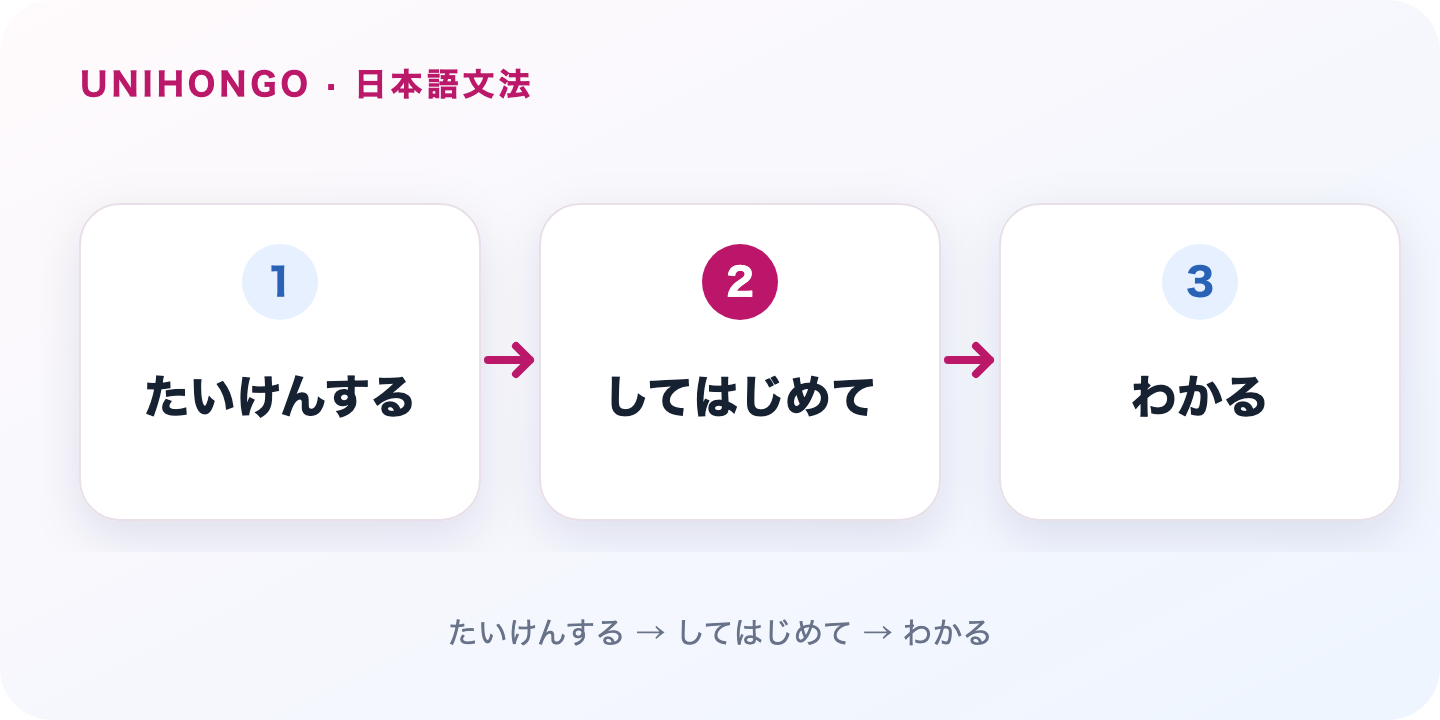
In 日本に来て初めて、電車の便利さが分かった, arriving in Japan made a new understanding possible. The main clause often contains 分かる, 気づく, 知る or できる. This is more than saying that two events happened in order: the first event changed what the speaker could know or do. It can describe a discovery, a lesson learned after trouble, or a result available only after preparation.
| Japanese | Romaji | Meaning |
|---|---|---|
| 一人で暮らして初めて、親のありがたさが分かりました。 | Hitori de kurashite hajimete, oya no arigatasa ga wakarimashita. | Only after living alone did I appreciate my parents. |
| 実際に使って初めて、この道具の便利さに気づいた。 | Jissai ni tsukatte hajimete, kono dōgu no benrisa ni kizuita. | Using it showed me how useful this tool is. |
How to form it
Put a verb in its て form directly before 初めて: 使う → 使って初めて. The expression may be followed by a comma in writing. It can also appear after で to describe a state or condition, but verb て form is the most useful starting point for learners.
| Use | Japanese form | Meaning |
|---|---|---|
| Experience | 住んで初めて | Only after living there |
| Discovery | 住んで初めて分かった | I understood only after living there |
Natural examples
Read each sentence for the relationship between the first idea and the second. The English translation gives a natural meaning, while the Japanese wording shows exactly where the pattern attaches.
| Japanese | Romaji | Meaning |
|---|---|---|
| 失敗して初めて、説明をよく読む大切さを知った。 | Shippai shite hajimete, setsumei o yoku yomu taisetsusa o shitta. | Only after failing did I learn the value of reading the instructions. |
| 話して初めて、同じ悩みがあると分かりました。 | Hanashite hajimete, onaji nayami ga aru to wakarimashita. | Only after talking did I learn we had the same concern. |
Compare the nearby pattern
初めて日本に行きました simply says you went to Japan for the first time. 日本に行って初めて分かりました says that going there made you understand something. If your sentence does not explain what changed because of the experience, put 初めて before the action instead of after its て form.
| Japanese | Romaji | Meaning |
|---|---|---|
| 初めて京都に行きました。 | Hajimete Kyōto ni ikimashita. | I went to Kyoto for the first time. |
| 京都に行って初めて、街の広さが分かりました。 | Kyōto ni itte hajimete, machi no hirosa ga wakarimashita. | Visiting Kyoto made me realize how spread out the city is. |
The two examples may describe similar situations, but they lead the listener to different conclusions. Choose the form that matches the claim you really intend to make.
Common mistake to avoid
Do not use て初めて for unrelated consecutive events. 食べて初めて寝ました is awkward if you only mean 'I ate and then slept.' It suggests eating made sleep possible or led to a realization. Plain てから is enough for a timetable.
- The first event unlocks a later realization
- Attach 初めて to verb て form
- Often pairs with 分かる or 気づく
- 初めて before a verb only means first time
Try it yourself
Recall something you understood only after living, working, trying or failing. Say the experience with て初めて and name the exact insight. Then describe a mere sequence using てから.
Say your sentence once slowly while looking at the Japanese pattern. Then say it again without reading. If your second clause changes from a possibility to a fact, or from advice to a requirement, revise it so the grammar still matches your meaning.