
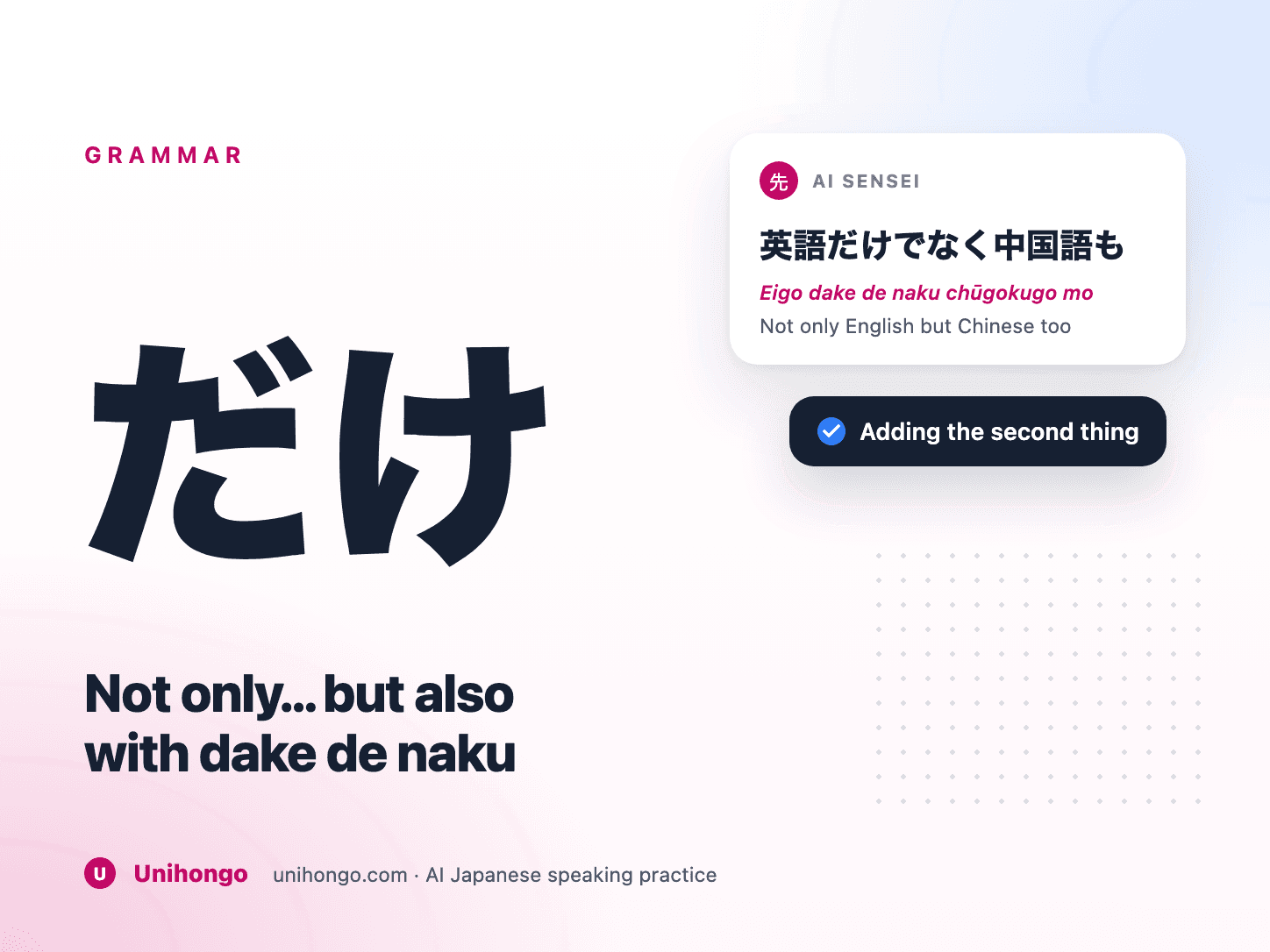
Not only X, but also Y
Dake means only. Dake de naku means not only. Put it after the first item, then add the second item with mo, and you have the full idea: not only the first, but the second as well.
It works for recommending, praising, explaining and arguing, which makes it one of the most reusable intermediate patterns in conversation.
| Japanese | Romaji | Meaning |
|---|---|---|
| 彼は英語だけでなく、中国語も話せます。 | Kare wa eigo dake de naku, chūgokugo mo hanasemasu. | He speaks not only English but also Chinese. |
| この店は安いだけでなく、おいしいです。 | Kono mise wa yasui dake de naku, oishii desu. | This restaurant is not only cheap but also good. |
| 学生だけでなく、先生も参加しました。 | Gakusei dake de naku, sensei mo sanka shimashita. | Not only the students but the teachers took part too. |
Attaching it to nouns, verbs and adjectives
Nouns and i-adjectives attach directly, verbs use the plain form, and na-adjectives keep na before dake.
| Japanese | Romaji | Meaning |
|---|---|---|
| 日本だけでなく | Nihon dake de naku | Noun: not only Japan |
| 読むだけでなく | yomu dake de naku | Verb: not only reading |
| 安いだけでなく | yasui dake de naku | I-adjective: not only cheap |
| 静かなだけでなく | shizuka na dake de naku | Na-adjective: not only quiet |
| この部屋は静かなだけでなく、明るいです。 | Kono heya wa shizuka na dake de naku, akarui desu. | This room is not only quiet but also bright. |
| 漢字を読むだけでなく、書くこともできます。 | Kanji o yomu dake de naku, kaku koto mo dekimasu. | I can not only read kanji but write them too. |
Casual speech: dake ja nakute
In relaxed conversation, dake de naku usually becomes dake ja nakute. It is exactly the same idea with the contraction and te form that spoken Japanese prefers.
| Japanese | Romaji | Meaning |
|---|---|---|
| 見た目だけじゃなくて、味もいいよ。 | Mitame dake ja nakute, aji mo ii yo. | It is not just the look, it tastes good too. |
| 土曜日だけじゃなくて、日曜日も働いてる。 | Doyōbi dake ja nakute, nichiyōbi mo hataraiteru. | I work not just Saturdays but Sundays too. |
| それだけじゃなくて、 | Sore dake ja nakute, | Not only that, but |
Formal versions: bakari de naku and nomi narazu
Bakari de naku is close to dake de naku with a slightly more formal feel. Nomi narazu is formal and written, common in speeches, reports and news, and it sounds stiff in casual conversation.
| Japanese | Romaji | Meaning |
|---|---|---|
| 子どもばかりでなく、大人も楽しめます。 | Kodomo bakari de naku, otona mo tanoshimemasu. | Not only children but adults can enjoy it too. |
| 国内のみならず、海外でも人気があります。 | Kokunai nomi narazu, kaigai demo ninki ga arimasu. | It is popular not only in Japan but overseas as well. |
| このサービスは個人だけではなく、企業にも利用されています。 | Kono sābisu wa kojin dake de wa naku, kigyō ni mo riyō sarete imasu. | This service is used not only by individuals but also by companies. |
Other ways to add a point
Dake de naku is not always the most natural choice. When the first item is obvious, wa mochiron sounds smoother. When you are listing reasons, shi is lighter.
| Japanese | Romaji | Meaning |
|---|---|---|
| 日本語はもちろん、英語も話せます。 | Nihongo wa mochiron, eigo mo hanasemasu. | Of course I speak Japanese, and English too. |
| 経験に加えて、資格も必要です。 | Keiken ni kuwaete, shikaku mo hitsuyō desu. | In addition to experience, a qualification is also required. |
| 安いし、おいしいし、よく行きます。 | Yasui shi, oishii shi, yoku ikimasu. | It is cheap and tasty, so I go often. |
| 料理も上手だし、歌もうまいです。 | Ryōri mo jōzu da shi, uta mo umai desu. | Good at cooking, and a great singer too. |
Mistakes worth checking for
- Forgetting na with na-adjectives: say shizuka na dake de naku.
- Dropping mo on the second item, which weakens the also.
- Using nomi narazu in casual conversation, where it sounds stiff.
- Stacking dake de naku twice in one sentence; use shi or split the sentence.
- Saying dake de naku when wa mochiron would sound more natural for an obvious first item.
Using it in real conversation
Dake de naku comes up whenever you recommend something, describe someone or argue a point. Those are exactly the moments that need to come out without planning.
Try recommending a place or introducing a friend to your AI Sensei in Unihongo's immersive 3D classroom, using both dake de naku and dake ja nakute. At higher levels, the Win Support Before the Meeting roleplay mission gives you a natural reason to add points to an argument, and the session report's corrections show where the pattern did not come out right.