

The core meaning
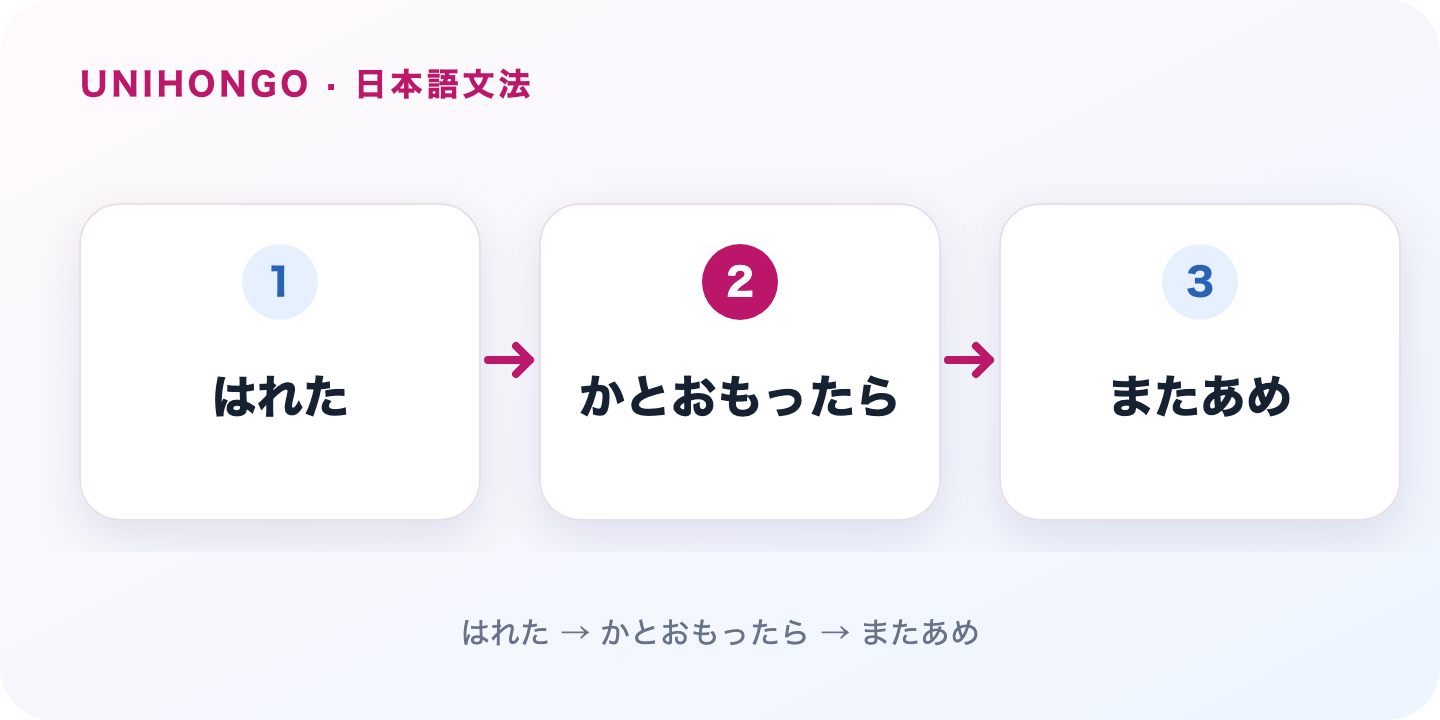
晴れたかと思ったら、また雨が降ってきた means it seemed the weather had cleared, but rain returned almost immediately. The speaker observes two contrasting states close together. Depending on context, the first clause can express a real event or the observer's impression of it. The important feeling is 'just when I thought A, B happened.'
| Japanese | Romaji | Meaning |
|---|---|---|
| 雨がやんだかと思ったら、また降り出した。 | Ame ga yanda ka to omottara, mata furidashita. | Just when I thought the rain had stopped, it started again. |
| 子どもが笑ったかと思ったら、急に泣き出した。 | Kodomo ga waratta ka to omottara, kyū ni nakidashita. | The child laughed, then suddenly burst into tears. |
How to form it
Put a plain clause before かと思ったら; a past verb is common when one event has just occurred: 終わったかと思ったら. The ending かと思うと is a close alternative. It is a narrative connector rather than a question, even though it contains か.
| Use | Japanese form | Meaning |
|---|---|---|
| Past event | 終わったかと思ったら | Just when I thought it had ended |
| State | 静かかと思ったら | Just when I thought it was quiet |
Natural examples
Read each sentence for the relationship between the first idea and the second. The English translation gives a natural meaning, while the Japanese wording shows exactly where the pattern attaches.
| Japanese | Romaji | Meaning |
|---|---|---|
| 店が空いたかと思ったら、すぐに満席になった。 | Mise ga aita ka to omottara, sugu ni manseki ni natta. | Just when the place seemed to clear, it filled up again. |
| 彼は帰ったかと思ったら、忘れ物を取りに戻ってきた。 | Kare wa kaetta ka to omottara, wasuremono o tori ni modotte kita. | I thought he had left, but he came back for something he forgot. |
Compare the nearby pattern
と思った simply reports a thought: 雨がやんだと思った says 'I thought the rain had stopped.' かと思ったら links that impression to an immediate twist. たとたんに focuses more tightly on the exact instant of the second event; かと思ったら highlights a perceived change or contrast.
| Japanese | Romaji | Meaning |
|---|---|---|
| 電車が来たと思った。 | Densha ga kita to omotta. | I thought the train had come. |
| 電車が来たかと思ったら、通過してしまった。 | Densha ga kita ka to omottara, tsūka shite shimatta. | I thought the train was here, but it passed straight through. |
The two examples may describe similar situations, but they lead the listener to different conclusions. Choose the form that matches the claim you really intend to make.
Common mistake to avoid
Do not translate it as a literal question about what someone thought. The whole construction narrates an unexpected transition. Also avoid using it for changes separated by many days unless the fast contrast is still the point of the story.
- A new event reverses or surprises an expectation
- The two states are close in time
- It is common in observed narratives
- と思った alone only reports a thought
Try it yourself
Describe a fast change you have seen: weather, a crowded shop or someone's mood. Say what seemed true first, then introduce the surprising next state with かと思ったら.
Say your sentence once slowly while looking at the Japanese pattern. Then say it again without reading. If your second clause changes from a possibility to a fact, or from advice to a requirement, revise it so the grammar still matches your meaning.