

The core meaning
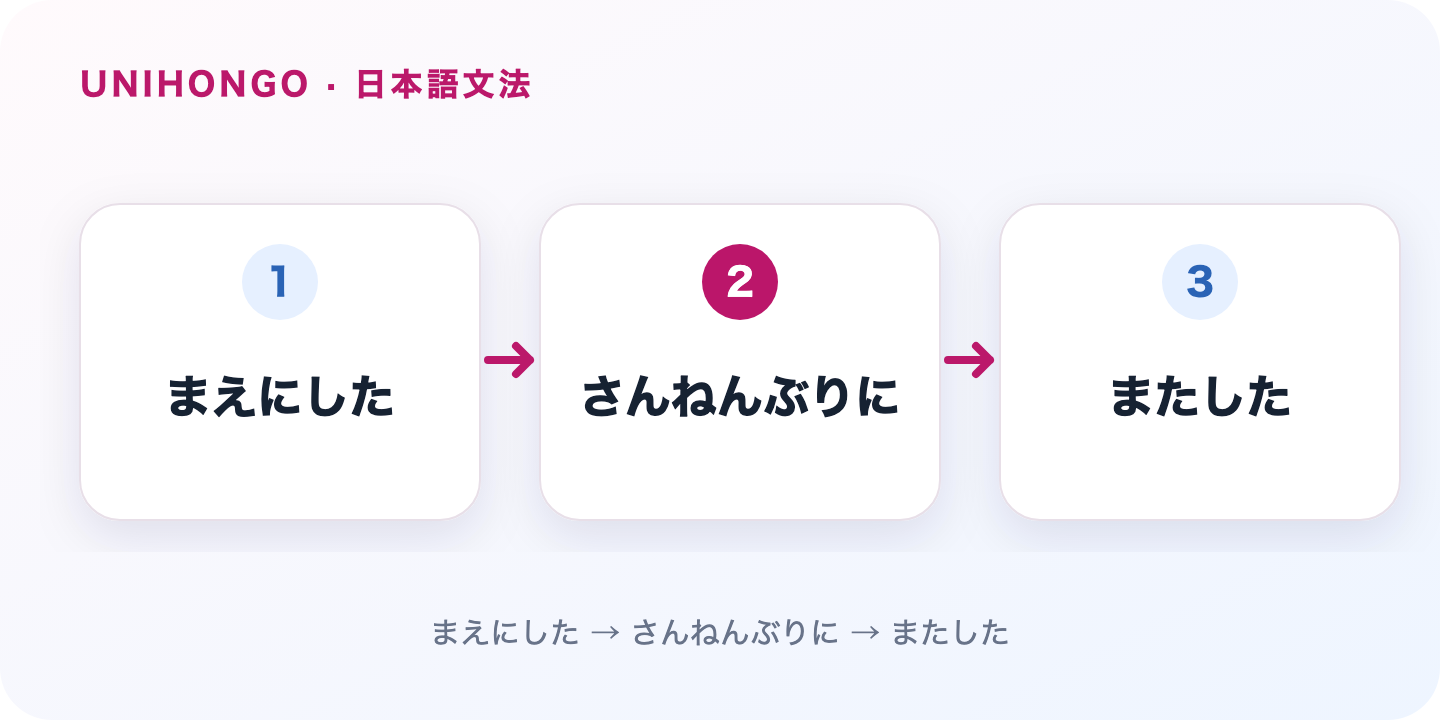
三年ぶりに京都へ行きました means the speaker last went to Kyoto about three years earlier and has now returned. The phrase counts the interval since the previous occurrence, not the duration of the current trip. 久しぶりに expresses the same return without naming a precise number. It is natural for meetings, visits, hobbies and experiences resumed after a pause.
| Japanese | Romaji | Meaning |
|---|---|---|
| 三年ぶりに京都へ行きました。 | San-nen buri ni Kyōto e ikimashita. | I went to Kyoto for the first time in three years. |
| 一週間ぶりに運動しました。 | Isshūkan buri ni undō shimashita. | I exercised again after a week off. |
How to form it
Put a time span directly before ぶり: 一週間ぶり, 三年ぶり, 十年ぶり. Add に before a verb: 三年ぶりに会う. Add の before a noun: 三年ぶりの再会. 久しぶり is a fixed expression and works with the same particles.
| Use | Japanese form | Meaning |
|---|---|---|
| Before verb | 三年ぶりに会う | Meet again after three years |
| Before noun | 三年ぶりの再会 | A reunion after three years |
| Unspecified gap | 久しぶりに会う | Meet after a long time |
Natural examples
Read each sentence for the relationship between the first idea and the second. The English translation gives a natural meaning, while the Japanese wording shows exactly where the pattern attaches.
| Japanese | Romaji | Meaning |
|---|---|---|
| 久しぶりに友達と話せてうれしいです。 | Hisashiburi ni tomodachi to hanasete ureshii desu. | I'm happy I got to talk with my friend after so long. |
| 十年ぶりの再会でした。 | Jū-nen buri no saikai deshita. | It was our first reunion in ten years. |
Compare the nearby pattern
三年後に会いました means 'we met three years later' relative to some stated event. 三年ぶりに会いました means 'we met again after not meeting for three years.' One measures forward from a reference event; the other measures the gap since the last occurrence of the same activity.
| Japanese | Romaji | Meaning |
|---|---|---|
| 三年後にまた会いました。 | San-nen go ni mata aimashita. | We met again three years later. |
| 三年ぶりに会いました。 | San-nen buri ni aimashita. | We met again after a three-year gap. |
The two examples may describe similar situations, but they lead the listener to different conclusions. Choose the form that matches the claim you really intend to make.
Common mistake to avoid
Do not say 三年ぶりに日本に初めて行った. ぶり signals repetition, while 初めて signals a first occurrence. If this was your first visit in three years, say 三年ぶりに日本に行った without 初めて.
- The activity happened before and is happening again
- Time span + ぶりに goes before a verb
- Time span + ぶりの modifies a noun
- 初めて is for a first occurrence
Try it yourself
Think of a friend you met again or a hobby you resumed. Say the interval with ぶりに. Then make a noun phrase with ぶりの, such as a reunion or first practice session after that gap.
Say your sentence once slowly while looking at the Japanese pattern. Then say it again without reading. If your second clause changes from a possibility to a fact, or from advice to a requirement, revise it so the grammar still matches your meaning.