

The core meaning
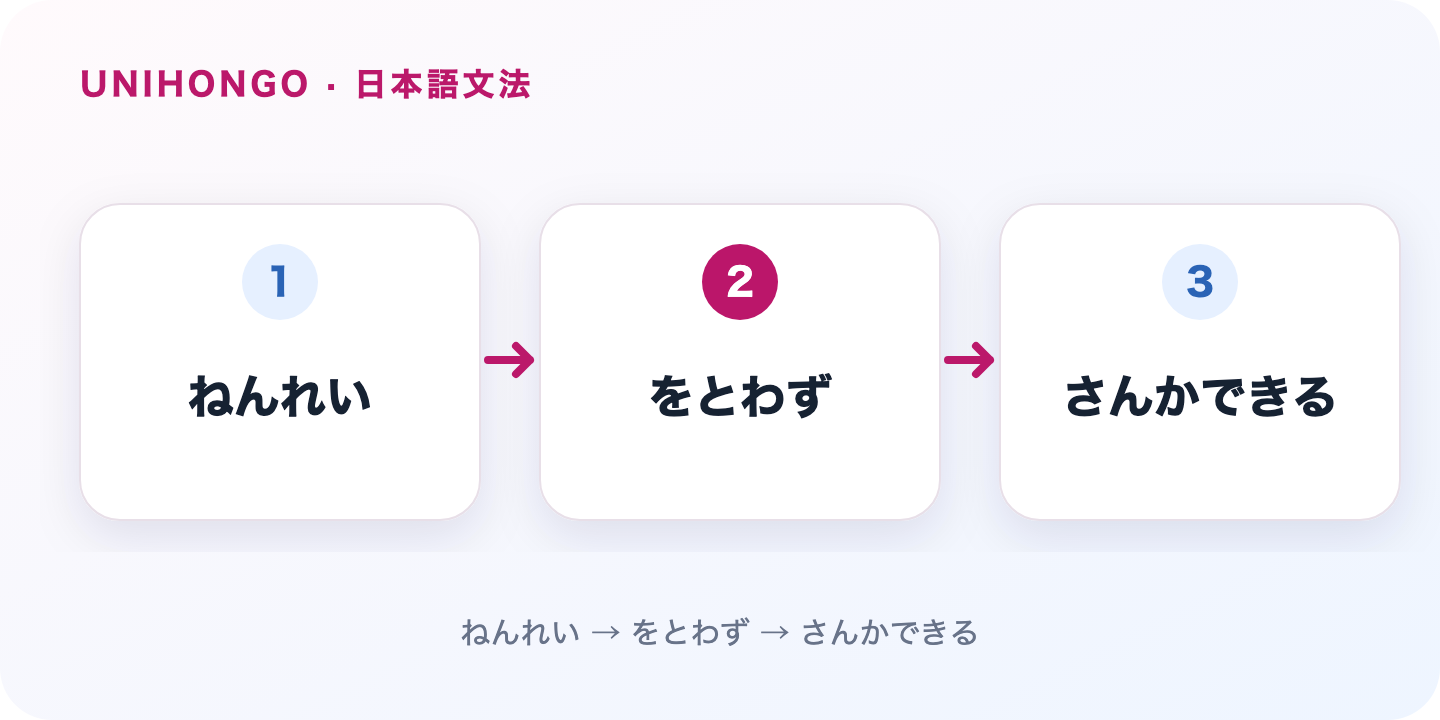
年齢を問わず参加できます means anyone can participate regardless of age. The category is not a deciding factor. This concise expression appears in recruitment, event notices and eligibility statements, where organizers want to state inclusion across age, nationality, experience or gender. The sentence still may have other requirements; it only sets aside the named category.
| Japanese | Romaji | Meaning |
|---|---|---|
| このイベントは年齢を問わず参加できます。 | Kono ibento wa nenrei o towazu sanka dekimasu. | People of any age can join this event. |
| 経験を問わず応募できます。 | Keiken o towazu ōbo dekimasu. | You can apply regardless of experience. |
How to form it
Put a noun naming the category before を問わず: 年齢を問わず, 経験を問わず, 国籍を問わず. Common pairs include 男女を問わず and 昼夜を問わず. The verb 問う means to ask or consider; here the whole phrase means 'without regard to.' It is more formal than everyday 関係なく.
| Use | Japanese form | Meaning |
|---|---|---|
| Age | 年齢を問わず | Regardless of age |
| Experience | 経験を問わず | Regardless of experience |
| Nationality | 国籍を問わず | Regardless of nationality |
Natural examples
Read each sentence for the relationship between the first idea and the second. The English translation gives a natural meaning, while the Japanese wording shows exactly where the pattern attaches.
| Japanese | Romaji | Meaning |
|---|---|---|
| 国籍を問わず利用できます。 | Kokuseki o towazu riyō dekimasu. | It can be used regardless of nationality. |
| この窓口は昼夜を問わず対応しています。 | Kono madoguchi wa chūya o towazu taiō shite imasu. | This help desk responds day and night. |
Compare the nearby pattern
年齢に関係なく参加できます is a friendly everyday alternative. 年齢を問わず参加できます reads like a concise announcement. なんでも can mean 'anything' but does not identify the category whose alternatives are being treated equally. Use を問わず when the category itself is the point.
| Japanese | Romaji | Meaning |
|---|---|---|
| 年齢に関係なく参加できます。 | Nenrei ni kankei naku sanka dekimasu. | You can participate regardless of age. |
| 年齢を問わず参加できます。 | Nenrei o towazu sanka dekimasu. | Participation is open regardless of age. |
The two examples may describe similar situations, but they lead the listener to different conclusions. Choose the form that matches the claim you really intend to make.
Common mistake to avoid
Do not use を問わず to promise unrestricted access if another rule contradicts it. 年齢を問わず means age is not a barrier, but if registration is required, state that separately. Also use a noun before the phrase, not a full ordinary clause.
- A named category does not change the rule
- Use category noun + を問わず
- Common in notices and eligibility statements
- に関係なく is more conversational
Try it yourself
Draft a one-line event or hiring notice. Identify exactly one category that does not affect eligibility and use を問わず. Add any real registration requirement separately to keep the notice accurate.
Say your sentence once slowly while looking at the Japanese pattern. Then say it again without reading. If your second clause changes from a possibility to a fact, or from advice to a requirement, revise it so the grammar still matches your meaning.