

The core meaning
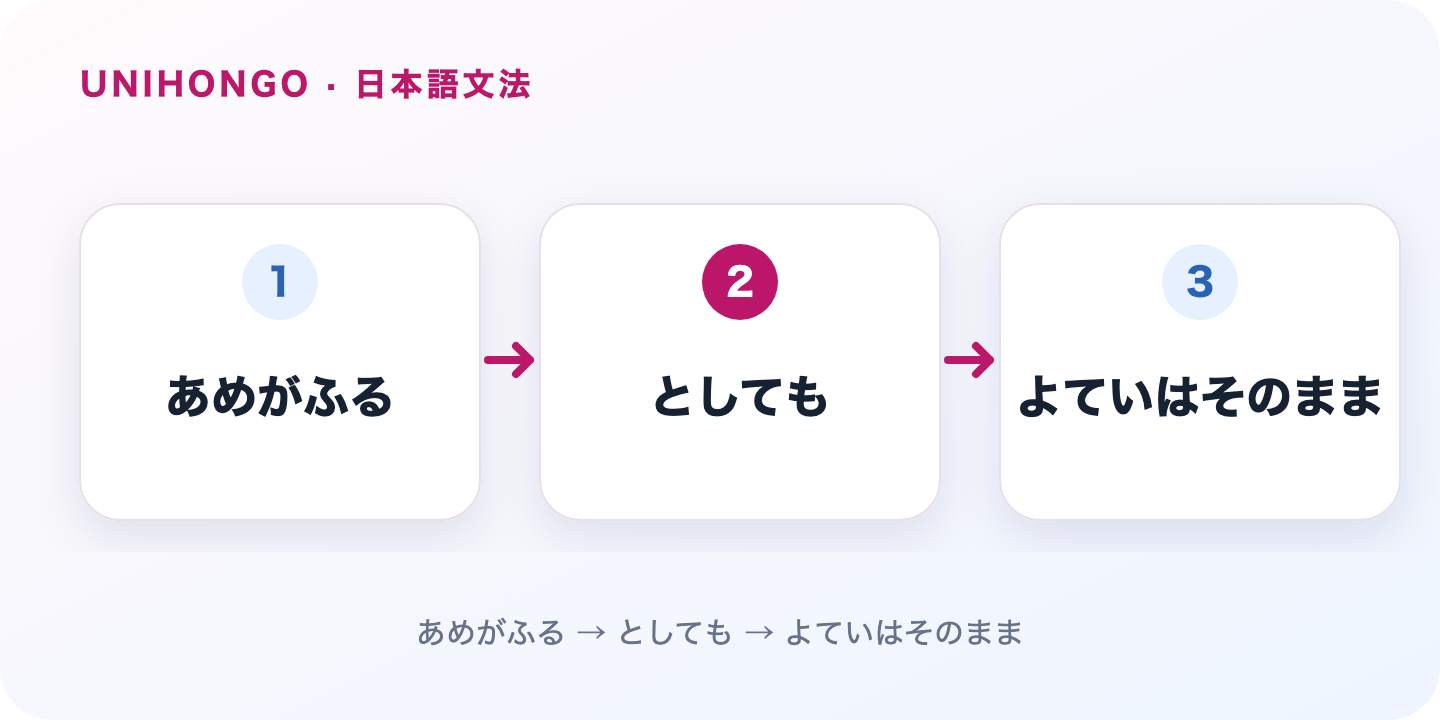
間に合わないとしても、連絡はしてください says that even if you cannot make it on time, you should still contact someone. The speaker provisionally accepts a situation and states what follows despite it. The condition may be unlikely, inconvenient or simply undecided. This is useful for plans, negotiations and measured arguments.
| Japanese | Romaji | Meaning |
|---|---|---|
| 間に合わないとしても、連絡はしてください。 | Maniawanai to shite mo, renraku wa shite kudasai. | Even if you cannot make it on time, please contact us. |
| 雨が降るとしても、試合は行います。 | Ame ga furu to shite mo, shiai wa okonaimasu. | Even if it rains, the match will go ahead. |
How to form it
Place a plain clause before としても: 雨が降るとしても, 難しいとしても. Nouns and な adjectives normally use だ or である before it: 無理だとしても. The pattern can be expanded with 仮に at the start when you want to emphasize a hypothetical assumption.
| Use | Japanese form | Meaning |
|---|---|---|
| Verb | 遅れるとしても | Even if you are late |
| Noun | 失敗だとしても | Even if it is a failure |
| Emphatic | 仮に遅れるとしても | Supposing you are late |
Natural examples
Read each sentence for the relationship between the first idea and the second. The English translation gives a natural meaning, while the Japanese wording shows exactly where the pattern attaches.
| Japanese | Romaji | Meaning |
|---|---|---|
| 難しいとしても、挑戦する価値はあります。 | Muzukashii to shite mo, chōsen suru kachi wa arimasu. | Even if it is hard, it is worth trying. |
| 仮に失敗したとしても、経験は残ります。 | Kari ni shippai shita to shite mo, keiken wa nokorimasu. | Even if you fail, the experience remains. |
Compare the nearby pattern
ても is the simpler everyday 'even if' and works well for direct advice: 雨が降っても行きます. としても sounds more like entertaining a scenario: 雨が降るとしても、予定は変えません. たとえ〜ても intensifies the concession and explicitly means 'even if, no matter how.'
| Japanese | Romaji | Meaning |
|---|---|---|
| 雨が降っても行きます。 | Ame ga futte mo ikimasu. | I'll go even if it rains. |
| 雨が降るとしても、計画は変えません。 | Ame ga furu to shite mo, keikaku wa kaemasen. | Even supposing it rains, I won't change the plan. |
The two examples may describe similar situations, but they lead the listener to different conclusions. Choose the form that matches the claim you really intend to make.
Common mistake to avoid
Do not treat としても as proof that the first event occurred. 失敗したとしても can mean 'even if one failed' within a hypothetical discussion. If you want to report a real outcome, use a factual connector such as けれども or それでも.
- The first clause is a provisional assumption
- The second conclusion still holds
- Use a plain clause before としても
- ても is the simpler conversational choice
Try it yourself
Take a real plan with one uncertain obstacle. State the obstacle with としても, then say what action or conclusion will still hold. Retell it with ても and compare the tone.
Say your sentence once slowly while looking at the Japanese pattern. Then say it again without reading. If your second clause changes from a possibility to a fact, or from advice to a requirement, revise it so the grammar still matches your meaning.