

What kiri means
Kiri is the noun form of kiru, to cut, and it is usually written in hiragana as きり. The written kanji form 切り exists, but in grammar uses you will see hiragana far more often. The core image is a line being cut: up to here, and nothing beyond.
That image produces three meanings. After a noun or number, kiri limits the amount: only this, and no more. After the ta form of a verb, it cuts the timeline: this happened, and after that, nothing. In the phrase kiri ga nai, the same kiri means a limit or an end point, so kiri ga nai is there is no end.
Kiri often carries emotion. Hitori kiri can sound lonely, sore kiri can sound regretful, and ichido kiri can sound precious. That emotional colour is what separates it from the neutral dake.
| Japanese | Romaji | Meaning |
|---|---|---|
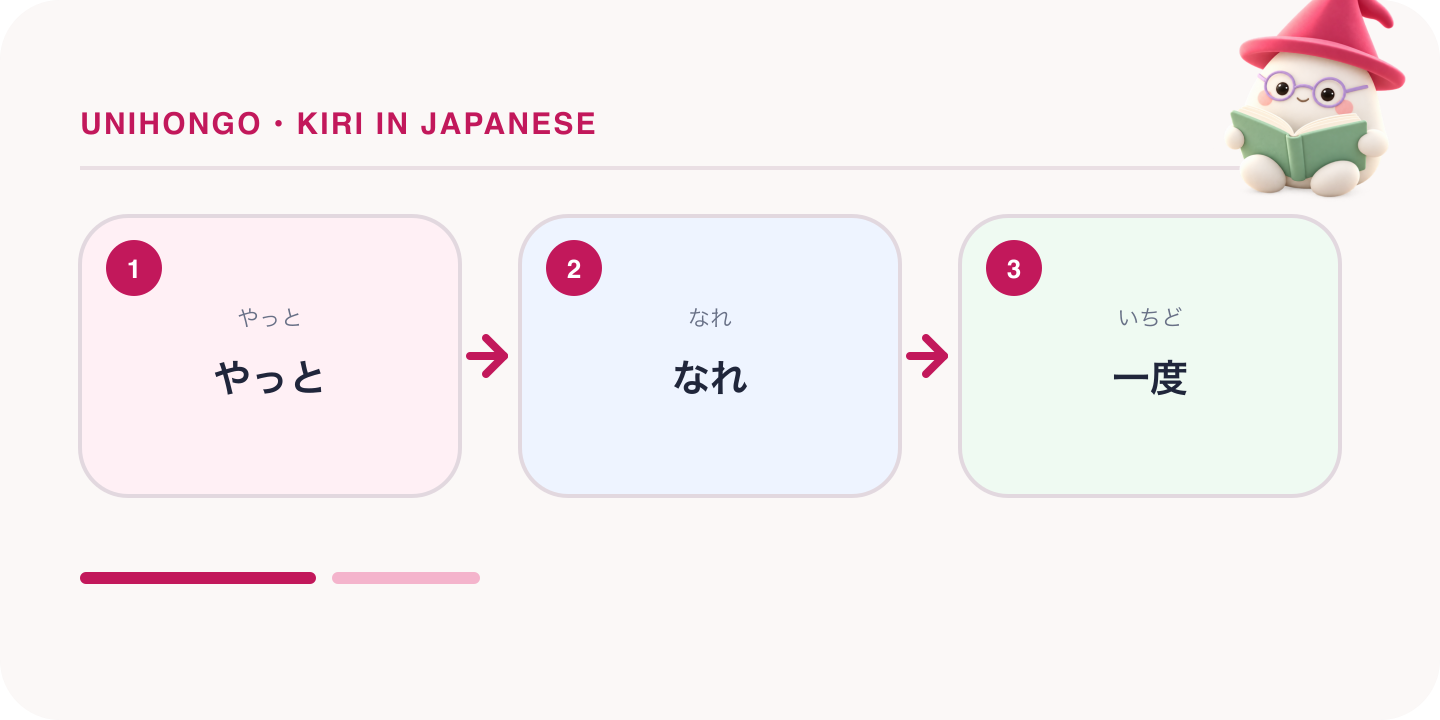
| やっと二人きりになれたね。 | Yatto futari kiri ni nareta ne. | We're finally alone together. |
| 一度きりの人生だから、やりたいことをしよう。 | Ichido kiri no jinsei da kara, yaritai koto o shiyō. | You only live once, so let's do what we want. |
| 彼は出かけたきり、帰ってこない。 | Kare wa dekaketa kiri, kaette konai. | He went out and hasn't come back. |
| 心配し始めたらきりがない。 | Shinpai shihajimetara kiri ga nai. | Once you start worrying, there's no end to it. |
| それっきり、彼女とは会っていません。 | Sorekkiri, kanojo to wa atte imasen. | I haven't seen her since then. |
Forms of kiri at a glance
Kiri attaches directly to nouns and numbers and to the plain past of verbs. It then behaves like a noun, so it can take da, desu, no or ni after it. The doubled kkiri form works in every slot below and is the natural choice in speech.
| Pattern | Formation | Example | Meaning |
|---|---|---|---|
| Only, just | Noun or number + きり | 二人きり | Just the two of us |
| Only this | これ / それ / あれ + きり | これきりにしてください | Let this be the last time |
| Since then, nothing | Verb ta form + きり | 行ったきり戻らない | Went and never returned |
| Ending a sentence | Verb ta form + きりだ | 去年会ったきりだ | The last time I saw them was last year |
| Devoted to one thing | Verb stem + きり | 付きっきりで看病する | Nurse someone without leaving their side |
| No end | きりがない | 言い出したらきりがない | Once you start, there's no end |
| Good stopping point | きりのいいところ | きりのいいところで休もう | Let's break at a good point |
Only: futari kiri, hitori kiri, ichido kiri
With people and numbers, kiri means only that many and nobody else. Hitori kiri is all alone, futari kiri is just the two of us, and the pair is the most common use of kiri in everyday Japanese. It often suggests privacy or isolation: futari kiri de hanasu is to talk privately, without anyone else there.
With counters for times, kiri stresses that there is no second chance. Ichido kiri, only once, and ikkai kiri, just one time, appear in phrases about opportunities, promises and life itself. Kore kiri, only this, and kore kiri ni suru, to make this the last time, are also very common, especially as a warning.
Kiri can also follow a small amount to stress how little is left: senen kiri shika nai, I only have a thousand yen. When kiri is combined with shika like this, the negative ending is required, just as with shika alone.
| Japanese | Romaji | Meaning |
|---|---|---|
| 週末は一人きりで過ごしました。 | Shūmatsu wa hitori kiri de sugoshimashita. | I spent the weekend all by myself. |
| 二人っきりで話したいことがあるんだ。 | Futarikkiri de hanashitai koto ga aru n da. | There's something I want to talk about, just the two of us. |
| これは一回きりのチャンスです。 | Kore wa ikkai kiri no chansu desu. | This is a one-time-only chance. |
| お金を貸すのはこれっきりだよ。 | Okane o kasu no wa korekkiri da yo. | This is the last time I'm lending you money. |
| 遅刻はこれきりにしてください。 | Chikoku wa kore kiri ni shite kudasai. | Please don't be late again. |
| 財布に千円きりしか残っていない。 | Saifu ni senen kiri shika nokotte inai. | I've only got a thousand yen left in my wallet. |
Since then, nothing: the ta form plus kiri
After the plain past of a verb, kiri means the action happened and then the situation froze. What we expected to follow, a return, a reply, a second meeting, never came. The second half of the sentence is usually negative or describes an unchanged state: itta kiri kaette konai, went and has not come back; kiita kiri henji ga nai, asked and have had no answer.
Kiri da at the end of a sentence packs the same idea into one clause. Kare to wa gakusei no koro ni atta kiri da means the last time I saw him was when we were students. The listener understands that there has been no contact since.
This pattern often has a note of regret, worry or mild complaint. It is not used for neutral sequences: tabeta kiri, neta, I ate and then slept, is odd because nothing expected is missing. Use te kara or ato de for simple order.
| Japanese | Romaji | Meaning |
|---|---|---|
| 息子は朝出かけたきり、まだ連絡がない。 | Musuko wa asa dekaketa kiri, mada renraku ga nai. | My son went out this morning and I still haven't heard from him. |
| メールを送ったきり、返事が来ません。 | Mēru o okutta kiri, henji ga kimasen. | I sent the email and haven't had a reply. |
| その本は一ページ読んだきり、放ってある。 | Sono hon wa ippēji yonda kiri, hōtte aru. | I read one page of that book and left it. |
| 彼女とは去年の忘年会で会ったきりだ。 | Kanojo to wa kyonen no bōnenkai de atta kiri da. | The last time I saw her was at last year's year-end party. |
| 祖父は去年から寝たきりです。 | Sofu wa kyonen kara netakiri desu. | My grandfather has been bedridden since last year. |
| 買ったっきり、一度も着ていない服がある。 | Kattakkiri, ichido mo kite inai fuku ga aru. | I have clothes I bought and have never worn once. |
Netakiri, bedridden, is a fixed word built on this pattern: lay down and never got up again. You will see it in news about ageing and care.
Sore kiri and are kiri: that was the last time
Sore kiri and are kiri, usually pronounced sorekkiri and arekkiri, work as adverbs meaning after that, never again. They start a sentence and point back to an event just described. Sorekkiri kare wa kaette konakatta, after that he never came back, is a line you will find in novels and dramas.
They can also end a sentence with da to mean that was all or that was the end of it: hanashi wa sorekkiri datta, and that was the end of the conversation.
| Japanese | Romaji | Meaning |
|---|---|---|
| 一度電話があったけど、それっきりです。 | Ichido denwa ga atta kedo, sorekkiri desu. | They called once, but nothing since. |
| あれっきり、あの店には行っていない。 | Arekkiri, ano mise ni wa itte inai. | I haven't been back to that shop since then. |
| 話はそれきりで終わった。 | Hanashi wa sore kiri de owatta. | The conversation ended there. |
| 彼はそれっきり黙ってしまった。 | Kare wa sorekkiri damatte shimatta. | After that he fell completely silent. |
Kiri ga nai and kiri no ii tokoro
In kiri ga nai, kiri is a noun meaning a limit or a place to stop, so the phrase means there is no end. It usually follows a conditional: ieba kiri ga nai, if I start listing them, it's endless; ue o mireba kiri ga nai, if you look at those better off than you, there's no end. It is a common way to close a list politely or to talk yourself out of comparing.
The positive side is kiri ga ii or kiri no ii tokoro, a natural stopping point. Kiri no ii tokoro de yasumimashō, let's take a break at a good point, is everyday office Japanese. Kiri ga ii kazu is a round number.
| Japanese | Romaji | Meaning |
|---|---|---|
| 欲しいものを数えたらきりがない。 | Hoshii mono o kazoetara kiri ga nai. | If I counted the things I want, I'd never finish. |
| 上を見ればきりがないよ。 | Ue o mireba kiri ga nai yo. | If you compare yourself with people above you, it never ends. |
| 文句を言い出したらきりがありません。 | Monku o iidashitara kiri ga arimasen. | Once you start complaining, there's no end to it. |
| きりのいいところで終わりにしましょう。 | Kiri no ii tokoro de owari ni shimashō. | Let's stop at a good point. |
| この章がきりがいいので、ここまでにします。 | Kono shō ga kiri ga ii node, koko made ni shimasu. | This chapter is a good place to stop, so I'll finish here. |
Verb stem plus kiri: fully devoted
A smaller group of words uses the verb stem plus kiri to mean doing one thing exclusively. Tsukikkiri, from tsuku, to be attached, means staying at someone's side the whole time. Kakarikiri, from kakaru, means being fully occupied with one task. Omoikiri, as much as you can, looks similar but is built on the verb kiru and works as a separate adverb.
Treat these as vocabulary rather than a productive pattern. You cannot freely attach kiri to any verb stem, but the common ones appear often in conversation about care, work and children.
| Japanese | Romaji | Meaning |
|---|---|---|
| 母は一晩中付きっきりで看病してくれた。 | Haha wa hitobanjū tsukikkiri de kanbyō shite kureta. | My mother nursed me all night without leaving my side. |
| 今週は新しいプロジェクトにかかりきりです。 | Konshū wa atarashii purojekuto ni kakarikiri desu. | This week I'm completely tied up with the new project. |
| 子どもに付きっきりで、自分の時間がない。 | Kodomo ni tsukikkiri de, jibun no jikan ga nai. | I'm with the kids all the time and have no time for myself. |
Kiri vs dake and shika
Dake is the neutral word for only and works almost everywhere. Shika... nai stresses that the amount is less than expected. Kiri sits between them: it means only, but with a feeling of finality or isolation, and it prefers numbers, kore, sore and are, and past verbs.
For time sequences, compare kiri with te kara and ato. Te kara and ato simply order events. Ta kiri says the second, expected event never came.
| Pattern | Nuance | Example |
|---|---|---|
| だけ | Neutral only | 二人だけで行った |
| しか〜ない | Only, less than expected | 二人しか来なかった |
| きり | Only, with closure or isolation | 二人きりで話した |
| てから | Neutral sequence | 会ってから連絡した |
| たきり | Happened, then nothing since | 会ったきり連絡がない |
Common mistakes with kiri
- Using the dictionary form before kiri for since: iku kiri kaette konai is wrong; it must be itta kiri.
- Using ta kiri for a neutral sequence: gohan o tabeta kiri, terebi o mita sounds strange; use tabete kara.
- Following ta kiri with a positive new event: dekaketa kiri, sugu kaette kita contradicts the meaning of nothing since.
- Forgetting the negative when kiri is combined with shika: senen kiri shika aru is wrong; say senen kiri shika nai.
- Using kiri with large or open amounts: takusan kiri does not work; kiri limits things to a small, closed amount.
- Confusing kiri ga nai with shikata ga nai: kiri ga nai means endless, shikata ga nai means it can't be helped.