

The core meaning
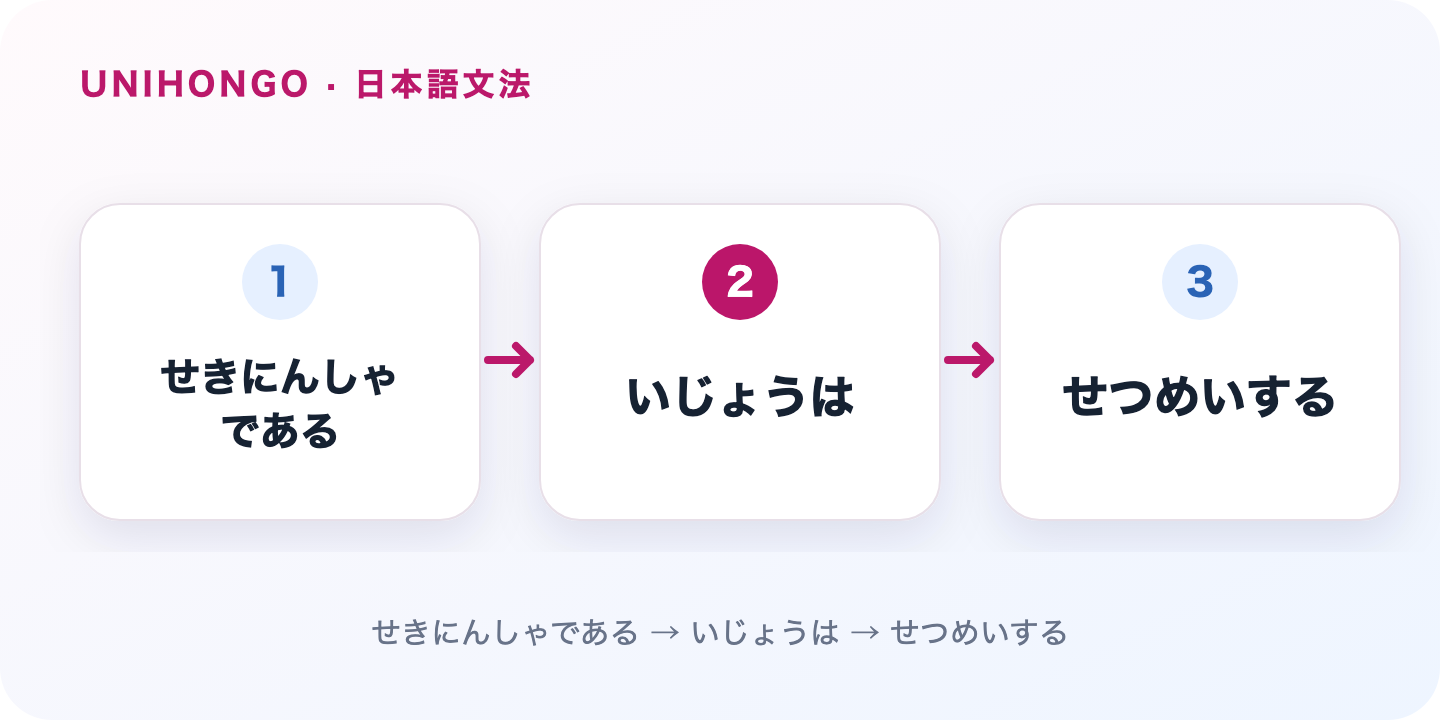
責任者である以上は、説明しなければなりません means that being the person in charge entails explaining. The speaker starts from a premise they accept as true and draws a duty or strong conclusion from it. The expression is common in rules, debates, advice and serious personal statements. It sounds firmer and more reasoned than a casual だから.
| Japanese | Romaji | Meaning |
|---|---|---|
| 責任者である以上は、説明しなければなりません。 | Sekininsha de aru ijō wa, setsumei shinakereba narimasen. | As the person in charge, I must explain. |
| 参加する以上は、ルールを守ってください。 | Sanka suru ijō wa, rūru o mamotte kudasai. | If you take part, please follow the rules. |
How to form it
Use a plain verb or い adjective before 以上は: 参加する以上は, 忙しい以上は. With a noun or な adjective, use である以上は in formal prose: 責任者である以上は. In speech, 以上 may appear without は, with much the same conditional force.
| Use | Japanese form | Meaning |
|---|---|---|
| Verb | 参加する以上は | Once you participate |
| Noun | 責任者である以上は | Since you are in charge |
| Adjective | 危険である以上は | Since it is dangerous |
Natural examples
Read each sentence for the relationship between the first idea and the second. The English translation gives a natural meaning, while the Japanese wording shows exactly where the pattern attaches.
| Japanese | Romaji | Meaning |
|---|---|---|
| 約束した以上は、必ず行きます。 | Yakusoku shita ijō wa, kanarazu ikimasu. | Since I promised, I'll definitely go. |
| 疑問が残る以上は、もう一度調べるべきです。 | Gimon ga nokoru ijō wa, mō ichido shiraberu beki desu. | As long as questions remain, we should investigate again. |
Compare the nearby pattern
からには is close and can sound more personal: やるからには頑張る voices determination. やる以上は責任を持つ frames responsibility as a consequence of undertaking the job. Both are possible in many contexts. ので simply explains a reason and does not itself make the consequent an obligation.
| Japanese | Romaji | Meaning |
|---|---|---|
| 働くので、早く起きます。 | Hataraku node, hayaku okimasu. | I get up early because I work. |
| 働く以上は、約束を守るべきです。 | Hataraku ijō wa, yakusoku o mamoru beki desu. | Once you take on the work, you should keep your commitments. |
The two examples may describe similar situations, but they lead the listener to different conclusions. Choose the form that matches the claim you really intend to make.
Common mistake to avoid
Avoid using 以上は for a lightweight everyday explanation such as 'Since the train is late, I will buy coffee.' ので or から suits that. 以上は asks the listener to accept a stronger duty, rule or conclusion derived from the premise.
- The first clause is an accepted premise
- A duty or strong conclusion follows
- Noun and な adjective usually take である
- It is firmer than a simple reason
Try it yourself
Choose a role such as student, employee or team leader. State one genuine responsibility that follows from it with である以上は. Check that the second clause is stronger than a mere schedule or coincidence.
Say your sentence once slowly while looking at the Japanese pattern. Then say it again without reading. If your second clause changes from a possibility to a fact, or from advice to a requirement, revise it so the grammar still matches your meaning.