

The core meaning
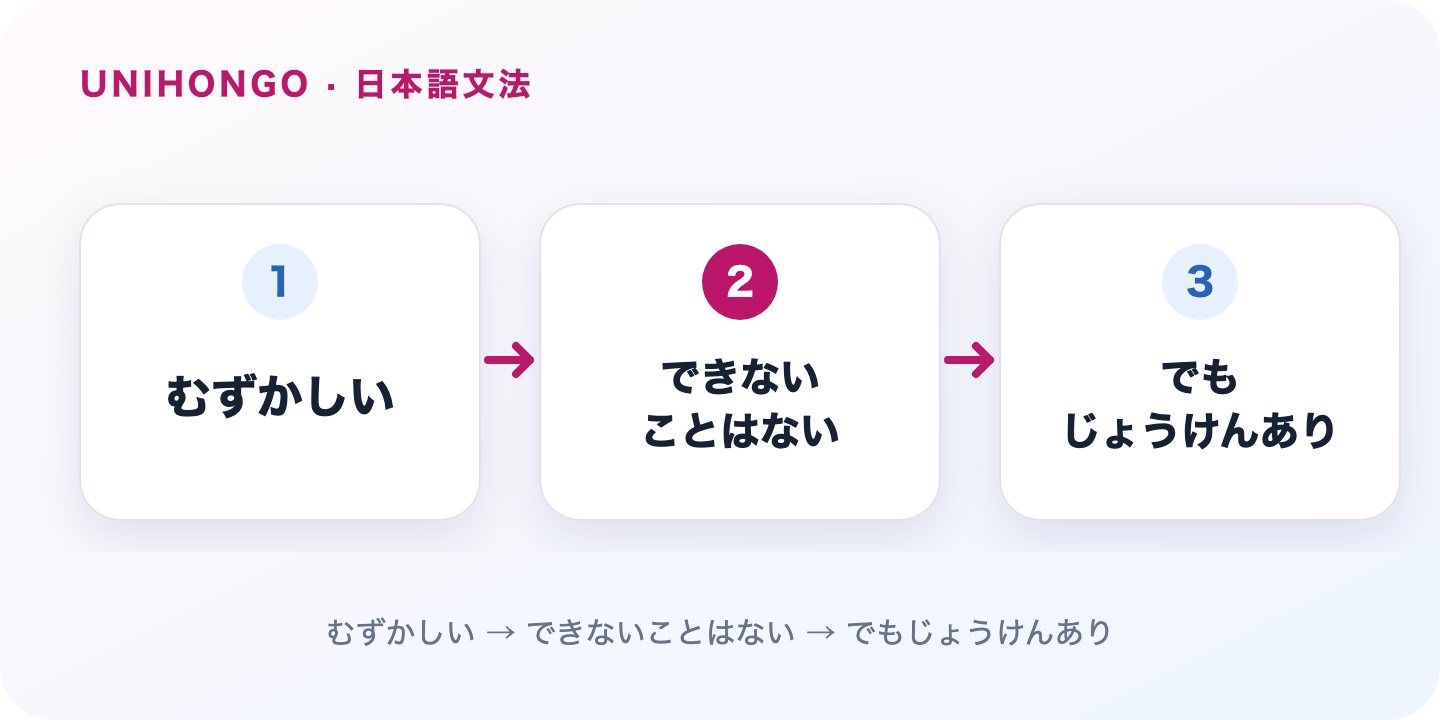
行けないことはない means 'It's not impossible for me to go.' The speaker may be busy, reluctant or unsure whether it is worth the effort. The double negative opens a door, but only a little. This pattern is useful when you want to avoid a flat refusal without promising more than you can deliver.
| Japanese | Romaji | Meaning |
|---|---|---|
| 行けないことはないけど、少し遅れます。 | Ikenai koto wa nai kedo, sukoshi okuremasu. | I can make it, but I'll be a little late. |
| 意味が分からないことはない。 | Imi ga wakaranai koto wa nai. | I do understand the meaning, to a degree. |
How to form it
Put the plain negative form before ことはない: 行かないことはない, 分からないことはない. With a potential verb, できないことはない is especially common. In conversation, speakers may finish with けど or が and then explain the reservation.
| Use | Japanese form | Meaning |
|---|---|---|
| Action | 行かないことはない | I do go sometimes |
| Ability | 行けないことはない | It isn't impossible to go |
| Understanding | 分からないことはない | I understand to some extent |
Natural examples
Read each sentence for the relationship between the first idea and the second. The English translation gives a natural meaning, while the Japanese wording shows exactly where the pattern attaches.
| Japanese | Romaji | Meaning |
|---|---|---|
| 辛い物も食べないことはありません。 | Karai mono mo tabenai koto wa arimasen. | It's not that I never eat spicy food. |
| 直せないことはないですが、時間がかかります。 | Naosenai koto wa nai desu ga, jikan ga kakarimasu. | It's not impossible to fix, but it'll take time. |
Compare the nearby pattern
行けます gives a direct yes. 行けないことはない leaves practical or emotional conditions unstated. わけではない rejects a particular inference; ないことはない accepts a minimal positive possibility. If a person needs a definite RSVP, follow the phrase with a clear decision.
| Japanese | Romaji | Meaning |
|---|---|---|
| 明日、行けます。 | Ashita, ikemasu. | I can go tomorrow. |
| 明日、行けないことはないです。 | Ashita, ikenai koto wa nai desu. | It isn't impossible for me to go tomorrow. |
The two examples may describe similar situations, but they lead the listener to different conclusions. Choose the form that matches the claim you really intend to make.
Common mistake to avoid
Do not use this construction when you want to sound certain and enthusiastic. 参加できないことはありません is grammatically possible but sounds hedged. For a straightforward commitment, say 参加できます or ぜひ参加します.
- Two negatives produce a qualified positive
- The speaker often has a reservation
- Use plain negative + ことはない
- A direct potential form gives a clearer yes
Try it yourself
Answer a request in two ways: first with a confident potential form, then with できないことはない and a realistic reservation. Notice how the listener's expectation changes.
Say your sentence once slowly while looking at the Japanese pattern. Then say it again without reading. If your second clause changes from a possibility to a fact, or from advice to a requirement, revise it so the grammar still matches your meaning.