

The core meaning
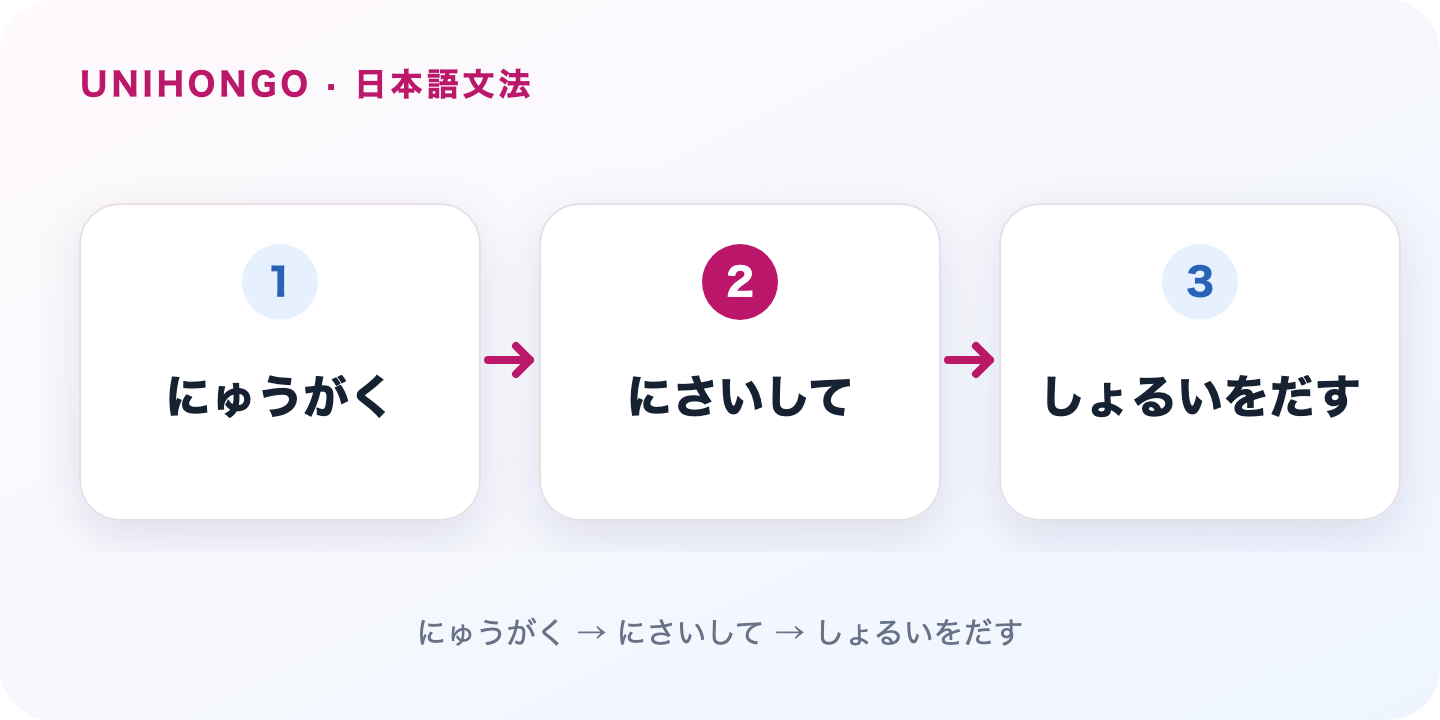
入学に際して、必要な書類を提出してください is the kind of sentence you might read from a school. The event is an occasion for preparation, a notice or an official action. The phrase often appears in rules, speeches and administrative writing, not casual talk about a normal afternoon. It can mark something just before or around the event, rather than one exact second.
| Japanese | Romaji | Meaning |
|---|---|---|
| 入学に際して、必要な書類を提出してください。 | Nyūgaku ni saishite, hitsuyō na shorui o teishutsu shite kudasai. | Please submit the required documents when enrolling. |
| 契約に際して、内容を十分に確認してください。 | Keiyaku ni saishite, naiyō o jūbun ni kakunin shite kudasai. | Please check the terms carefully before signing the contract. |
How to form it
Attach に際して to a noun for an event: 入学に際して, 契約に際して. A dictionary-form verb can also precede it: 引っ越すに際して. The shorter に際し is common in formal writing. Before a noun, use に際しての, as in 入学に際してのご案内.
| Use | Japanese form | Meaning |
|---|---|---|
| Event noun | 入学に際して | Upon entering school |
| Verb | 引っ越すに際して | When moving |
| Before noun | 入学に際しての案内 | Guidance for enrollment |
Natural examples
Read each sentence for the relationship between the first idea and the second. The English translation gives a natural meaning, while the Japanese wording shows exactly where the pattern attaches.
| Japanese | Romaji | Meaning |
|---|---|---|
| 引っ越すに際して、住所変更の手続きをしました。 | Hikkosu ni saishite, jūsho henkō no tetsuzuki o shimashita. | I filed a change of address when moving. |
| 開店に際し、皆様に感謝申し上げます。 | Kaiten ni saishi, minasama ni kansha mōshiagemasu. | On the opening of our shop, we thank everyone. |
Compare the nearby pattern
引っ越すとき、友達に電話した is an ordinary report about when you called. 引っ越すに際して、住所変更の手続きをした frames the move as an occasion requiring preparation. にあたって is a close formal alternative; it often highlights the preparatory attitude or action taken as an undertaking begins.
| Japanese | Romaji | Meaning |
|---|---|---|
| 引っ越すとき、友達に電話しました。 | Hikkosu toki, tomodachi ni denwa shimashita. | I called my friend when I moved. |
| 引っ越すに際して、住所変更をしました。 | Hikkosu ni saishite, jūsho henkō o shimashita. | I changed my registered address as part of the move. |
The two examples may describe similar situations, but they lead the listener to different conclusions. Choose the form that matches the claim you really intend to make.
Common mistake to avoid
Do not attach past tense directly as 引っ越したに際して for the usual 'when moving' sense; the dictionary form marks the planned event. Nor use に際して just to say a meal was eaten at noon. Use とき or a time expression for everyday timing.
- A significant occasion sets the context
- Noun or dictionary-form verb + に際して
- Formal notices and speeches commonly use it
- とき is natural for everyday events
Try it yourself
Imagine writing a school or workplace notice. Choose an important event, then state a useful preparation with に際して. Retell the same information to a friend using とき.
Say your sentence once slowly while looking at the Japanese pattern. Then say it again without reading. If your second clause changes from a possibility to a fact, or from advice to a requirement, revise it so the grammar still matches your meaning.