

The core meaning
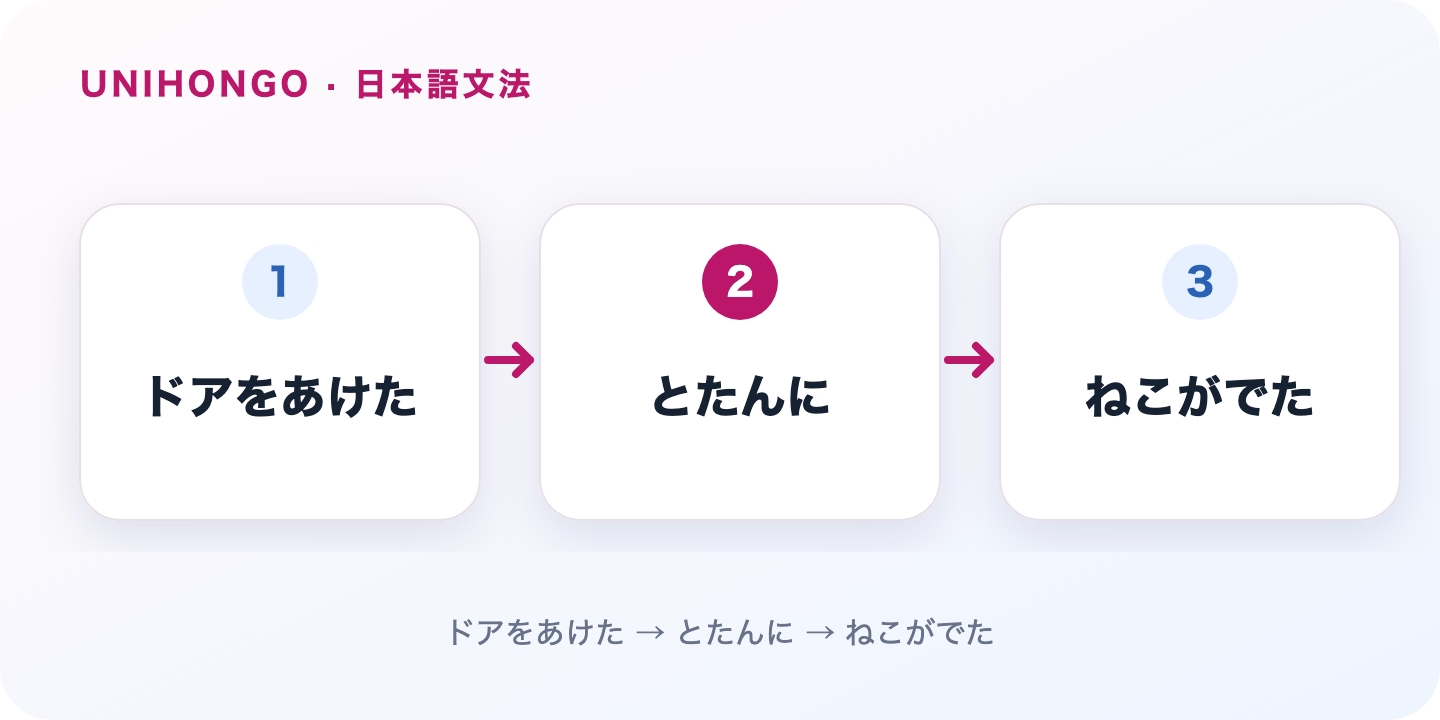
ドアを開けたとたんに、猫が飛び出した places the cat's movement right at the moment the door opened. The second event is typically surprising, automatic or outside the speaker's control. This is why the pattern works well in stories about weather, accidents, reactions and sudden discoveries. It does not normally introduce an action the speaker deliberately scheduled.
| Japanese | Romaji | Meaning |
|---|---|---|
| ドアを開けたとたんに、猫が飛び出した。 | Doa o aketa totan ni, neko ga tobidashita. | The instant I opened the door, the cat darted out. |
| 外に出たとたん、雨が降り出した。 | Soto ni deta totan, ame ga furidashita. | As soon as I stepped outside, it started raining. |
How to form it
Use the plain past form of a verb plus とたんに: 開ける → 開けたとたんに. The に may be omitted, especially in speech. Despite the た form, the phrase marks the boundary of the first event; it is not a separate assertion about distant past time.
| Use | Japanese form | Meaning |
|---|---|---|
| Plain past | 開けたとたんに | The instant I opened it |
| Without に | 開けたとたん | Same meaning in speech |
Natural examples
Read each sentence for the relationship between the first idea and the second. The English translation gives a natural meaning, while the Japanese wording shows exactly where the pattern attaches.
| Japanese | Romaji | Meaning |
|---|---|---|
| 名前を呼んだとたんに、彼は振り向いた。 | Namae o yonda totan ni, kare wa furimuita. | He turned around the moment I called his name. |
| 電気を消したとたんに、赤ちゃんが泣き始めた。 | Denki o keshita totan ni, akachan ga nakihajimeta. | The baby began to cry as soon as I switched off the light. |
Compare the nearby pattern
窓を開けてすぐに電話しました says you called right after opening the window; the call can be intentional. 窓を開けたとたんに、風が入ってきた describes wind arriving immediately and unbidden. たら can also tell what happened after an action, but does not insist on the precise instant.
| Japanese | Romaji | Meaning |
|---|---|---|
| 駅に着いてすぐ、友達に電話した。 | Eki ni tsuite sugu, tomodachi ni denwa shita. | I called my friend as soon as I arrived at the station. |
| 駅に着いたとたんに、友達から電話が来た。 | Eki ni tsuita totan ni, tomodachi kara denwa ga kita. | My friend called me the instant I reached the station. |
The two examples may describe similar situations, but they lead the listener to different conclusions. Choose the form that matches the claim you really intend to make.
Common mistake to avoid
Avoid たとたんに for your own planned next step, such as 駅に着いたとたんに切符を買いました. If buying a ticket was your plan, 着いてすぐ or 着いたら is more natural. The sudden second event matters more than the speed alone.
- The second event happens at the same instant
- Use plain past verb + とたんに
- The outcome is often unexpected
- Use すぐ for deliberate next actions
Try it yourself
Tell a two-sentence story about something unexpected that happened as you opened a door, arrived somewhere or switched something on. Put the surprise after たとたんに, then retell a planned action using すぐに.
Say your sentence once slowly while looking at the Japanese pattern. Then say it again without reading. If your second clause changes from a possibility to a fact, or from advice to a requirement, revise it so the grammar still matches your meaning.