

The core meaning
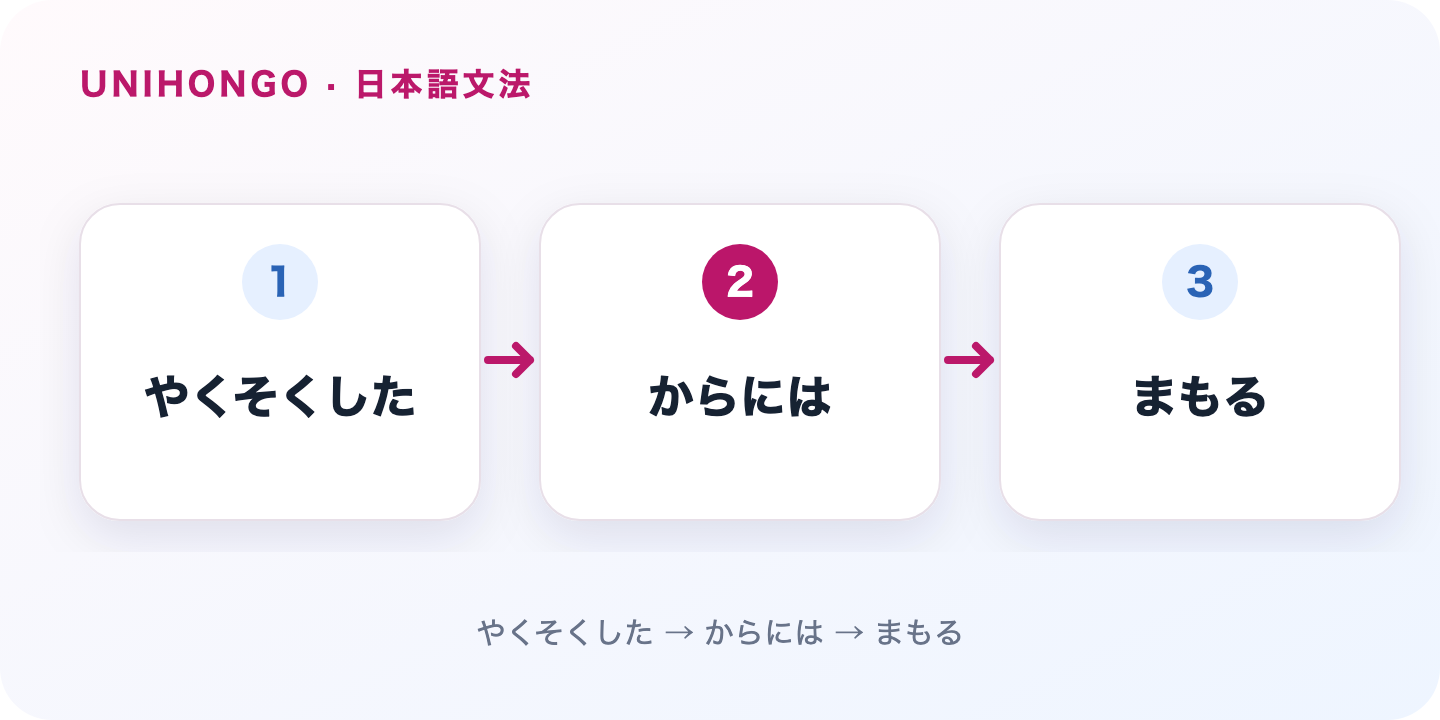
引き受けたからには、最後までやります means 'Now that I have accepted it, I will see it through.' The first clause is treated as an established situation; the speaker then expresses duty, determination, advice or an expected consequence. The link is stronger than an ordinary reason. It presents the second clause as something you should not evade once the first is true.
| Japanese | Romaji | Meaning |
|---|---|---|
| 引き受けたからには、最後までやります。 | Hikiuketa kara ni wa, saigo made yarimasu. | Now that I've accepted it, I'll see it through. |
| 約束したからには、守ってください。 | Yakusoku shita kara ni wa, mamotte kudasai. | Since you promised, please keep your word. |
How to form it
Put a plain clause before からには: 引き受けたからには, 行くからには. Noun and な adjective predicates normally use であるからには in more formal writing. In everyday speech, からには commonly follows a verb describing a deliberate decision or action.
| Use | Japanese form | Meaning |
|---|---|---|
| Past decision | 引き受けたからには | Now that I accepted it |
| Upcoming action | 行くからには | If I am going, then I should make it count |
Natural examples
Read each sentence for the relationship between the first idea and the second. The English translation gives a natural meaning, while the Japanese wording shows exactly where the pattern attaches.
| Japanese | Romaji | Meaning |
|---|---|---|
| 日本へ行くからには、日本語で話してみたい。 | Nihon e iku kara ni wa, Nihongo de hanashite mitai. | If I'm going to Japan, I want to try speaking Japanese. |
| 試合に出るからには、全力を尽くします。 | Shiai ni deru kara ni wa, zenryoku o tsukushimasu. | If I'm entering the match, I'll give it my all. |
Compare the nearby pattern
行くので、切符を買います gives an ordinary reason for buying tickets. 行くからには、思い切り楽しみたい says that going creates a commitment to make the trip worthwhile. 以上は is close but can sound a little more formal or logical; からには often carries the speaker's personal resolve.
| Japanese | Romaji | Meaning |
|---|---|---|
| 行くので、切符を買います。 | Iku node, kippu o kaimasu. | I'm going, so I'll buy a ticket. |
| 行くからには、悔いのない旅にしたい。 | Iku kara ni wa, kui no nai tabi ni shitai. | Since I'm going, I want a trip I won't regret. |
The two examples may describe similar situations, but they lead the listener to different conclusions. Choose the form that matches the claim you really intend to make.
Common mistake to avoid
Do not use からには for a tiny, mechanical cause and result like 雨が降ったからには地面が濡れた. The result there is a fact, not a commitment or expected conduct. Use から, ので or ため for plain causation.
- The first fact is accepted as given
- The second clause expresses resolve, duty or expectation
- Attach it to a plain clause
- から and ので only state a reason
Try it yourself
Think of a promise, trip or project you accepted. Say what you intend to do because you committed to it. Then state a plain reason with ので and compare the force of the two sentences.
Say your sentence once slowly while looking at the Japanese pattern. Then say it again without reading. If your second clause changes from a possibility to a fact, or from advice to a requirement, revise it so the grammar still matches your meaning.