
The memory-check ending
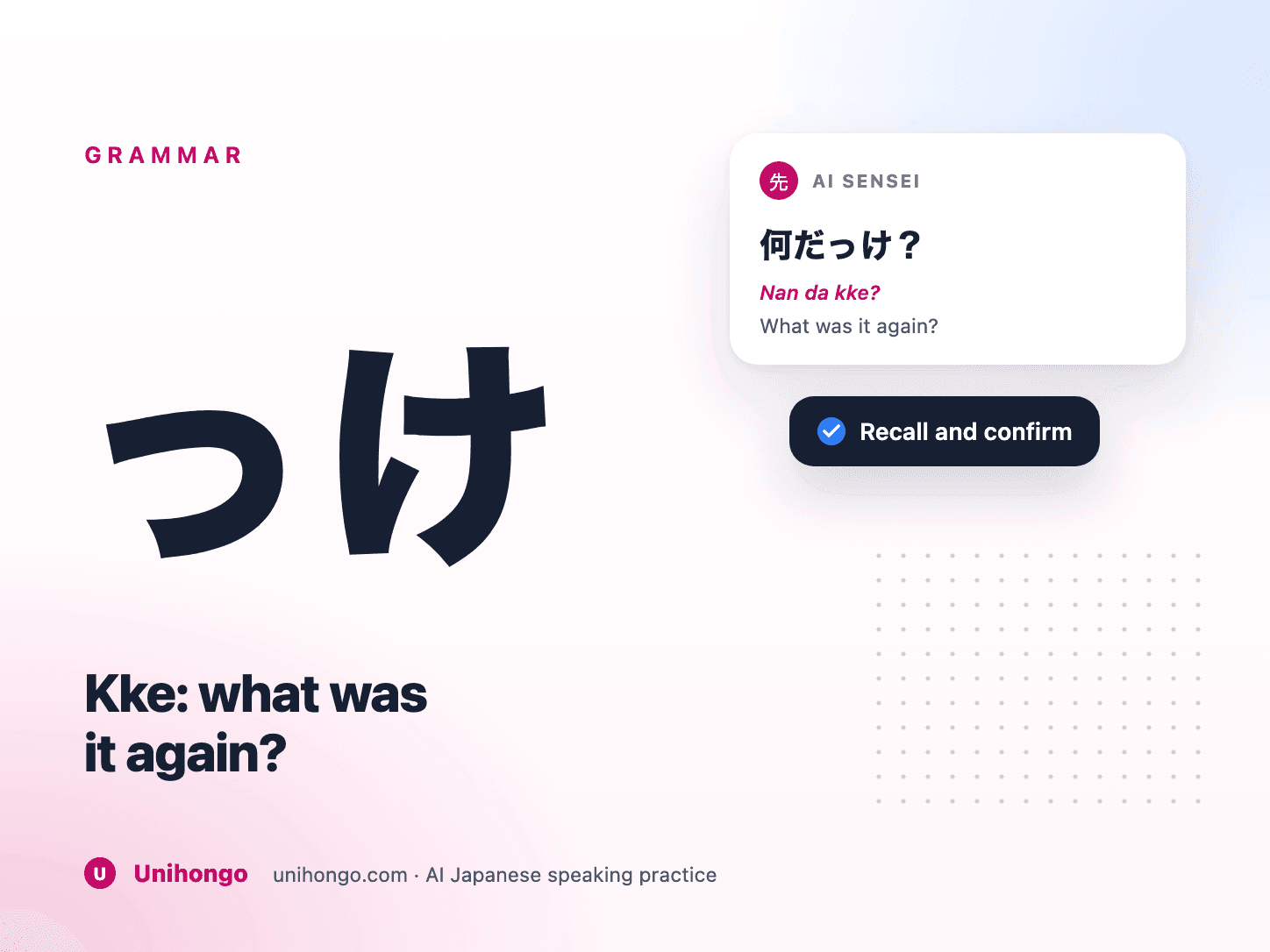
Kke is added to the end of a sentence when you are reaching back for something. It tells the listener two things at once: I think I knew this, and I would like you to confirm it.
That makes it more social than a plain question. It admits the lapse lightly, which is why it is so common between friends and colleagues who have already talked about the topic.
| Japanese | Romaji | Meaning |
|---|---|---|
| 名前、何だっけ? | Namae, nan da kke? | What was the name again? |
| 会議は何時だっけ? | Kaigi wa nanji da kke? | What time was the meeting again? |
| あれ、どこに置いたっけ。 | Are, doko ni oita kke. | Hm, where did I put it? |
How kke attaches
Kke follows the plain form of the sentence. Nouns and na-adjectives need da or datta before it, and both are common; datta leans a little more towards recalling.
| Japanese | Romaji | Meaning |
|---|---|---|
| 明日だっけ? | Ashita da kke? | Was it tomorrow? |
| あの店、高かったっけ? | Ano mise, takakatta kke? | Was that place expensive? |
| そう言ったっけ? | Sō itta kke? | Did I say that? |
| 田中さんって、犬を飼ってるんだっけ? | Tanaka-san tte, inu o katteru n da kke? | Tanaka, you have a dog, don't you? |
| Before kke | Form to use | What it sounds like |
|---|---|---|
| Noun or na-adjective | Add da or datta | What was it again? |
| i-adjective | Plain or past form | Was it expensive, again? |
| Verb | Plain or past form | Did I say that? |
| Explanatory sentence | Plain form plus n da | You have a dog, right? |
| Polite speech | Deshita or mashita | The softer version for colleagues |
A past form for a present fact
One feature confuses learners: kke often takes a past form even when the fact is still true today. The station has not moved and your friend's birthday has not changed, yet datta kke is natural.
The past form points at the moment the information came to you. It is a small grammatical way of saying you told me this before.
| Japanese | Romaji | Meaning |
|---|---|---|
| 誕生日、いつだったっけ? | Tanjōbi, itsu datta kke? | When is your birthday again? |
| 駅はどっちだったっけ。 | Eki wa dotchi datta kke. | Which way was the station again? |
| お名前、何でしたっけ? | O-namae, nan deshita kke? | Sorry, what was your name again? |
Keeping kke polite
Deshita kke and mashita kke are normal between colleagues who talk regularly. They sound friendly and slightly apologetic.
With a client, a senior manager or someone you met once, kke can suggest you were not listening. There, it is better to apologise for asking again and use a full polite request.
| Japanese | Romaji | Meaning |
|---|---|---|
| 締め切りは金曜日でしたっけ? | Shimekiri wa kin'yōbi deshita kke? | The deadline was Friday, wasn't it? (to a colleague) |
| 以前お会いしましたっけ? | Izen o-ai shimashita kke? | Have we met before? |
| 恐れ入りますが、お名前をもう一度伺ってもよろしいですか。 | Osoreirimasu ga, o-namae o mō ichido ukagatte mo yoroshii desu ka. | I am sorry, may I ask your name once more? (to a client) |
Thinking aloud and looking back
Kke also works with no listener at all. Said quietly with a falling tone, it is the sound of someone searching their memory: are, kagi kaketa kke, wait, did I lock the door?
With a past verb and a reflective tone, kke can also look back fondly on something that used to happen. It carries a nostalgic warmth, often with nā at the end.
| Japanese | Romaji | Meaning |
|---|---|---|
| えっと、何だっけ… | Etto, nan da kke… | Um, what was it… |
| あれ、鍵かけたっけ? | Are, kagi kaketa kke? | Wait, did I lock the door? |
| 子どもの頃、よくこの公園で遊んだっけなあ。 | Kodomo no koro, yoku kono kōen de asonda kke nā. | We used to play in this park so often as kids. |
Mistakes that give kke away
Kke is small, but a few habits show that a learner has not quite absorbed what it signals.
- Using kke for a completely new question, which implies you were already told.
- Leaving out da or datta after a noun: nan da kke, not a bare noun plus kke.
- Using kke with a client or senior person instead of a full polite question.
- Using a rising tone when talking to yourself, which makes it sound like a question.
- Asking the same kke question twice in one conversation, which undoes the politeness.