

The core meaning
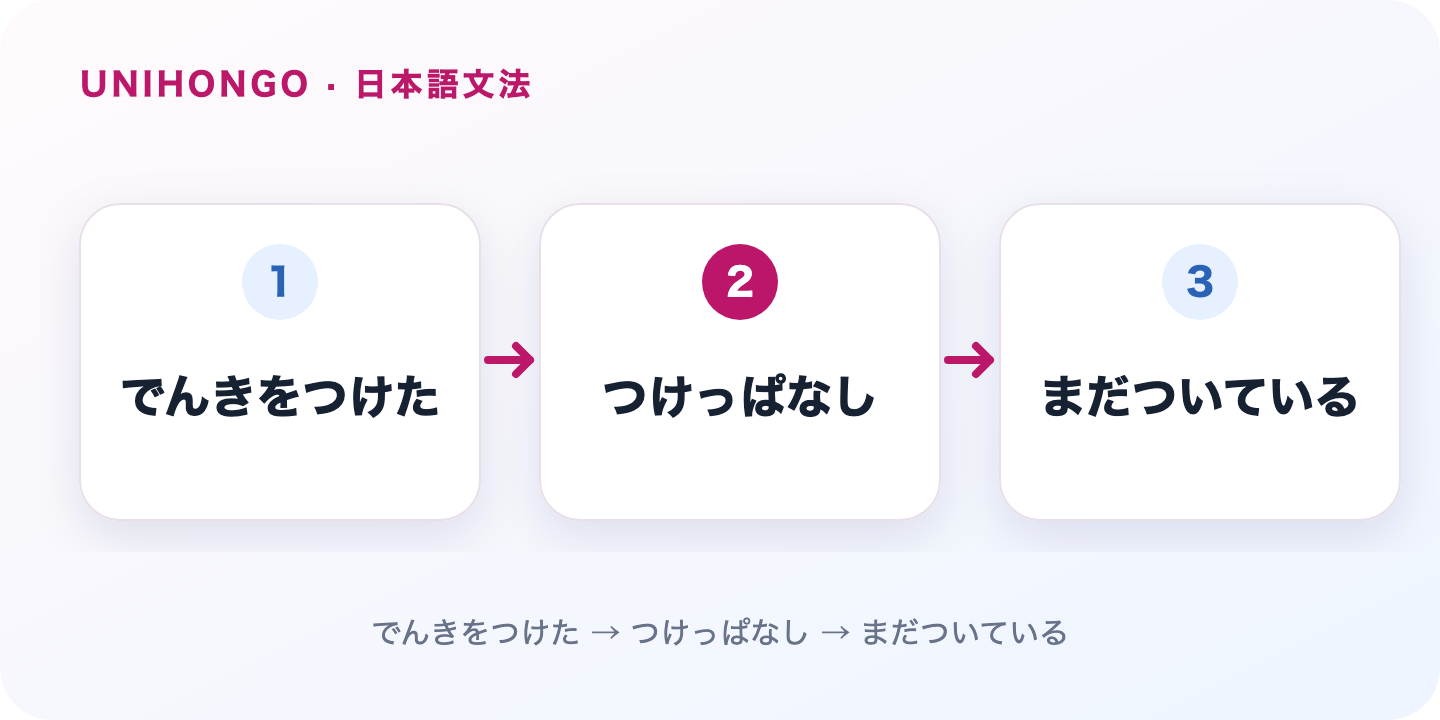
電気をつけっぱなしにした means the light was switched on and then left on. The speaker often feels the state should have been changed: a door was left open, a tap kept running or work was abandoned. The suffix focuses on neglect or persistence after an action, so it is especially common in reminders and complaints.
| Japanese | Romaji | Meaning |
|---|---|---|
| 電気をつけっぱなしにしないで。 | Denki o tsukeppanashi ni shinaide. | Don't leave the light on. |
| 窓が開けっぱなしでした。 | Mado ga akeppanashi deshita. | The window had been left open. |
How to form it
Take the ます stem and add っぱなし: つけます → つけっぱなし. The result behaves like a noun or な adjective: つけっぱなしにする, 開けっぱなしの窓. With an intransitive verb, a continuous state can be the subject, as in 立ちっぱなし, standing the whole time.
| Use | Japanese form | Meaning |
|---|---|---|
| Left on | つけっぱなし | Switched on and left on |
| Left open | 開けっぱなしの窓 | A window left open |
| Continuous activity | 立ちっぱなし | Standing without a break |
Natural examples
Read each sentence for the relationship between the first idea and the second. The English translation gives a natural meaning, while the Japanese wording shows exactly where the pattern attaches.
| Japanese | Romaji | Meaning |
|---|---|---|
| 今日は一日立ちっぱなしで疲れました。 | Kyō wa ichinichi tachippanashi de tsukaremashita. | I was on my feet all day and got tired. |
| 映画が面白くて、笑いっぱなしだった。 | Eiga ga omoshirokute, waraippanashi datta. | The film was so funny I kept laughing. |
Compare the nearby pattern
ドアを開けたままにした neutrally says the door remained open. ドアを開けっぱなしにした often suggests somebody should have closed it. まま can describe many unchanged states, while っぱなし attaches directly to the stem of an action and commonly sounds more critical.
| Japanese | Romaji | Meaning |
|---|---|---|
| ドアを開けたままにしました。 | Doa o aketa mama ni shimashita. | I left the door open. |
| ドアを開けっぱなしにしました。 | Doa o akeppanashi ni shimashita. | I left the door wide open and never closed it. |
The two examples may describe similar situations, but they lead the listener to different conclusions. Choose the form that matches the claim you really intend to make.
Common mistake to avoid
Avoid the dictionary form 開けるっぱなし; the stem is 開け. Do not assume every っぱなし sentence is a reprimand. The negative feeling comes from the situation and wording, although it is a strong default with lights, taps and doors.
- An action or resulting state continues
- Use verb ます stem + っぱなし
- Often implies neglect, especially with appliances
- まま is usually more neutral
Try it yourself
Describe one thing someone accidentally left on or open, and one continuous activity such as standing or laughing. Then replace っぱなし with まま where possible and hear the change in tone.
Say your sentence once slowly while looking at the Japanese pattern. Then say it again without reading. If your second clause changes from a possibility to a fact, or from advice to a requirement, revise it so the grammar still matches your meaning.