

The core meaning
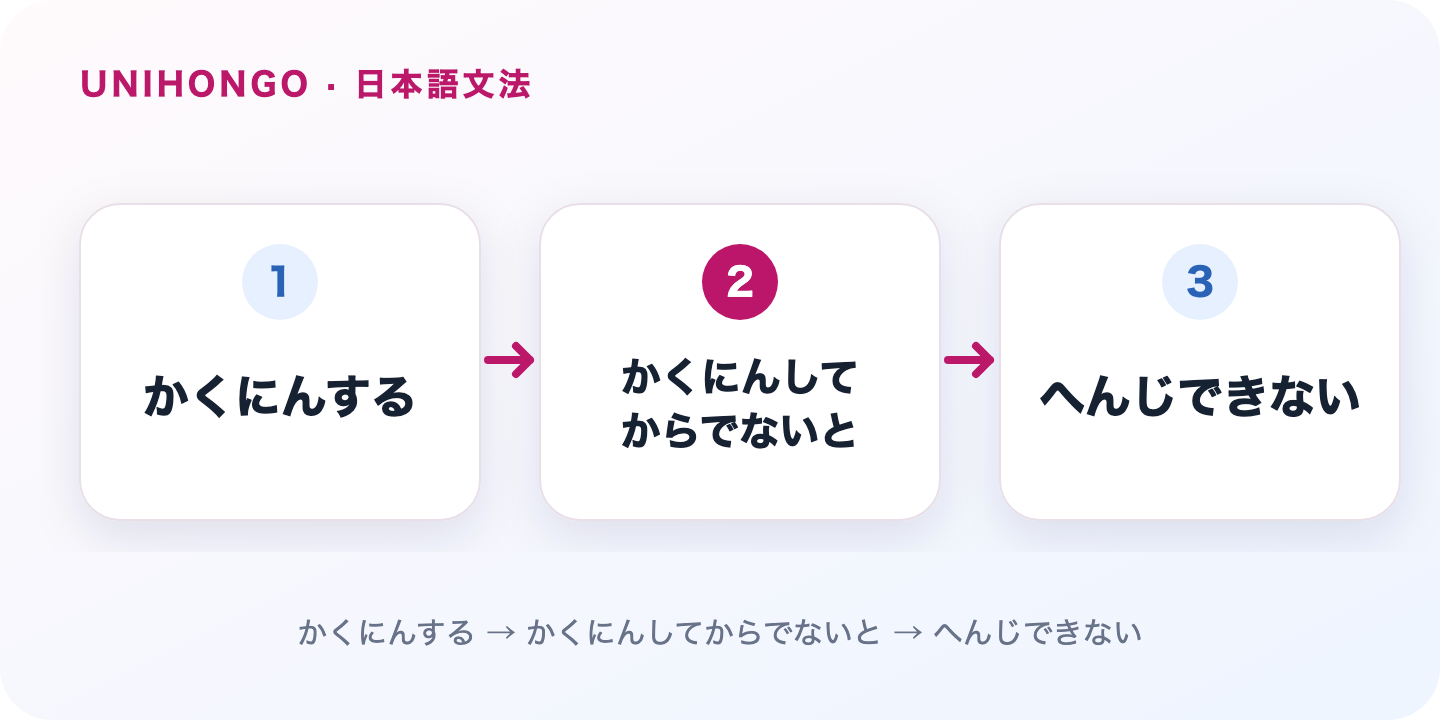
This pattern sets a prerequisite, not just a timeline. In 実物を見てからでないと決められません, the speaker is unable to decide without seeing the real item. The clause after でないと is often negative, such as 分からない, 決められない or できない. The inability can be practical, logical or personal, but the first action must supply something the second needs.
| Japanese | Romaji | Meaning |
|---|---|---|
| 値段を見てからでないと買えません。 | Nedan o mite kara de nai to kaemasen. | I can't buy it until I've seen the price. |
| 本人に聞いてからでないと分かりません。 | Honnin ni kiite kara de nai to wakarimasen. | I won't know until I ask the person concerned. |
How to form it
Attach からでないと to the verb's て form: 見る → 見てからでないと. A polite sentence often ends in a negative potential form. In speech, てからじゃないと is common; じゃ is a contraction of では. Do not add another から before the て form.
| Use | Japanese form | Meaning |
|---|---|---|
| Verb | 調べてからでないと | Unless I check first |
| Spoken | 調べてからじゃないと | Same meaning, conversational |
Natural examples
Read each sentence for the relationship between the first idea and the second. The English translation gives a natural meaning, while the Japanese wording shows exactly where the pattern attaches.
| Japanese | Romaji | Meaning |
|---|---|---|
| 予約してからでないと入れません。 | Yoyaku shite kara de nai to hairemasen. | You can't enter without booking first. |
| 地図を見てからじゃないと道を説明できない。 | Chizu o mite kara ja nai to michi o setsumei dekinai. | I can't explain the route until I've looked at a map. |
Compare the nearby pattern
予定を確認してから返事します says 'I will check the schedule and then reply.' 予定を確認してからでないと返事できません says 'I cannot reply until I have checked.' The second is stronger and may sound like a firm boundary. Soften it with ちょっと or すみません when declining to decide immediately.
| Japanese | Romaji | Meaning |
|---|---|---|
| 予定を確認してから返事します。 | Yotei o kakunin shite kara henji shimasu. | I'll check my schedule and then reply. |
| 予定を確認してからでないと返事できません。 | Yotei o kakunin shite kara de nai to henji dekimasen. | I can't reply before checking my schedule. |
The two examples may describe similar situations, but they lead the listener to different conclusions. Choose the form that matches the claim you really intend to make.
Common mistake to avoid
A common error is following てからでないと with a confident positive result such as 決めます. The construction creates a condition of impossibility, so use 決められません or a similar negative. For a plain sequence ending positively, choose てから.
- The first action is a prerequisite
- Use verb て form + からでないと
- The main clause is normally negative or expresses inability
- てから only states sequence
Try it yourself
Pick a real decision you cannot make yet. Say what you must check first, then finish with 決められません or 分かりません. Say a second version with てから and notice how the claim changes.
Say your sentence once slowly while looking at the Japanese pattern. Then say it again without reading. If your second clause changes from a possibility to a fact, or from advice to a requirement, revise it so the grammar still matches your meaning.