

The core meaning
そんなことは無理に決まっている means 'Of course that's impossible.' The speaker sounds convinced that there is no real alternative. This can be encouraging, dismissive or argumentative depending on the claim and tone. It is common in conversation and fiction, but in a careful report it may sound too subjective or confrontational.
| Japanese | Romaji | Meaning |
|---|---|---|
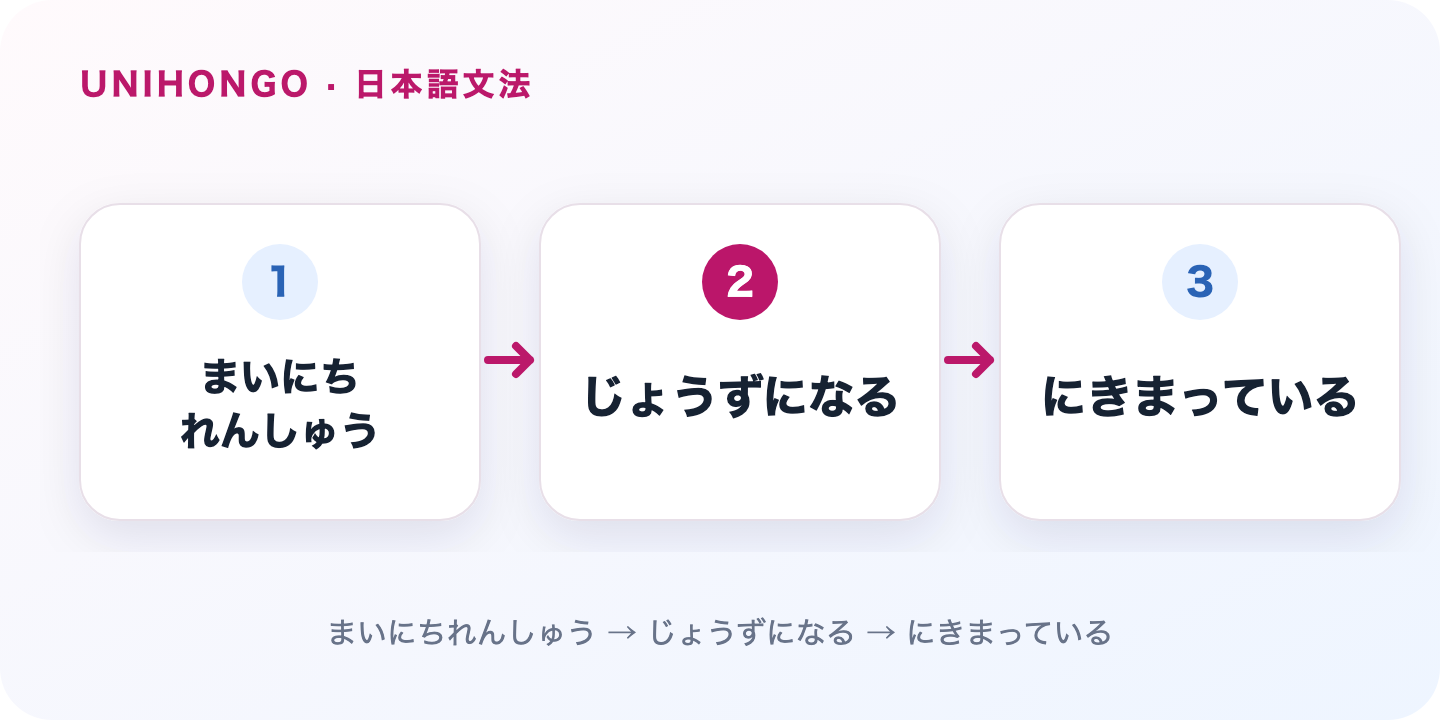
| 毎日練習したんだから、上手になるに決まっているよ。 | Mainichi renshū shita n da kara, jōzu ni naru ni kimatte iru yo. | You've practiced every day; of course you'll improve. |
| それは冗談に決まっている。 | Sore wa jōdan ni kimatte iru. | That's obviously a joke. |
How to form it
Use a plain clause before に決まっている: 勝つに決まっている, おいしいに決まっている. Nouns and な adjectives attach without だ: 冗談に決まっている, 無理に決まっている. The form 決まってる is a common casual contraction. It is not the same as a decision that has officially been settled.
| Use | Japanese form | Meaning |
|---|---|---|
| Verb | 勝つに決まっている | Of course they'll win |
| Noun | 冗談に決まっている | Obviously it's a joke |
| Casual | 勝つに決まってる | Conversational contraction |
Natural examples
Read each sentence for the relationship between the first idea and the second. The English translation gives a natural meaning, while the Japanese wording shows exactly where the pattern attaches.
| Japanese | Romaji | Meaning |
|---|---|---|
| そんなに急いだら疲れるに決まってる。 | Sonna ni isoidara tsukareru ni kimatteru. | If you rush that much, of course you'll get tired. |
| この景色なら、写真を撮りたくなるに決まっています。 | Kono keshiki nara, shashin o toritaku naru ni kimatte imasu. | With a view like this, of course you'd want a photo. |
Compare the nearby pattern
に違いない suggests a deduction based on clues and often sounds more measured. に決まっている announces the speaker's confident position, sometimes without giving evidence. 決まっている on its own can literally mean 'has been decided'; the に before it marks this idiomatic certainty construction.
| Japanese | Romaji | Meaning |
|---|---|---|
| 証拠がある。彼が知っているに違いない。 | Shōko ga aru. Kare ga shitte iru ni chigai nai. | There's evidence; he must know. |
| 彼なら知っているに決まっているよ。 | Kare nara shitte iru ni kimatte iru yo. | He'll know, of course. |
The two examples may describe similar situations, but they lead the listener to different conclusions. Choose the form that matches the claim you really intend to make.
Common mistake to avoid
Do not use it as if it were a neutral forecast in formal analysis. A product manager writing a report should say 可能性が高い or explain evidence; 売れるに決まっている sounds like conviction without support. Use the expression when an emphatic voice is intended.
- The conclusion feels obvious to the speaker
- Nouns attach without だ
- It is emphatic and subjective
- に違いない suggests an evidence-based deduction
Try it yourself
Write one encouraging sentence to a friend with に決まっている. Then rewrite it as a cautious evidence-based inference using に違いない, giving a specific clue.
Say your sentence once slowly while looking at the Japanese pattern. Then say it again without reading. If your second clause changes from a possibility to a fact, or from advice to a requirement, revise it so the grammar still matches your meaning.