

Why natives describe a vibe instead of listing facts
A textbook answer to dō datta? is a list of adjectives: hiroi, shizuka, kirei. Real speakers do something different. They compare the thing to something you both know and mark the comparison as an impression: toshokan mitai na kanji, a sort of library feel. One comparison carries the size, the silence and the neatness all at once, and it stays modest because it is only a feel, not a verdict.
The grammar is simple. Mitai attaches to a noun or a plain verb and means like; to put it in front of another noun you add na, so neko mitai na hito is a cat-like person. Kanji is a noun meaning feeling, so mitai na kanji is a feeling like.
The habit also softens judgement. Takai, expensive, is a fact you may be wrong about; takasō na kanji, a feel of being expensive, is an impression nobody can argue with.
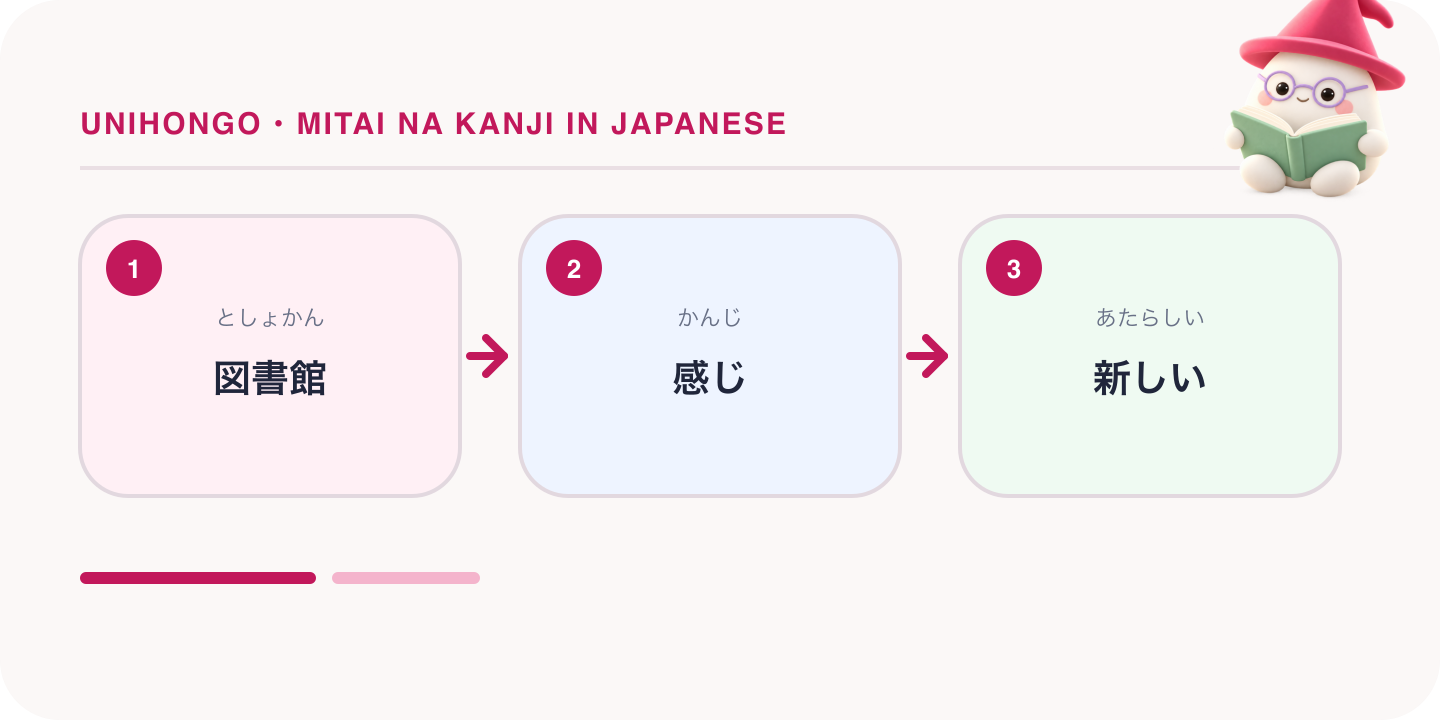
| Japanese | Romaji | Meaning |
|---|---|---|
| あの店、図書館みたいな感じだった。 | Ano mise, toshokan mitai na kanji datta. | That shop had a sort of library feel. |
| 新しい先生、優しいお姉さんみたいな感じ。 | Atarashii sensei, yasashii onēsan mitai na kanji. | The new teacher has a kind-big-sister sort of feel. |
| 駅前は、ちょっと下町みたいな感じだよ。 | Ekimae wa, chotto shitamachi mitai na kanji da yo. | The area by the station has a bit of an old-town feel. |
| 家庭料理みたいな感じで、落ち着く。 | Katei ryōri mitai na kanji de, ochitsuku. | It feels like home cooking, so it's relaxing. |
| 高そうな感じの店だね。 | Takasō na kanji no mise da ne. | It's the sort of place that feels expensive. |
| 夢みたいな一日だった。 | Yume mitai na ichinichi datta. | It was a day like a dream. |
Tte kanji: wrapping any phrase into a vibe
Tte kanji is the most flexible tool of the four. Tte is the casual quoting particle, so tte kanji literally means a feeling you could describe as the following. Anything can go in front of it: a noun, an adjective, a slogan, a sound effect, even a whole sentence. Mō natsu tte kanji means it feels like summer already. Ganbatte masu tte kanji means someone gives off an I'm-trying-hard sort of feeling.
Because tte quotes, this pattern suits impressions that do not fit a single word: kichinto shiteru tte kanji, a proper, well-organised sort of person, or zeitaku tte kanji, a treat-yourself kind of meal. The listener understands you are painting with a phrase rather than making a claim.
Tte kanji also carries a hint of amusement, which is why it appears in gentle teasing: kare, ore ni makasero tte kanji da yo ne, he's got that leave-it-to-me vibe. Be careful with seniors, since it can sound like you are imitating them.
| Japanese | Romaji | Meaning |
|---|---|---|
| もう夏って感じだね。 | Mō natsu tte kanji da ne. | It feels like summer already, doesn't it. |
| 彼女、きちんとしてるって感じの人。 | Kanojo, kichinto shiteru tte kanji no hito. | She's a proper, well-organised sort of person. |
| 今日のランチは贅沢って感じ。 | Kyō no ranchi wa zeitaku tte kanji. | Today's lunch feels like a real treat. |
| この曲、朝の電車って感じがする。 | Kono kyoku, asa no densha tte kanji ga suru. | This song has a morning-train sort of feel. |
| 彼、俺に任せろって感じだよね。 | Kare, ore ni makasero tte kanji da yo ne. | He's got that leave-it-to-me vibe, hasn't he. |
| 昭和って感じの喫茶店だった。 | Shōwa tte kanji no kissaten datta. | It was a coffee house with a Shōwa-era feel. |
Kanji ga suru: the feeling that comes to you
Kanji ga suru shifts the point of view. Mitai na kanji and tte kanji describe the thing; kanji ga suru describes what the thing does to you. Natsukashii kanji ga suru means it gives me a nostalgic feeling. Nanka iya na kanji ga suru means I get a bad feeling about it. The subject is your reaction, so this pattern is the natural choice for atmospheres, hunches and first impressions.
The phrase before kanji ga suru is usually an adjective or a sō form: samui kanji, amasō na kanji. A clause with yō na gives a more careful comparison, and in polite speech the verb simply becomes shimasu, so this pattern moves smoothly into office conversation.
The negative, kanji ga shinai, is equally useful. Tabeta kanji ga shinai, I don't feel like I've eaten, is the standard complaint about a tiny portion.
| Japanese | Romaji | Meaning |
|---|---|---|
| この町、懐かしい感じがする。 | Kono machi, natsukashii kanji ga suru. | This town gives me a nostalgic feeling. |
| なんか嫌な感じがするから、やめとく。 | Nanka iya na kanji ga suru kara, yametoku. | I get a bad feeling about it, so I'll pass. |
| この部屋、少し寒い感じがしますね。 | Kono heya, sukoshi samui kanji ga shimasu ne. | This room feels a little cold, doesn't it. |
| 食べた感じがしない。 | Tabeta kanji ga shinai. | I don't feel like I've eaten anything. |
| 秋が来たような感じがする。 | Aki ga kita yō na kanji ga suru. | It feels as though autumn has arrived. |
| ここ、歓迎されてる感じがするね。 | Koko, kangei sareteru kanji ga suru ne. | It feels like we're welcome here. |
Ppoi in one line, and how the four fit together
Ppoi is the fourth tool and the most compact. It attaches to a noun or an adjective stem and means having the quality of: kodomoppoi, childish, akippoi, autumn-like, yasuppoi, cheap-looking. A dedicated post on ppoi covers its full range; for a vibe, remember that ppoi judges from the outside and fits food and objects better than people you like.
The working division: mitai na kanji when you have a concrete thing to compare with, tte kanji when your impression is a phrase rather than a noun, kanji ga suru when you are reporting the feeling you get, and ppoi when one word does the job and a little bluntness is acceptable.
| Japanese | Romaji | Meaning |
|---|---|---|
| この服、ちょっと安っぽい。 | Kono fuku, chotto yasuppoi. | These clothes look a bit cheap. |
| 今日は秋っぽい天気だね。 | Kyō wa akippoi tenki da ne. | It's autumn-like weather today. |
| 彼、ちょっと子供っぽいところがある。 | Kare, chotto kodomoppoi tokoro ga aru. | He has a slightly childish side. |
| 学食みたいな感じで、安くて早い。 | Gakushoku mitai na kanji de, yasukute hayai. | It's like a school canteen, cheap and quick. |
| 家族でやってますって感じの店。 | Kazoku de yattemasu tte kanji no mise. | A family-run sort of place. |
| 肉っぽい味がするけど、大豆だよ。 | Nikuppoi aji ga suru kedo, daizu da yo. | It tastes meat-like, but it's soy. |
Example exchanges about places, people and food
The best way to learn these expressions is in threes: a question, a described vibe, and a reply that echoes it. Notice that the replies never argue with the impression; they confirm the picture, add a detail or ask for more.
| Japanese | Romaji | Meaning |
|---|---|---|
| 新しいカフェ、どうだった? | Atarashii kafe, dō datta? | How was the new café? |
| なんか、おばあちゃんちみたいな感じで落ち着いた。 | Nanka, obāchan chi mitai na kanji de ochitsuita. | It had a sort of grandma's-house feel, really relaxing. |
| いいね、そういう感じの店好き。 | Ii ne, sō iu kanji no mise suki. | Nice, I like that kind of place. |
| 今度の上司、どんな人? | Kondo no jōshi, donna hito? | What's the new boss like? |
| 静かだけど、ちゃんと見てるって感じの人。 | Shizuka da kedo, chanto miteru tte kanji no hito. | Quiet, but the sort who notices everything. |
| あー、わかる。うちの部長もそんな感じ。 | Ā, wakaru. Uchi no buchō mo sonna kanji. | Ah, I know the type. Our manager's like that too. |
| そのラーメン、どんな味? | Sono rāmen, donna aji? | What does that ramen taste like? |
| 味噌っぽいけど、もっとあっさりした感じ。 | Misoppoi kedo, motto assari shita kanji. | Miso-like, but with a lighter feel. |
| へえ、なんか良さそう。 | Hē, nanka yosasō. | Oh, that sounds good. |
Replies that keep the conversation going
When someone offers a vibe, the reply should accept the picture. Sō iu kanji ka shows you understood, wakaru signals shared experience, nanka ii ne is warm approval, and e, sō na no? invites the speaker to say more. Each is short, so the other person keeps the floor.
A useful reply move is to offer a comparison back: obāchan chi mitai? Ā, tatami no kanji? This confirms the picture while checking a detail. The list below gives the replies in rough order from neutral to enthusiastic.
- sō iu kanji ka: I see, that kind of feel; neutral acknowledgement
- sonna kanji: that sort of thing; confirming a summary
- wakaru: I know what you mean; shared experience
- e, sō na no?: really? mild surprise that asks for more
- nanka ii ne: sounds nice; warm approval of a place or dish
- sore wa chotto: that's a bit much; a gentle disagreement with the vibe
Sore wa chotto rejects an impression without arguing: sore wa chotto, chigau to omou keeps the tone light.
The four expressions side by side
The table compares the patterns on one example, a small neighbourhood bakery, so you can see how the meaning shifts, with notes on register and point of view.
| Expression | Reading | What it says and where it fits |
|---|---|---|
| パン屋みたいな感じ | pan'ya mitai na kanji | compares to a bakery; casual, concrete picture |
| ヨーロッパって感じ | Yōroppa tte kanji | wraps a word as a vibe; casual, playful |
| 温かい感じがする | atatakai kanji ga suru | the feeling you get; casual or polite with shimasu |
| パン屋っぽい | pan'yappoi | bakery-like in one word; casual, a little blunt |
| パン屋のような雰囲気 | pan'ya no yō na fun'iki | a bakery-like atmosphere; polite, written or formal |
| そういう感じ | sō iu kanji | that kind of feel; echoing reply |
| どんな感じ? | donna kanji? | what's it like? asks for a vibe, not facts |
| 感じのいい店 | kanji no ii mise | a shop with a nice feel; set phrase for friendly service |
| いい感じ | ii kanji | nice, looking good; all-purpose approval |
| 微妙な感じ | bimyō na kanji | a so-so feel; polite way to say not great |
Kanji no ii is a set phrase worth learning: kanji no ii tenin san, a shop assistant with a pleasant manner, is the standard compliment for service.
Mistakes learners make when describing a feel
The first mistake is dropping the na. Toshokan mitai kanji is a common slip, but mitai is a na adjective when it modifies a noun, so it must be toshokan mitai na kanji. The same applies to sō: takasō na kanji, never takasō kanji.
The second is over-stacking. Nanka toshokan mitai na kanji tte kanji ga suru is grammatical but exhausting. Choose one pattern per sentence.
The third is using ppoi where an impression was wanted. Telling a friend her new flat is bimbōppoi, poor-looking, is an insult; furui apāto mitai na kanji is an observation.
Finally, these are spoken forms. In an email to a client, replace mitai na kanji with no yō na inshō o ukemashita or no yō na fun'iki desu. The comparison stays; the casual wrapper goes.
| Japanese | Romaji | Meaning |
|---|---|---|
| 図書館みたいな感じの店。 | Toshokan mitai na kanji no mise. | A shop with a sort of library feel. (na included) |
| 古いアパートみたいな感じだけど、かわいい。 | Furui apāto mitai na kanji da kedo, kawaii. | It's got an old-apartment feel, but it's cute. |
| 落ち着いた雰囲気のお店でした。 | Ochitsuita fun'iki no omise deshita. | It was a shop with a calm atmosphere. (polite) |
| 家庭的な印象を受けました。 | Kateiteki na inshō o ukemashita. | I got a homely impression. (formal) |
| どんな感じの人? | Donna kanji no hito? | What sort of person are they? |