

The core meaning
そんなに心配することはありません means 'There is no need to worry so much.' The speaker is not saying worry is impossible; they are saying it is not warranted. This expression is common in advice and consolation when someone feels pressure to apologize, rush, panic or make an unnecessary effort.
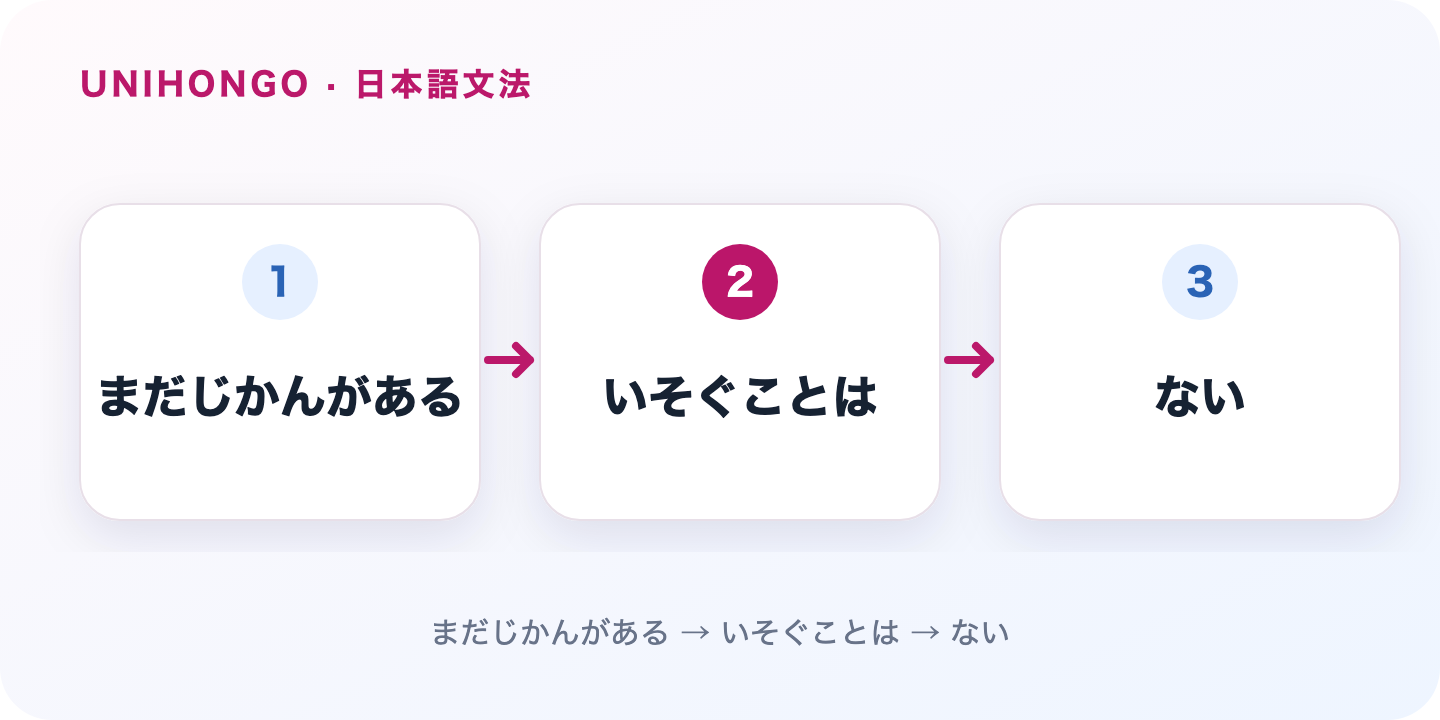
| Japanese | Romaji | Meaning |
|---|---|---|
| そんなに心配することはありません。 | Sonna ni shinpai suru koto wa arimasen. | There's no need to worry that much. |
| まだ時間があるから、急ぐことはないよ。 | Mada jikan ga aru kara, isogu koto wa nai yo. | There's still time, so you don't need to rush. |
How to form it
Use the dictionary form of a verb before ことはない: 急ぐことはない, 謝ることはない. The polite form is ことはありません. The verb remains affirmative; the negation applies to the necessity of doing it. ことはない can also appear in other grammar contexts, so read the surrounding sentence.
| Use | Japanese form | Meaning |
|---|---|---|
| Advice | 急ぐことはない | No need to hurry |
| Polite | 謝ることはありません | No need to apologize |
| Different pattern | 行かないことはない | I do sometimes go |
Natural examples
Read each sentence for the relationship between the first idea and the second. The English translation gives a natural meaning, while the Japanese wording shows exactly where the pattern attaches.
| Japanese | Romaji | Meaning |
|---|---|---|
| あなたが謝ることはありません。 | Anata ga ayamaru koto wa arimasen. | You don't need to apologize. |
| 一度失敗しただけで、諦めることはない。 | Ichido shippai shita dake de, akirameru koto wa nai. | One failure is no reason to give up. |
Compare the nearby pattern
急がなくてもいい also says 'You don't have to hurry' and is very common in everyday talk. 急ぐことはない can sound like a considered judgment that there is no reason to hurry. ないことはない is a different double-negative pattern meaning something is possible to some extent.
| Japanese | Romaji | Meaning |
|---|---|---|
| 急がなくてもいいですよ。 | Isoganakute mo ii desu yo. | You don't have to hurry. |
| 急ぐことはありません。 | Isogu koto wa arimasen. | There is no need to hurry. |
The two examples may describe similar situations, but they lead the listener to different conclusions. Choose the form that matches the claim you really intend to make.
Common mistake to avoid
Do not confuse verb dictionary form + ことはない with negative form + ことはない. 行くことはない can mean there is no need to go, while 行かないことはない can mean you do sometimes go. One added ない before こと reverses the logic.
- It says an action is not necessary
- Use dictionary verb + ことはない
- It often offers reassurance
- ないことはない means something different
Try it yourself
Reply to a friend who thinks they must hurry, apologize or give up. Use ことはない and give a concrete reason. Then create a separate qualified possibility with ないことはない to keep the patterns apart.
Say your sentence once slowly while looking at the Japanese pattern. Then say it again without reading. If your second clause changes from a possibility to a fact, or from advice to a requirement, revise it so the grammar still matches your meaning.