
Why one ending does three jobs
Learners usually meet these three patterns in separate chapters and never notice they share a shape. Then a real sentence arrives, the shape does something unexpected, and the whole sentence collapses. The dedicated passive guide covers how to build and use the passive on its own, and the potential guide does the same for ability, so this post assumes you have met both and concentrates only on telling them apart in live speech.
The good news is that Japanese almost never leaves the reading genuinely open. Ambiguity is resolved by the frame around the verb, and the frame arrives before the verb does. By the time you hear the ending, you have usually already heard a ni-marked person, or a ga-marked object, or a title such as buchō, and your brain has committed to a reading. Training that anticipation is the actual skill.
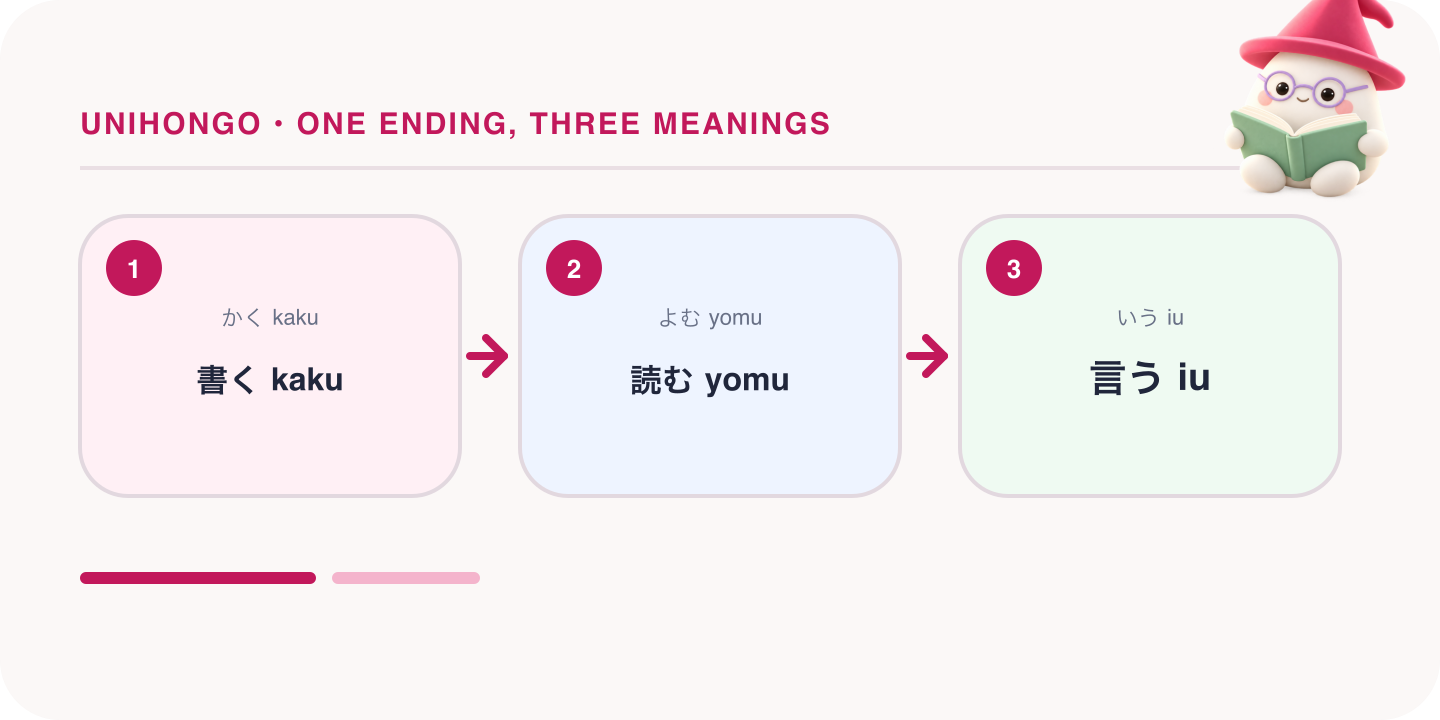
The three readings and their clues
| Reading | Subject is | Key particle | Register cue |
|---|---|---|---|
| Passive | The affected party, often the speaker | Agent takes ni; the object may keep o | Neutral or written; common in news and reports |
| Potential | The person with the ability | The thing handled takes ga | Any register; often with a negative or ka |
| Honorific | A socially superior person | The object keeps o; no ni agent | Polite -masu, titles, and other keigo nearby |
| Spontaneous | A feeling or impression | The feeling takes ga | Reflective or written; a small verb set |
Read the table as a checklist rather than a set of definitions. In practice you run down it in order: is there a ni-marked person, is the object marked with ga, and is the subject somebody I would bow to. The first clue that fires wins, and the fourth row only matters for a handful of verbs of thinking and feeling, which the last section covers.
How each form is built
| Verb | Class | Passive | Potential | Honorific |
|---|---|---|---|---|
| 書く kaku | Godan | 書かれる kakareru | 書ける kakeru | 書かれる kakareru |
| 読む yomu | Godan | 読まれる yomareru | 読める yomeru | 読まれる yomareru |
| 話す hanasu | Godan | 話される hanasareru | 話せる hanaseru | 話される hanasareru |
| 言う iu | Godan | 言われる iwareru | 言える ieru | 言われる iwareru |
| 帰る kaeru | Godan | 帰られる kaerareru | 帰れる kaereru | 帰られる kaerareru |
| 食べる taberu | Ichidan | 食べられる taberareru | 食べられる taberareru | 食べられる taberareru |
| 見る miru | Ichidan | 見られる mirareru | 見られる mirareru | 見られる mirareru |
| 出る deru | Ichidan | 出られる derareru | 出られる derareru | 出られる derareru |
| する suru | Irregular | される sareru | できる dekiru | される sareru |
| 来る kuru | Irregular | 来られる korareru | 来られる korareru | 来られる korareru |
The godan rule is worth saying out loud until it is automatic. Take the dictionary form, replace the final -u vowel with -a and add reru for the passive, or replace it with -e and add ru for the potential. Verbs ending in -u take wa rather than a, which is why iu becomes iwareru and not iareru. Ichidan verbs simply drop る and add られる, which is exactly why they have no spare shape left for the potential.
Notice that 帰る kaeru is a godan verb despite ending in -eru, so its potential is 帰れる kaereru, not 帰られる. Getting a verb's class wrong quietly produces the wrong reading, so check the class before you check the pattern.
Clue one: follow the particles
The particle test resolves most sentences on its own. A ni-marked person immediately before the verb is an agent, and an agent means passive. A ga-marked thing that is not alive and is not doing anything means the potential, because potential verbs describe a state rather than an action and states in Japanese take ga. If the object is still riding on o and there is no ni agent anywhere, you are usually looking at an honorific.
The one wrinkle is the indirect passive, sometimes called the suffering passive, which keeps the object on o while adding a ni agent: otōto ni sashimi o taberaremashita. Two particles, two clues, and no ambiguity at all. This is the pattern that makes learners think the passive is irregular, when in fact it is the clearest case of all.
| Japanese | Romaji | Meaning |
|---|---|---|
| 漢字が読めません。 | Kanji ga yomemasen. | I cannot read the kanji. (potential: ga on the object) |
| 妹に日記を読まれました。 | Imōto ni nikki o yomaremashita. | My little sister read my diary. (passive: ni agent, o object) |
| 先生はもう資料を読まれました。 | Sensei wa mō shiryō o yomaremashita. | The teacher has already read the document. (honorific) |
| 弟に刺身を食べられました。 | Otōto ni sashimi o taberaremashita. | My brother ate my sashimi on me. (passive) |
| 刺身が食べられますか。 | Sashimi ga taberaremasu ka? | Can you eat sashimi? (potential) |
| みんなに笑われました。 | Minna ni warawaremashita. | I was laughed at by everyone. |
| 雨に降られて、濡れました。 | Ame ni furarete, nuremashita. | I got rained on and ended up wet. |
| この歌は世界中で歌われています。 | Kono uta wa sekaijū de utawarete imasu. | This song is sung all over the world. |
Clue two: who the subject is
The honorific reading is the only one that depends on social position, and that makes it easy to spot. If the subject is your teacher, a manager, a customer, an older stranger, or anyone you would not address by name alone, the honorific reading is live. If the subject is you, your family, or a friend, it is not, because Japanese does not raise its own side.
This is why the same verb form flips meaning when the subject changes and nothing else does. Watashi wa dekakeraremasen is potential, I cannot go out. Buchō wa dekakeraremashita is honorific, the manager went out. Neither sentence is ambiguous to a listener, because the subject already told them which reading to build.
| Japanese | Romaji | Meaning |
|---|---|---|
| 私は明日の会議に出られません。 | Watashi wa ashita no kaigi ni deraremasen. | I cannot attend tomorrow's meeting. (potential) |
| 部長は明日の会議に出られます。 | Buchō wa ashita no kaigi ni deraremasu. | The manager will attend tomorrow's meeting. (honorific) |
| 先生はいつ来られますか。 | Sensei wa itsu koraremasu ka? | When is the teacher coming? (honorific) |
| すみません、今日は来られません。 | Sumimasen, kyō wa koraremasen. | Sorry, I cannot come today. (potential) |
| 友達に来られて、勉強できませんでした。 | Tomodachi ni korarete, benkyō dekimasen deshita. | A friend turned up and I could not study. (passive) |
| 社長はもう帰られました。 | Shachō wa mō kaeraremashita. | The president has already gone home. (honorific) |
| 終電に間に合わなくて、帰れませんでした。 | Shūden ni maniawanakute, kaeremasen deshita. | I missed the last train and could not get home. (potential) |
Clue three: the register around the verb
Register is the tiebreaker when particles and subject leave the door open. Honorific verbs travel in company: they sit beside -masu endings, titles such as shachō and okyakusama, prefixes o- and go-, and humble verbs describing your own side. A sentence in plain casual form is almost never honorific, so tabereru or even taberareru in a friend's message is a potential.
The passive also has a register signature. Written and broadcast Japanese leans on it heavily to state facts without naming who is responsible, which is why to iwarete imasu and to kangaerarete imasu turn up constantly in news and reports. If a sentence sounds like an announcement rather than a personal remark, weigh the passive first.
| Japanese | Romaji | Meaning |
|---|---|---|
| お客様がお見えになりました。 | Okyakusama ga omie ni narimashita. | The customer has arrived. (fuller honorific) |
| お客様が来られました。 | Okyakusama ga koraremashita. | The customer has arrived. (lighter honorific) |
| そのニュースは日本でも報道されました。 | Sono nyūsu wa Nihon de mo hōdō saremashita. | That news was reported in Japan too. |
| この方法が一番いいと言われています。 | Kono hōhō ga ichiban ii to iwarete imasu. | This method is said to be the best. |
| 明日は雨が降ると考えられています。 | Ashita wa ame ga furu to kangaerarete imasu. | It is thought that it will rain tomorrow. |
| ねえ、明日来れる? | Nē, ashita koreru? | Hey, can you come tomorrow? (casual potential) |
Ambiguous sentences resolved by context
| Japanese | Romaji | Meaning |
|---|---|---|
| 食べられました。 | Taberaremashita. | Ate it, could eat it, or had it eaten: no clues at all. |
| 先生が食べられました。 | Sensei ga taberaremashita. | The teacher ate it. (superior subject, honorific) |
| 猫に食べられました。 | Neko ni taberaremashita. | It was eaten by the cat. (ni agent, passive) |
| やっと納豆が食べられました。 | Yatto nattō ga taberaremashita. | I could finally eat natto. (ga object, potential) |
| 見られましたか。 | Miraremashita ka? | Ambiguous until the frame arrives. |
| 社長はもうこの資料を見られましたか。 | Shachō wa mō kono shiryō o miraremashita ka? | Has the president looked at this document yet? (honorific) |
| 映画がやっと見られました。 | Eiga ga yatto miraremashita. | I finally got to see the film. (potential) |
| 知らない人に写真を見られました。 | Shiranai hito ni shashin o miraremashita. | A stranger saw my photo. (passive) |
Say these eight lines in order and you can feel the ambiguity closing. The bare verb is genuinely open, and every added phrase removes one reading until only one survives. Japanese speakers do this constantly without noticing, which is why they are surprised when a learner asks what taberareru means; out of context, the honest answer is that it means nothing in particular yet.
When you speak, work the same machinery in reverse. If you want a potential and the verb is ichidan, put the ga on the object early. If you want a passive, name the agent with ni. Supplying the clue is your job, not the listener's.
The honorific in business speech
In most offices the -reru and -rareru honorific is the default respectful form for talking about someone inside your own company who outranks you. It is quick, it attaches to any verb, and it does not sound stiff, which is why it fills internal conversation while the heavier o-verb-ni-naru appears in customer-facing speech and formal announcements. The sonkeigo and kenjōgo guide covers that fuller system; here the point is simply that this ending is one of its cheapest entry doors.
Two habits keep it correct. Never use it about yourself or your own actions, because raising yourself is the single most noticeable keigo error. And never stack it on a verb that already has a special honorific: iku becomes irassharu, taberu becomes meshiagaru, and iu becomes ossharu, so ikaremasu is acceptable but irasshaimasu is better with a customer.
| Japanese | Romaji | Meaning |
|---|---|---|
| 部長はいつ出発されますか。 | Buchō wa itsu shuppatsu saremasu ka? | When does the manager depart? |
| 社長は来週出張されます。 | Shachō wa raishū shutchō saremasu. | The president is on a business trip next week. |
| 田中さんはもう帰られましたか。 | Tanaka-san wa mō kaeraremashita ka? | Has Tanaka already left for the day? |
| 先生はこの本を書かれました。 | Sensei wa kono hon o kakaremashita. | The teacher wrote this book. |
| 何時ごろ来られますか。 | Nan-ji goro koraremasu ka? | Around what time will you be coming? |
| メールはご覧になりましたか。 | Mēru wa goran ni narimashita ka? | Have you seen the email? (special honorific verb) |
| 課長がそう言われました。 | Kachō ga sō iwaremashita. | The section chief said so. |
| 私がご案内いたします。 | Watashi ga goannai itashimasu. | I will show you the way. (humble, about yourself) |
Why the ra-dropped potential survives
Casual spoken Japanese widely drops the ra from ichidan potentials: tabereru, mireru, koreru, dereru, okireru. Prescriptive guides call this ra-nuki kotoba and it is still avoided in writing, exams, broadcasting, and formal speech. It has spread anyway, and one reason is purely practical. Since neither the passive nor the honorific ever drops the ra, tabereru can only mean can eat, and the ambiguity described in this whole post disappears in a single syllable.
For a learner the sensible position is to understand it everywhere and produce it selectively. Use the full taberareru whenever you are being polite or being assessed, and let tabereru come naturally in relaxed conversation once you have heard enough of it. Never mix it into keigo, where it sounds careless rather than casual.
| Japanese | Romaji | Meaning |
|---|---|---|
| 明日、来れる? | Ashita, koreru? | Can you come tomorrow? (casual) |
| 明日、来られますか。 | Ashita, koraremasu ka? | Can you come tomorrow? (polite) |
| 辛いもの、食べれる? | Karai mono, tabereru? | Can you eat spicy food? (casual) |
| 辛いものが食べられますか。 | Karai mono ga taberaremasu ka? | Can you eat spicy food? (polite) |
| ここから富士山が見えます。 | Koko kara Fujisan ga miemasu. | You can see Mount Fuji from here. (a different verb entirely) |
The quieter fourth reading
A small set of verbs of thinking and feeling uses the same ending for what grammars call the spontaneous: something arises in you without being willed. Omowareru means it strikes me or it is felt to be, rather than it is thought by someone specific. Kanjirareru works the same way. You will meet this reading in reflective writing, in essays, and in careful speech, and it is worth recognising so you do not hunt for a missing agent that was never there.
| Japanese | Romaji | Meaning |
|---|---|---|
| そう思われます。 | Sō omowaremasu. | It does seem that way. |
| 秋の気配が感じられます。 | Aki no kehai ga kanjiraremasu. | You can sense a hint of autumn. |
| 昔のことが思い出されます。 | Mukashi no koto ga omoidasaremasu. | Old memories come back to me. |
| 彼の将来が案じられます。 | Kare no shōrai ga anjiraremasu. | I cannot help worrying about his future. |
Notice that the thing felt takes ga, exactly as it does in the potential, and that no ni agent appears. This overlap is why the spontaneous is sometimes described as the ancestor of the potential rather than a separate pattern. In conversation you rarely need to produce it, but recognising it prevents a common mistranslation of omowaremasu as is thought by people.
A drill that makes the choice automatic
- Pick one godan verb and write its passive and potential side by side, then say both until kakareru and kakeru no longer feel related.
- Take one ichidan verb and build three full sentences from it: ni agent, ga object, superior subject. Say them in that order every day for a week.
- Rewrite five news-style sentences you have read into their active form to feel where the hidden agent went.
- Record yourself describing your day using three potentials and three honorifics about your boss, then check that no honorific landed on your own actions.
- Whenever you hear -rareru in a drama, pause and name the clue that told you the reading before the subtitle appears.
- Keep a short list of verbs whose class you keep guessing wrong, such as kaeru, hairu, and shiru, since a class error silently changes the meaning.