

Keep a visible original and a clear intention
Show the sentence you attempted and say what it should mean. Describe the audience in general terms if tone matters. This gives Mocchi a reference point for explaining changes and prevents the review from drifting into a different message. Without the original, even a useful correction can become difficult to connect to your own decision.
Choose a short draft for the first comparison. A long paragraph can produce many edits, some necessary and some optional. Learning to identify one important change in a small message makes later feedback easier to manage without accepting every rewrite uncritically.
A tense error differs from a word-choice preference
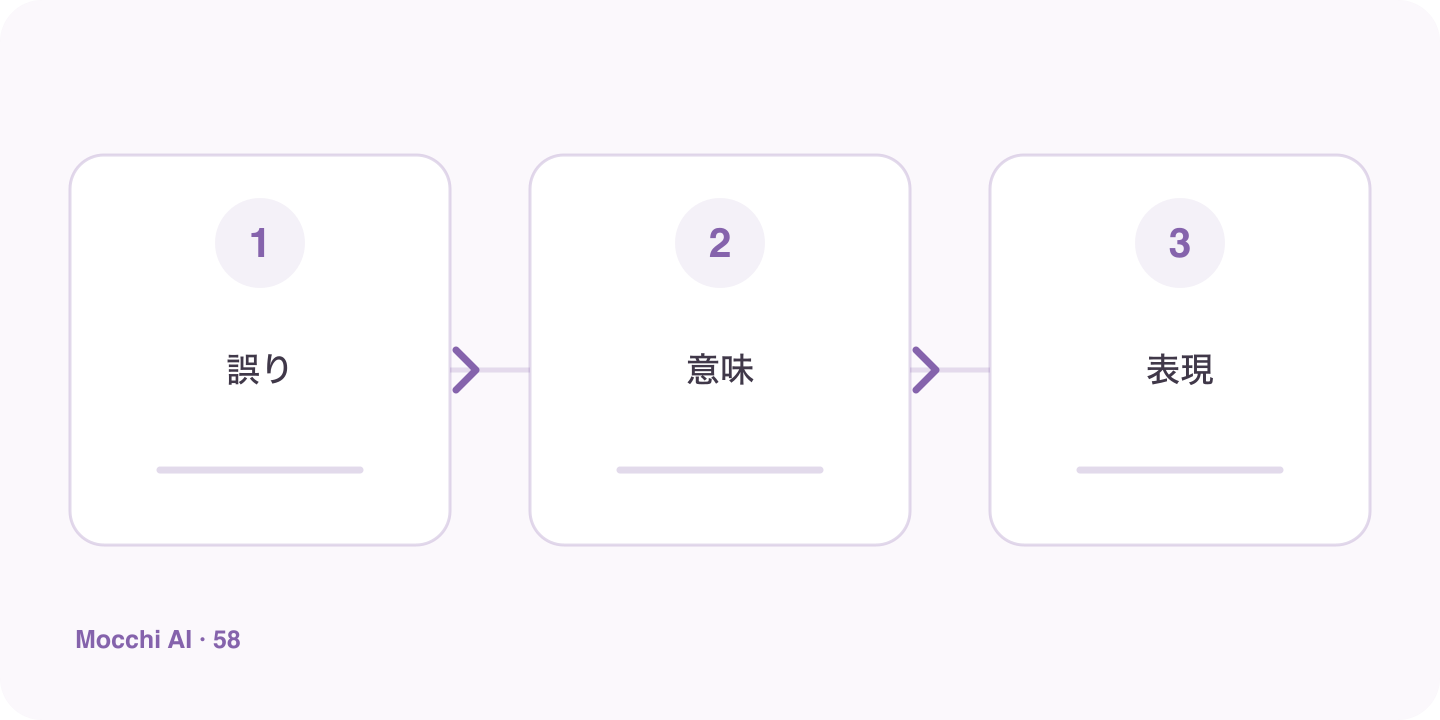
If the intended message is a completed event yesterday, 昨日、本を読みました makes that time relationship clear. A suggestion to use another natural expression for an enjoyable activity may instead concern tone or detail. Ask Mocchi to state which edit is required for the intended meaning and which offers a different presentation, then practice the necessary point separately.
| Japanese | Romaji | Meaning |
|---|---|---|
| 昨日、本を読みました。 | Kinō, hon o yomimashita. | I read a book yesterday. |
| とてもおもしろかったです。 | Totemo omoshirokatta desu. | It was very interesting. |
Ask whether the change affects accuracy, clarity, or tone
An accuracy correction fixes a form or relationship that does not express the intended message correctly. A clarity change helps the reader identify what you mean. A style suggestion offers another way to present the same idea for an audience. These categories can overlap, so ask for the specific reason in the actual sentence rather than treating the labels as a complete automatic grading system.
Request a context for an acceptable alternative
When two forms can work, ask where each sounds appropriate and what difference the reader may notice. This helps prevent a common learning mistake: replacing one vague rule with a new vague rule based on the latest correction. A context-rich comparison lets you keep more than one useful expression without assuming they are interchangeable everywhere.
Turn one necessary change into a fresh attempt
Choose the correction that matters most for your current goal and write another sentence using it. Ask Mocchi to check that attempt before adding further edits. If the point is still difficult, record the clue you missed for review. If it is reliable, move to a style comparison deliberately. This makes feedback a sequence of learnable decisions rather than an overwhelming difference between your draft and a polished model.