
Make a Flexible Japanese Plan With Mocchi for Shift Work

When work hours change, make the Japanese session flexible in size while keeping its next action clear. Tell Mocchi about the time you can realistically use, then ask for a small minimum, a normal session, and an optional extension around the same learning target.

Mocchi arranges a short minimum task, a normal session, and a longer study option around changing work hours
What you need to know

Make a Flexible Japanese Plan With Mocchi for Shift Work

A plan tied to an identical time every day may not fit rotating shifts, irregular travel, or unpredictable care responsibilities. The alternative is not an entirely improvised lesson each visit. Keep a short sequence that can expand or shrink: retrieve something familiar, practice the current weak point, and leave a next step. Mocchi can help adjust the workload when your availability changes, while the shared target keeps shorter sessions connected to the wider plan.

Describe available time without sharing private work details.

Use different session sizes around one target.

Keep a meaningful attempt in the minimum session.

Adjust future work instead of duplicating missed days.

Tell the tutor about a constraint, not your whole rota

You can say that work hours change and that some days allow only a brief session. Mocchi does not need your employer's name or a detailed private schedule to design flexible practice. Give a realistic range of study time and describe when concentration tends to be better. This helps distinguish a lack of available minutes from a task that is too demanding after a tiring shift.

Avoid designing the plan around your best possible day. A minimum should survive a normal difficult day without becoming meaningless. If the smallest version still requires a long explanation, reduce the target or prepare the prompt in advance.

Use one target with three session sizes

Suppose the target is making a polite request. The minimum can be one familiar request and a changed object. A normal session can compare two request forms and explain their context. A longer session can prepare a short exchange and move into AI Sensei or Roleplay for spoken practice. The activities differ in size, but they all contribute to the same practical objective.
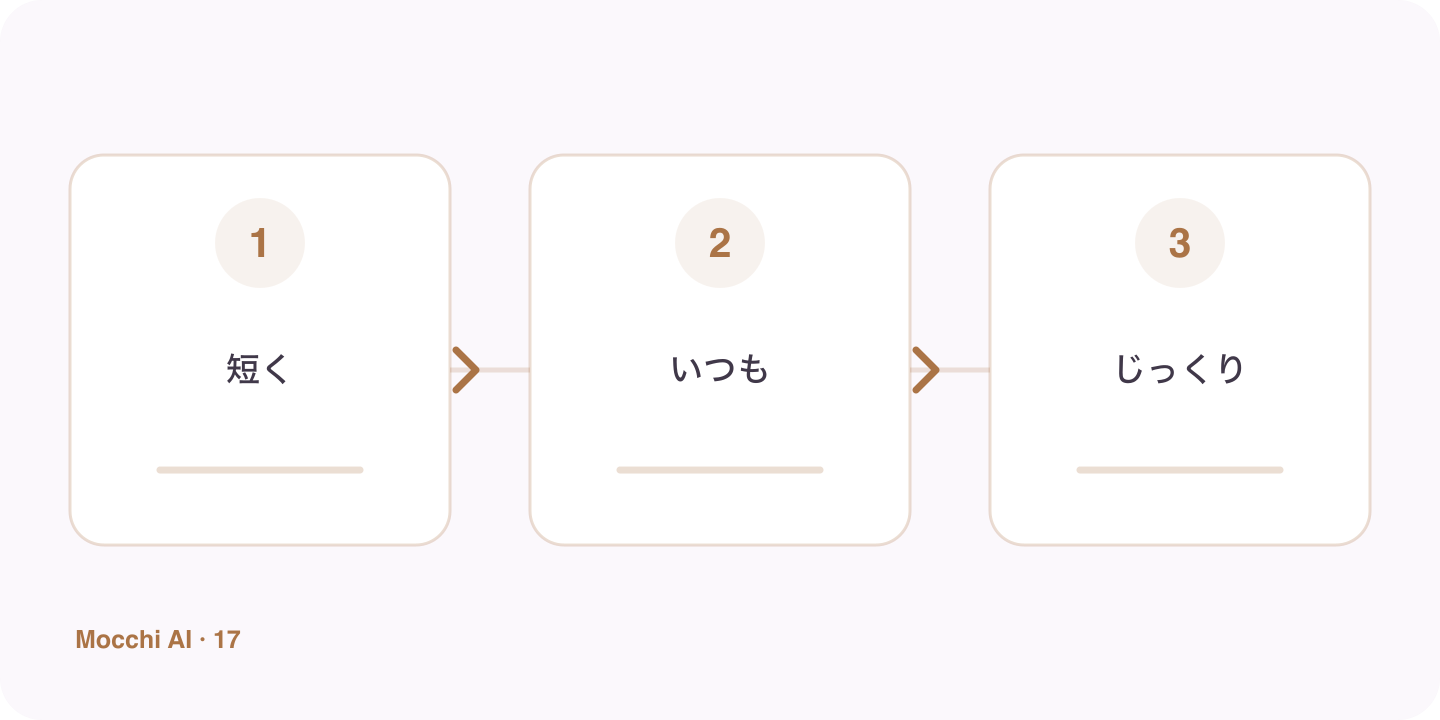
Three session sizes share the same learning target so a changing schedule does not require a new plan every day
Vary the size of the session while keeping a clear learning sequence and a small point of return.
JapaneseRomajiMeaning
もう一度説明してください。Mō ichido setsumei shite kudasai.Please explain it once more.
ゆっくり話してください。Yukkuri hanashite kudasai.Please speak slowly.

Keep the minimum active rather than symbolic

A useful minimum asks you to attempt something before looking at the answer. Retrieve a word, choose a particle, or change a sentence. If you need a hint, record it and make that the next review point. This gives even a short session an observable result and avoids treating a streak of app openings as the same thing as learning.

Adjust missed work without building a backlog mountain

When several sessions are missed, look at what remains relevant to the goal. Keep necessary review, move or reduce future tasks, and remove duplicated work where appropriate. Tell Mocchi which completed tasks should remain complete. Catching up should help you return to a workable sequence, not create a schedule that assumes extra time you still do not have.

Leave the next prompt ready to open

Write a short return instruction at the end of each session, such as 'Use one new context for polite requests.' If you install Unihongo through a supported browser, its icon can make returning more convenient, but the learning benefit comes from knowing the next action. Keep an alternative note for times without connectivity, because an installed PWA does not remove the network requirement for AI interactions.

Key points

A practical way to improve

Choose one current Japanese target and ask Mocchi for three versions: a five-minute minimum, a normal session, and an optional longer activity. Try the minimum on a busy day and record what you attempted. On a freer day, continue the same target with a changed example or short reading. At the end of the week, adjust the plan using the time you actually had rather than the schedule you hoped for.

  1. 1

    Choose one clear goal

    Focus each session on a situation or skill you can actually use.

  2. 2

    Practice actively

    Say complete answers aloud instead of only reading or recognizing Japanese.

  3. 3

    Review and repeat

    Keep useful corrections and revisit the same skill until it feels natural.

FAQ

Frequently asked questions

Do I need to study at the same time every day?

A stable cue can help, but a changing schedule may need a flexible cue such as after a meal or before leaving home. Choose something realistic and keep the first action small and specific.

Does a short session count if I learn nothing new?

It can be useful if you retrieve or apply earlier language. A brief review that exposes a weak point or makes a familiar pattern more available is different from merely opening the app.

Should Mocchi rebuild my plan every time a shift changes?

Usually a small adjustment is enough. Explain what changed and what remains correct, including your goal and completed work. Ask for a new plan only when the overall structure no longer fits.

Fit the plan to the week you actually have

Ask Mocchi for flexible session sizes and one connected learning sequence rather than a rigid daily workload.