
Have a Useful Japanese Review Day With Mocchi, No New Words

A day with no new Japanese words can still produce useful learning. Ask Mocchi to help you retrieve familiar material, choose among mixed examples, and make a changed response instead of measuring the session only by how much content you added.

Mocchi turns familiar Japanese material into recall, mixed practice, and a new response without adding another word list
What you need to know

Have a Useful Japanese Review Day With Mocchi, No New Words

New lessons create a visible sense of progress, while review can feel less exciting because the material looks familiar. The challenge is different: can you retrieve and use it without the explanation open? A review-only session gives that question attention. Choose a small set from recent work, attempt before looking, and connect the result to a useful next step. Mocchi can vary the examples around your goals so the session is more than rereading yesterday's answers.

Treat retrieval as a real study activity.

Use familiar material in changed contexts.

Mix alternatives after narrow practice becomes easy.

Keep new additions out of the session deliberately.

Choose a purpose beyond rereading notes

Decide whether you want to retrieve meanings, select a grammar pattern, or make a short response. Tell Mocchi that no new vocabulary should be introduced unless necessary to explain an existing item. A clear purpose makes the session active and prevents the tutor from offering a new topic simply because the familiar one feels comfortable to read.

Use a small set you have actually studied. If the list contains many items you only glanced at once, the session may require more teaching than you expected. That is useful information, but keep the scope manageable enough to complete an attempt and understand the feedback.

Retrieve before showing the familiar example

Try a short prompt with a word or pattern from earlier work. For example, describe a familiar study location without opening yesterday's sentence. Afterward, compare the result and explain the relevant relationship. The changed attempt checks availability more directly than reading a correct answer and deciding that it still looks familiar.
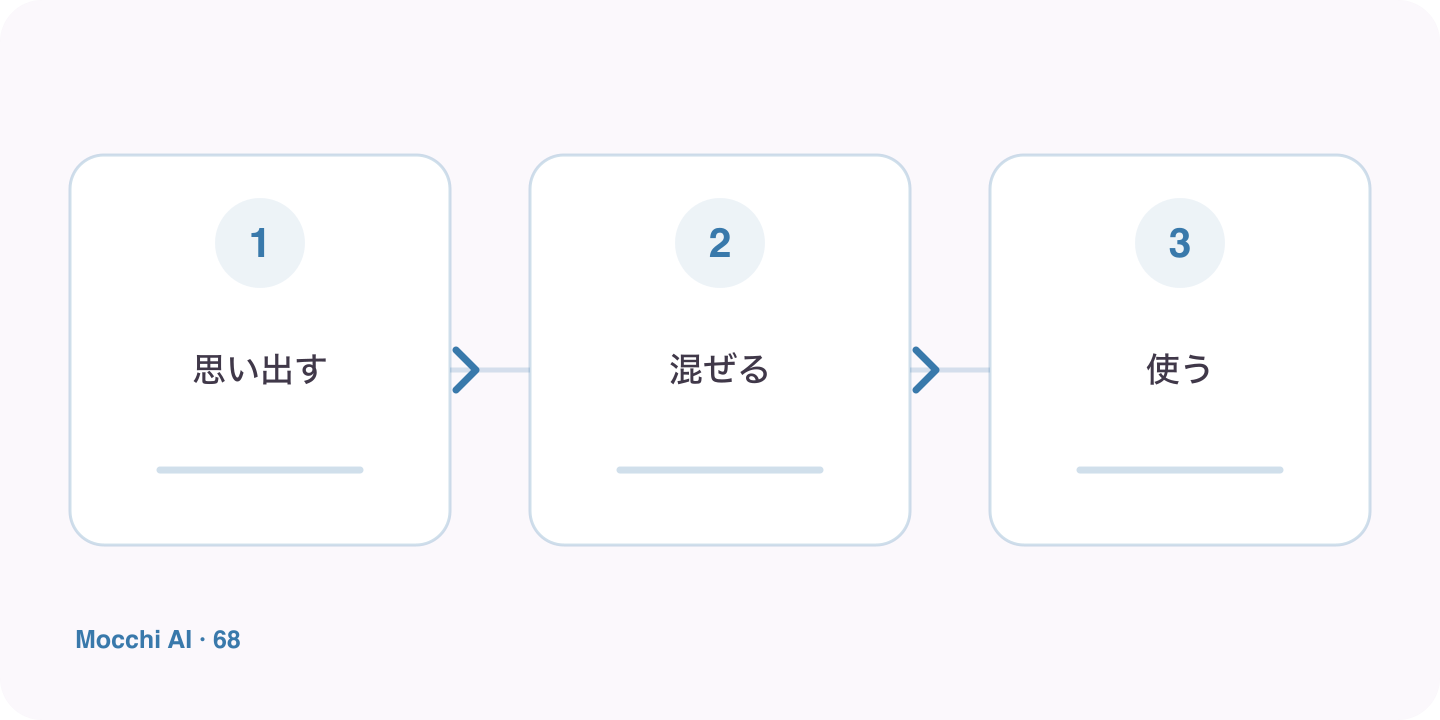
Previously studied items are retrieved, mixed, and applied in a changed sentence
A review-only day can deepen access to familiar language without adding new material to the queue.
JapaneseRomajiMeaning
家で日本語を勉強します。Ie de Nihongo o benkyō shimasu.I study Japanese at home.
図書館で本を読みます。Toshokan de hon o yomimasu.I read books at the library.

Mix choices when a narrow set becomes predictable

If every question tests the same form, the exercise may stop requiring a real choice. Ask Mocchi to mix a few familiar alternatives while keeping the vocabulary controlled. Explain which clue identifies the relevant pattern. This adds a useful challenge without expanding the amount of language you are supposed to know.

Make one response that combines familiar pieces

Use the reviewed words or pattern in a short sentence of your own. Change the context while keeping the target clear. If you need help, identify whether the issue is retrieving a word, building the form, or choosing the relationship. A new response can reveal a weak link that multiple-choice recognition did not expose.

End with a smaller queue and a clearer priority

Choose one item that still needs attention and state the clue you want to remember. Do not automatically respond to difficulty by adding several more resources or words. Mocchi can help decide whether the next session should continue review or introduce something related. A useful review day leaves familiar language more available and the next action clearer, even when the count of new material stays at zero.

Key points

A practical way to improve

Tell Mocchi that today's session should use only previously studied material. Choose a few recent words or patterns and attempt a recall check before explanations. Then ask for a small mixed task and one new sentence you produce using the same items. Finish by noting which link still needs review, without turning the result into another large vocabulary list.

  1. 1

    Choose one clear goal

    Focus each session on a situation or skill you can actually use.

  2. 2

    Practice actively

    Say complete answers aloud instead of only reading or recognizing Japanese.

  3. 3

    Review and repeat

    Keep useful corrections and revisit the same skill until it feels natural.

FAQ

Frequently asked questions

Does review count if I learn nothing new?

It can be valuable when it improves retrieval or application of earlier language. The useful evidence is what you can now do with the material, not only whether the topic was newly introduced.

Should a review day be easy?

Not necessarily. Familiar material can be difficult to retrieve without notes or choose in a mixed context. Keep the challenge purposeful and reduce support gradually rather than adding novelty to make it feel harder.

What if an unfamiliar word appears in a review example?

Ask Mocchi to replace it with familiar vocabulary if it is not part of the target. Keep the session's purpose clear so an accidental new word does not turn the whole activity into another lesson.

Make familiar Japanese easier to reach

Use Mocchi to vary review around your existing knowledge rather than constantly enlarging the queue.