
State who is writing to whom and why
Give Mocchi general roles such as student to teacher or colleague to colleague. Then state the action you need: checking a document, confirming a time, or answering a question. Those details are more useful than a vague instruction to make the email businesslike. You can keep names, company information, and private document contents out of the practice example.
Decide what the reader must know to act. Too little context can make the request confusing, while unrelated background can hide it. Start with a compact message and add information only when it explains the purpose or makes the next action unambiguous.
Build a request around the actual action
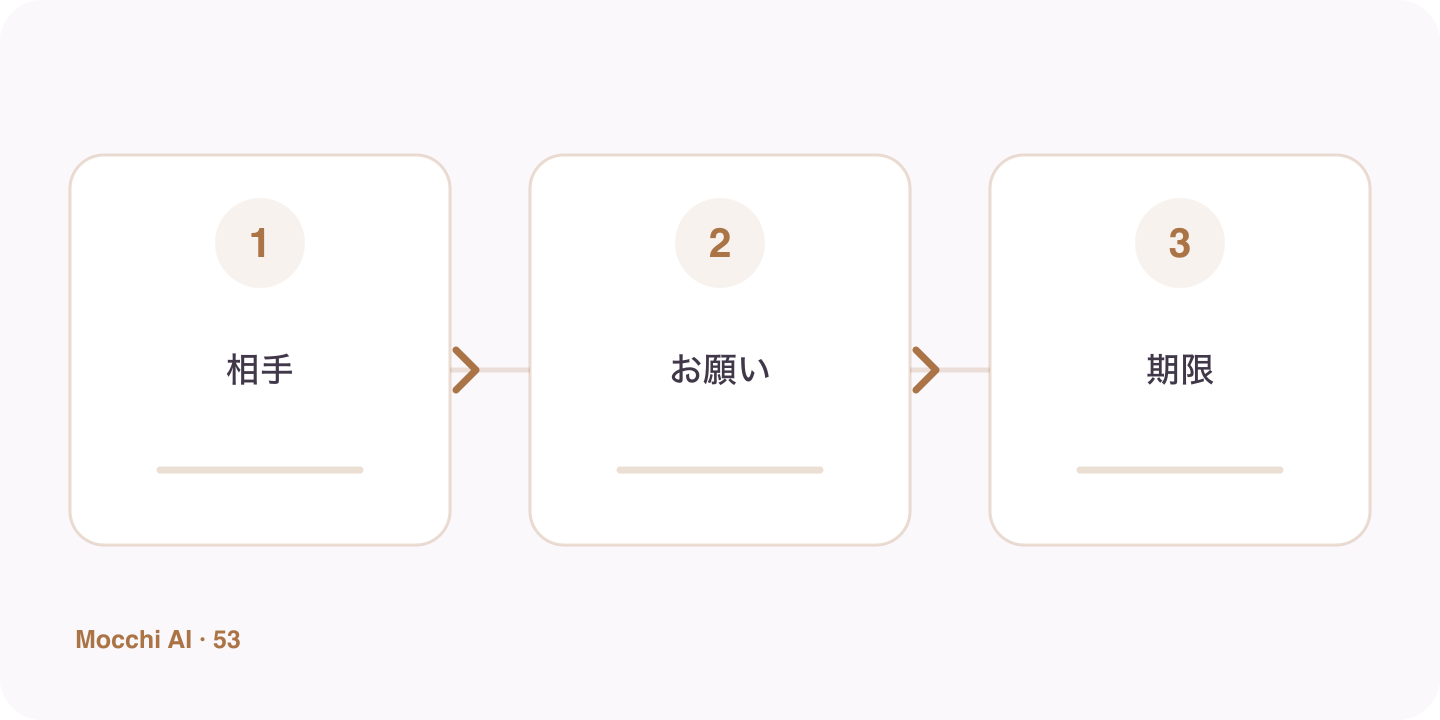
資料をご確認いただけますか asks whether the recipient could check the materials. If timing matters, 明日までにご確認いただけますか adds a by-tomorrow request. Ask Mocchi to discuss whether that timing and level of politeness fit the invented relationship. The examples are practice starting points, not a universal email template for every workplace or recipient.
| Japanese | Romaji | Meaning |
|---|---|---|
| 資料をご確認いただけますか。 | Shiryō o go-kakunin itadakemasu ka. | Could you check the materials? |
| 明日までにご確認いただけますか。 | Ashita made ni go-kakunin itadakemasu ka. | Could you check them by tomorrow? |
Check clarity before adding formal decoration
Read the draft and state what the recipient is being asked to do. If you cannot answer that quickly, simplify the message. Ask Mocchi whether an expression clarifies the request, represents the relationship, or merely adds length. Formality can serve communication, but it should not replace a clear description of the action.
Compare a second audience without changing the purpose
Keep the same request and change the recipient's general role. Ask which wording should change and why. This isolates audience-related choices instead of rewriting every detail at once. If the revised version changes the urgency or turns a question into a demand, identify that meaning change separately from politeness.
Verify the final details outside the practice draft
Before using a real message, check the recipient, attachment, deadline, and intention yourself. An AI language revision does not confirm those facts or the conventions of a particular organization. Keep the practice example as a learning aid and save the expression or contrast you want to review later. Mocchi can then help you become more capable at drafting requests rather than dependent on copying one polished template.