
Review a Timed Japanese Practice Set With Mocchi AI

After timed Japanese practice, review why answers failed before starting another set. Ask Mocchi to distinguish unknown language, rushed interpretation, and unsupported guesses, then choose a follow-up that addresses the actual obstacle.

Mocchi groups errors from a timed Japanese practice set into language, reading, and decision problems
What you need to know

Review a Timed Japanese Practice Set With Mocchi AI

A time limit can expose retrieval difficulty, but it can also encourage fast guessing or skipped instructions. A score alone does not identify which problem occurred. Keep a brief record of uncertain items and the conditions used. During review, explain your first reasoning and inspect the clue you missed. Mocchi can help organize that feedback into a focused lesson, while a later comparable task checks whether the change helps under similar conditions.

Record uncertainty and conditions during the attempt.

Separate language gaps from rushed decisions.

Review the evidence for a tempting option.

Try a comparable new task after targeted practice.

Keep enough information to explain the attempt

Note the task type, time condition, support used, and items that felt uncertain. A short record is enough. Tell Mocchi whether you read all questions carefully or guessed near the end. This context makes the review more useful than a total score detached from what happened during the activity.

Do not interrupt an independent timed check with explanations unless that is the activity you deliberately chose. If you do pause for teaching, record the support and interpret later answers accordingly. The goal is a fair description of the practice, not a performance record made to look stronger than it was.

Sort the error by the step that failed

An unknown key word needs vocabulary work. A missed contrast may need a reading comparison. A misunderstood instruction may require format familiarization. Ask Mocchi which diagnosis your actual answer and reasoning support. One label such as slow at Japanese is too broad to choose a precise next task.
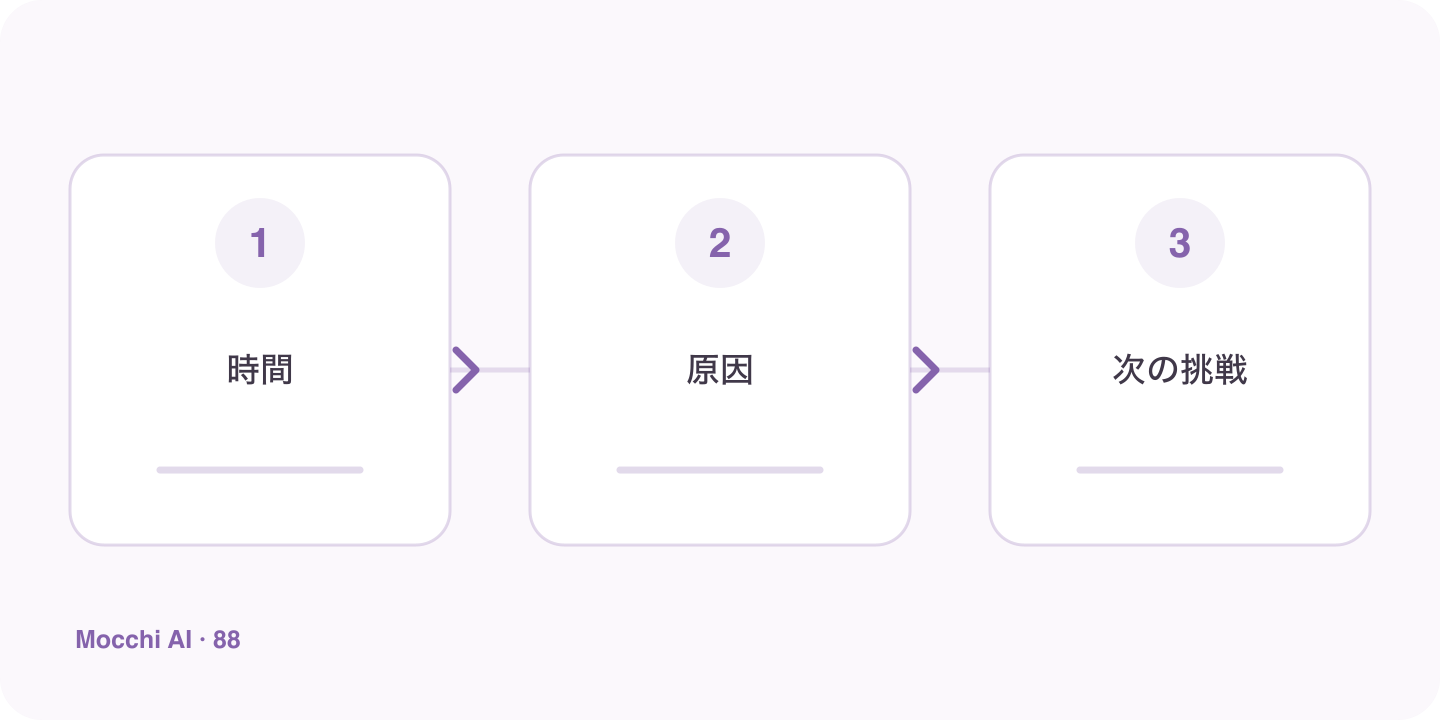
A timed attempt is reviewed for error cause before a focused lesson and another comparable check
The timer reveals a condition of performance; the review should identify what actually caused each difficulty.
What happenedPotential next step
Unknown key vocabularyLearn the word in context
Known words, wrong relationshipCompare the passage's evidence
Rushed or unsupported choiceRetry a short task with explicit reasoning

Inspect uncertain correct answers

A correct selection can hide an unsupported inference or a lucky guess. Explain the reason before reading the model explanation and check whether it matches the text. If not, treat the item as a useful review target. This keeps the score from concealing the decisions that remain unreliable under pressure.

Practice the weak decision without the timer first when needed

If the concept itself is unclear, a faster attempt will not make it clearer. Use a short untimed contrast to understand the relationship, then return to a comparable timed task. If the concept is clear but retrieval is slow, use familiar vocabulary and controlled repetition. The next activity should match the bottleneck rather than automatically increase pressure.

Compare a new attempt under similar conditions

Use new questions with a similar demand and note the same conditions. Look for more supported decisions or fewer repeated errors, not only a changed score. Mocchi can help interpret the pattern and choose another focused review, while broader exam preparation remains a separate task. A timed set becomes useful when it leads to a better learning decision afterward.

Key points

A practical way to improve

Complete an appropriate practice set using a consistent timer you choose. Mark items that felt uncertain without reading explanations during the attempt. Afterward, bring one error and your reasoning to Mocchi. Identify the cause, practice a small contrast, and try a fresh comparable item later. Compare the reasoning and support required instead of assuming that a faster completion automatically means better understanding.

  1. 1

    Choose one clear goal

    Focus each session on a situation or skill you can actually use.

  2. 2

    Practice actively

    Say complete answers aloud instead of only reading or recognizing Japanese.

  3. 3

    Review and repeat

    Keep useful corrections and revisit the same skill until it feels natural.

FAQ

Frequently asked questions

Does finishing faster always show improvement?

No. Speed can increase because you understand more efficiently or because you guess and skip. Compare accuracy, reasoning, and task conditions before interpreting the change.

Should I review only answers marked wrong?

Uncertain correct answers can be useful too. If the option was a guess or the reason was inaccurate, inspect it before treating the result as reliable knowledge.

Can I turn the practice percentage into an official pass estimate?

Do not treat a raw practice result as an official score conversion or guarantee. Use it to identify study priorities and consult official information for how actual results are defined.

Let the review explain the timed result

Use Mocchi to choose the next lesson from the error cause rather than immediately repeating a bigger set.