
Check N1-Style Reading Answer Choices With Mocchi AI

Advanced reading answers can be tempting because they sound reasonable while adding certainty, scope, or a reason the passage did not supply. Use Mocchi to compare each choice with textual evidence and preserve the writer's actual position.

Mocchi compares an advanced reading claim with answer choices that differ in scope and certainty
What you need to know

Check N1-Style Reading Answer Choices With Mocchi AI

An N1-style practice task may require more than recognizing difficult vocabulary. You need to distinguish what is stated, implied with support, and merely plausible in the broader topic. Start with a short original passage and explain the evidence for your choice. Mocchi can help inspect alternatives, but do not let a fluent explanation replace the text. The goal is a defensible interpretation and a specific review target, not a score treated as an official readiness judgment.

Identify evidence before defending an option.

Check scope and certainty in each claim.

Separate a plausible idea from a supported inference.

Use an error category to choose the next practice.

Read the task instruction as part of the evidence problem

Check whether the question asks for the writer's main claim, a reason, a detail, or an inference. Those demands are related but not identical. Tell Mocchi which task you are practicing and explain your first interpretation. This prevents a review from approving a plausible summary when the question actually asked for a specific reason.

Keep the passage manageable while investigating one repeated error. Advanced practice does not need to be maximally long every time. A short text can make an overstatement or unsupported inference easier to inspect before you return to a broader mixed set.

Compare a qualified view with an absolute rejection

必ずしも反対しているわけではありません does not state an absolute rejection; it limits a simple interpretation of opposition. An answer that claims the writer is completely against the idea would need stronger support. Ask Mocchi to explain the actual scope and compare another option that may also be too broad in the opposite direction.
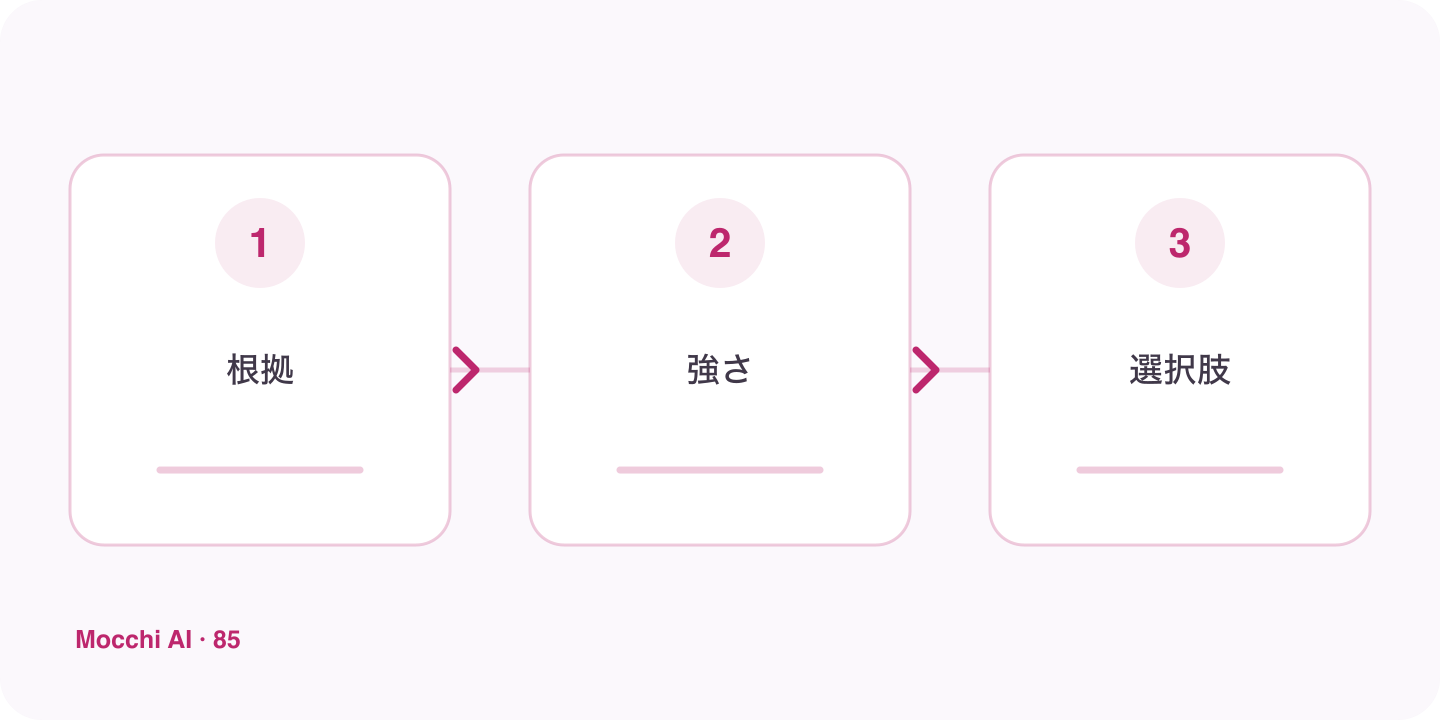
Text evidence supports a limited interpretation while stronger and unrelated claims are checked separately
A plausible answer can still add a claim the passage never made; compare the wording and the evidence.
JapaneseRomajiMeaning
必ずしも反対しているわけではありません。Kanarazushimo hantai shite iru wake de wa arimasen.I am not necessarily opposed.
条件を確認する必要があります。Jōken o kakunin suru hitsuyō ga arimasu.The conditions need to be checked.

Identify exactly what the tempting choice adds

An option may turn a possible cause into the only cause, some cases into every case, or a reservation into complete disagreement. Name that addition in plain language and point to the passage. This gives the wrong answer a useful role in learning and avoids reducing the explanation to the claim that another option sounded more natural.

Separate unsupported inference from missing vocabulary

If one key word was unknown, check it in context before deciding that your reasoning strategy failed. If the vocabulary was clear but you added an assumption, focus the next task on evidence and scope. Tell Mocchi which part changed your interpretation. Different error categories deserve different follow-up activities.

Return to a fresh text with the same decision

Ask for another short original passage and try the reasoning before opening the earlier explanation. Later, mix the target with other familiar question types. Mocchi can use practice context to make review relevant, while official samples clarify the actual test format. The aim is a reading choice you can justify in unfamiliar material, not recognition of one explanation or confidence supplied by a high practice total.

Key points

A practical way to improve

Ask Mocchi for a short advanced reading task and answer before seeing the explanation. Cite the phrase that supports your choice. Compare a tempting alternative and state what it adds or changes. If the answer was wrong, label the issue as scope, certainty, reference, or missing vocabulary, then try a fresh passage focused on that decision rather than simply increasing text length.

  1. 1

    Choose one clear goal

    Focus each session on a situation or skill you can actually use.

  2. 2

    Practice actively

    Say complete answers aloud instead of only reading or recognizing Japanese.

  3. 3

    Review and repeat

    Keep useful corrections and revisit the same skill until it feels natural.

FAQ

Frequently asked questions

Is the least strong option always correct?

No. The correct interpretation depends on the text. A strong claim can be supported and a cautious one can be wrong. Compare the option with the actual evidence rather than using a new mechanical shortcut.

Can background knowledge justify an answer the passage does not support?

The task may ask what this writer says or implies. Keep outside knowledge separate unless the instructions require it. A generally sensible statement is not automatically a faithful reading answer.

Does a good short set mean I am ready for the whole examination?

No. It covers limited material and conditions. Use it to guide study, and use official information and appropriate broader practice for the actual exam.

Make an advanced answer accountable to the passage

Use Mocchi to inspect the claim each option makes and the evidence it would need.