

Label the function of the statement before judging it
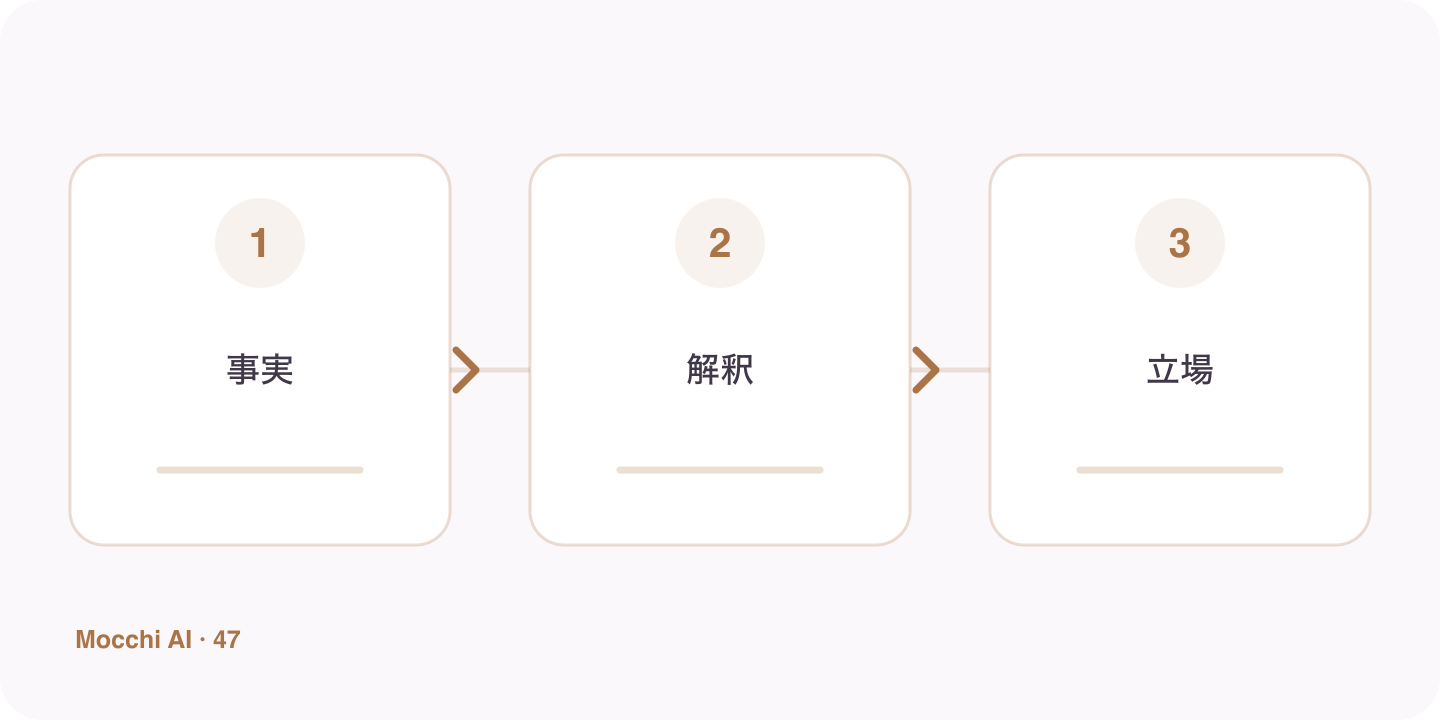
Ask whether a line reports an observation, interprets it, evaluates it, or recommends an action. A passage can move through several of these functions. Tell Mocchi where the transition becomes difficult and request a short example that isolates it. This gives an advanced lesson a concrete purpose beyond asking for longer or rarer vocabulary.
Keep your own position separate at first. You may agree with a possible explanation and still need to notice that the writer has not established it as certain. Reading accurately includes preserving that restraint, even when a stronger conclusion would be more convenient for your argument.
A limited conclusion is not a universal conclusion
この結果だけで判断することはできません limits what can be concluded from this result alone. It does not say that the result is useless or that no judgment can ever be made. Ask Mocchi to compare a faithful paraphrase with one that adds either extreme. The contrast makes the scope of the statement visible in ordinary language.
| Japanese | Romaji | Meaning |
|---|---|---|
| この結果だけで判断することはできません。 | Kono kekka dake de handan suru koto wa dekimasen. | We cannot make a judgment from this result alone. |
| ほかの要因も考慮する必要があります。 | Hoka no yōin mo kōryo suru hitsuyō ga arimasu. | Other factors also need to be considered. |
Locate the wording that carries the stance
Point to the phrase that introduces possibility, limitation, evaluation, or recommendation. Explain how removing or replacing it would change the claim. This focuses attention on the language doing the interpretive work rather than on every unfamiliar noun equally. If the phrase itself is unclear, practice it in a simpler sentence before returning to the paragraph.
Compare a cautious summary with an overstatement
Write a short summary, then ask Mocchi for a tempting but stronger interpretation. Identify exactly what the stronger version adds. Does it replace some with all, a possibility with a fact, or a qualification with a rejection? This comparison gives you a reusable check for advanced reading without assuming that the correct answer is always the least forceful option.
Use the distinction in your own response
After summarizing, add a separate sentence expressing your view and label it as yours. Give a reason that does not pretend to come from the original passage unless it actually appears there. Mocchi can help refine both tasks, but keeping them distinct develops a valuable reading habit: understand the writer's commitment first, then decide how you want to respond.