

Choose a repeatable kind of writing task
Use a short diary, a request, or an opinion paragraph that you can attempt again with changed content. Similar tasks make a comparison easier to interpret. A casual message and a formal report may require different language, so differences between them do not automatically show improvement or decline.
Keep the sample small enough to review carefully. The value comes from seeing a few decisions clearly: how you connect ideas, express time, choose particles, or preserve a polite request. A longer document can add many unrelated variables before you have a stable way to compare the writing.
Preserve the first attempt and the reason for a change
Keep the original wording beside a revised version and one short explanation. For example, if a completed past event needed a different ending, name that time relationship. Ask Mocchi to help phrase the reason in plain language. The note should make the next attempt easier to judge, not merely record that the revised sentence sounded more natural.
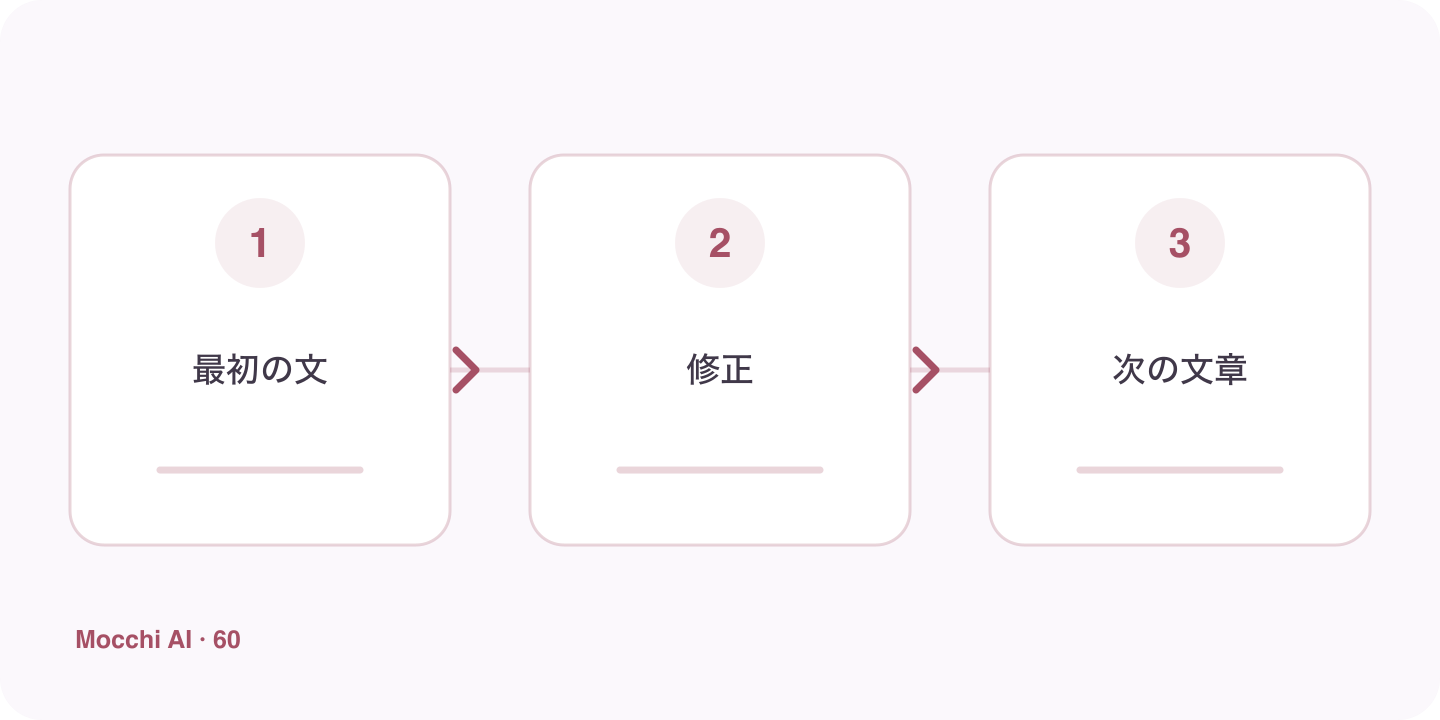
| Portfolio item | What it shows |
|---|---|
| Original draft | What you produced before help |
| Explained revision | The decision you practiced |
| Later comparable draft | Whether the decision transfers with less support |
Record support so the comparison stays honest
Note whether you used a translation, vocabulary prompt, complete model, or only a brief correction. These are legitimate supports, but they affect what a sample demonstrates. A later draft that uses simpler Japanese with less help may show a useful change even if an earlier AI-polished version looks more sophisticated.
Ask for one recurring pattern rather than a global score
Have Mocchi compare a few similar drafts and identify a repeated issue or a newly reliable choice. Request examples from the actual text. A broad score can hide whether the task became harder or whether one important problem improved. A specific observation gives you a practice target that can be attempted and checked in the next session.
Keep the next writing task connected but fresh
Use a new topic or detail while practicing the same decision. Try before opening the earlier revision, then compare the result. If the problem returns, request a smaller exercise; if it is stable, choose another improvement. A personal portfolio becomes useful when it influences what you practice next, not when it merely accumulates finished documents that you rarely revisit.