

Use recent evidence to choose the review list
Look at the tasks you attempted and identify recurring difficulties that are relevant to the exam. Tell Mocchi what went wrong and which parts already feel stable. This gives the remaining sessions a purpose and avoids spending the whole week on familiar material simply because it is comfortable.
Keep the target count small. A list that includes every possible weak point may be accurate but not actionable. Choose the next useful task, complete an attempt, and reassess. The plan should help you start rather than make the remaining time feel like an impossible inventory.
Separate a useful review from a new content collection
If a contrast keeps causing errors, a concise explanation and a few fresh examples can be worthwhile. If a new resource contains hundreds of unfamiliar items unrelated to recent practice, decide whether it serves the present goal. Ask Mocchi to explain why a proposed task deserves priority rather than adding it because it sounds important.
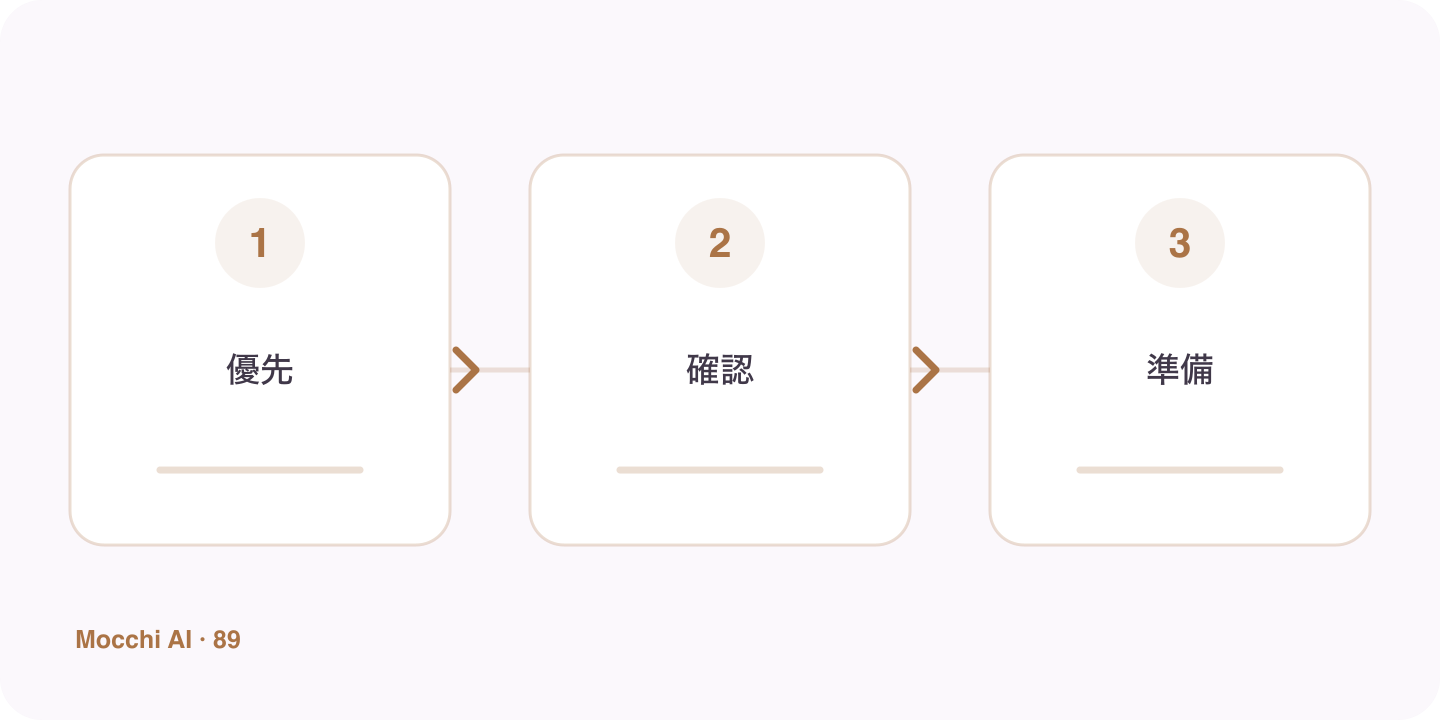
| Review candidate | Question to ask |
|---|---|
| Repeated relevant error | Can a small task clarify the decision? |
| Large unfamiliar list | Does this fit the available time and goal? |
| Already stable material | Is a brief mixed check enough? |
Keep format familiarization deliberate
Use official sample questions and instructions to check that you understand the actual task types. If a format is unfamiliar, practice the instruction and response process separately from the language difficulty. Mocchi can help explain wording, but the official source remains the reference for what the real examination asks.
Put practical arrangements in a separate check
Confirm registration details and organizer instructions from their current source rather than from a study conversation. Keep that list distinct from grammar and vocabulary review. This prevents a productive lesson from creating a false feeling that every practical requirement has also been handled.
End each session with a realistic return point
State what you practiced, what still needs attention, and the next small action. If the workload does not fit, ask Mocchi to reduce or reprioritize it. A useful final-week routine should remain grounded in actual attempts and available time. It cannot guarantee an outcome, but it can make the remaining study more focused and easier to evaluate.