
Read a Beginner Japanese Notice With Mocchi AI

A beginner notice is a useful reading task when you have a specific question to answer. Ask Mocchi for a short original example and find the day, place, or action in the text before translating every word or guessing from the topic.

Mocchi highlights the day and closure information in a short invented Japanese notice
What you need to know

Read a Beginner Japanese Notice With Mocchi AI

Real notices can look intimidating because layout, unfamiliar words, and practical consequences arrive together. A controlled learning notice separates those demands. Start with familiar vocabulary and one clear piece of information, such as a closing day. Explain which phrase supports the answer, then read a changed notice. This develops a habit of checking the actual text while keeping the task suitable for a learner who is still building basic reading confidence.

Read the question before searching for details.

Locate the phrase that supports the answer.

Keep a fictional notice separate from real venue information.

Change the day or action for a fresh reading check.

Begin with a question that directs your attention

Ask what information you need from the notice before reading every detail. A question about a day gives you a different target from a question about a place or required action. Tell Mocchi the kind of detail you want to practice, then attempt the answer before asking for a full explanation. This makes the lesson a reading task rather than a passive vocabulary tour.

Keep the first notice short and original. The purpose is to practice a manageable information relationship, not to reproduce the difficulty of every real notice at once. Once the task is clear, you can add another line or a less familiar expression.

Read the day together with the closure information

図書館は月曜日が休みです says that the library is closed on Mondays. The day expression matters, but so does 休み. Ask Mocchi to check that you understood both before changing the notice to a different day. This prevents you from correctly spotting a familiar date word while drawing the wrong practical conclusion from the rest of the sentence.
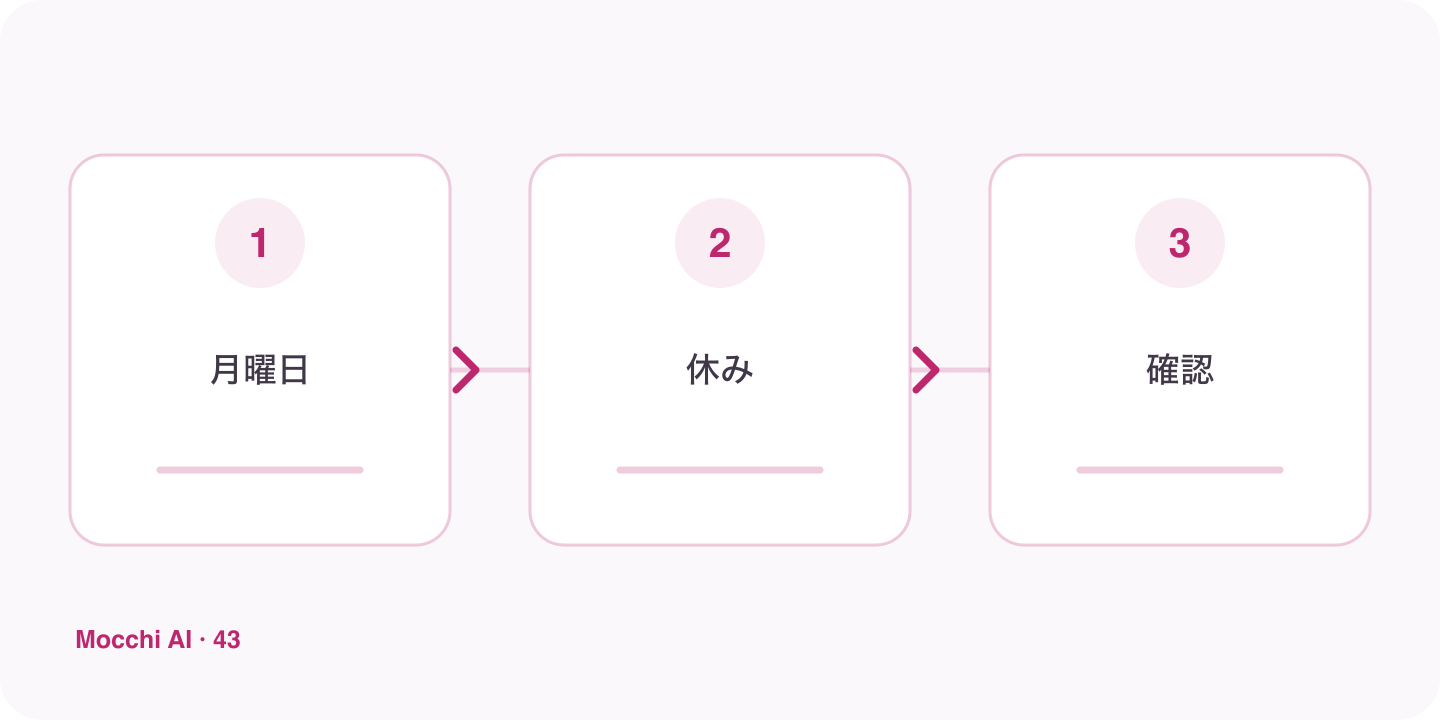
A reading question leads to the relevant day expression and a checked answer from the notice
Find the phrase that answers the question instead of guessing from the notice's general topic.
JapaneseRomajiMeaning
図書館は月曜日が休みです。Toshokan wa getsuyōbi ga yasumi desu.The library is closed on Mondays.
火曜日に来てください。Kayōbi ni kite kudasai.Please come on Tuesday.

Point to the phrase that supports the answer

After answering, identify the Japanese words that made the answer reasonable. If you guessed from the general topic, say so and ask which part of the text provides the detail. This develops a useful reading habit even at a beginner level: the answer should come from the notice, not from what would usually be true about a similar place.

Change one detail before increasing the length

Ask for a new notice with a different day, place, or action while keeping the grammar familiar. Answer without opening the previous example. If the changed detail causes trouble, check whether the issue is a day name, a negative form, or a relationship in the sentence. The next practice can then target that point instead of simply adding more lines.

Carry the reading habit into real situations carefully

When you later encounter an actual notice, identify the question you need answered and the phrase supporting it. Check current venue or service information directly when a real decision depends on it. Mocchi can help you practice and explain language, but a fictional learning example should never be mistaken for a live announcement. The transferable skill is looking for evidence and noticing which details still need confirmation.

Key points

A practical way to improve

Ask Mocchi for a short fictional notice about a library and one question about its closing day. Read the notice, answer, and quote or point to the relevant phrase. Then request a changed notice with another day or action. If you confuse a word, check that item in context and retry a fresh version rather than repeatedly reading the original answer.

  1. 1

    Choose one clear goal

    Focus each session on a situation or skill you can actually use.

  2. 2

    Practice actively

    Say complete answers aloud instead of only reading or recognizing Japanese.

  3. 3

    Review and repeat

    Keep useful corrections and revisit the same skill until it feels natural.

FAQ

Frequently asked questions

Should I translate the whole notice before answering?

Not always. If the question asks for one clear detail, first locate the phrase that answers it. Translate other parts when they affect understanding, rather than treating a full translation as the only valid reading task.

Is a generated notice current information about a real place?

No. Treat it as an original learning example. Check the venue's own current information when making real plans, especially for dates, opening hours, or instructions that affect an actual visit.

What if I recognize the day but misunderstand the action?

Check the word or phrase describing what happens on that day. A correct date alone does not answer whether a place is open, closed, or running a different activity.

Find one useful detail in the Japanese text

Use Mocchi to practice reading evidence in a small notice before increasing the amount of information.