

Decide whether today is for learning or checking
A learning session can pause for explanation, compare alternatives, and retry a point. A broader check needs more consistent conditions so the result is interpretable. Tell Mocchi which purpose matters today. Mixing both without noticing can make an encouraging supported score look like evidence from an independent test.
Neither purpose is automatically superior. A full-length attempt may reveal weak areas without teaching them, while focused practice may improve one decision without covering the whole exam. A useful preparation routine gives each format a role.
Inspect the activity before starting the timer
Check which sections and question types are included, whether explanations appear between items, and what access your account provides. If you choose timed practice, use the actual timing method available or a consistent timer of your own. Do not assume that a feature name alone guarantees every condition of the official test.
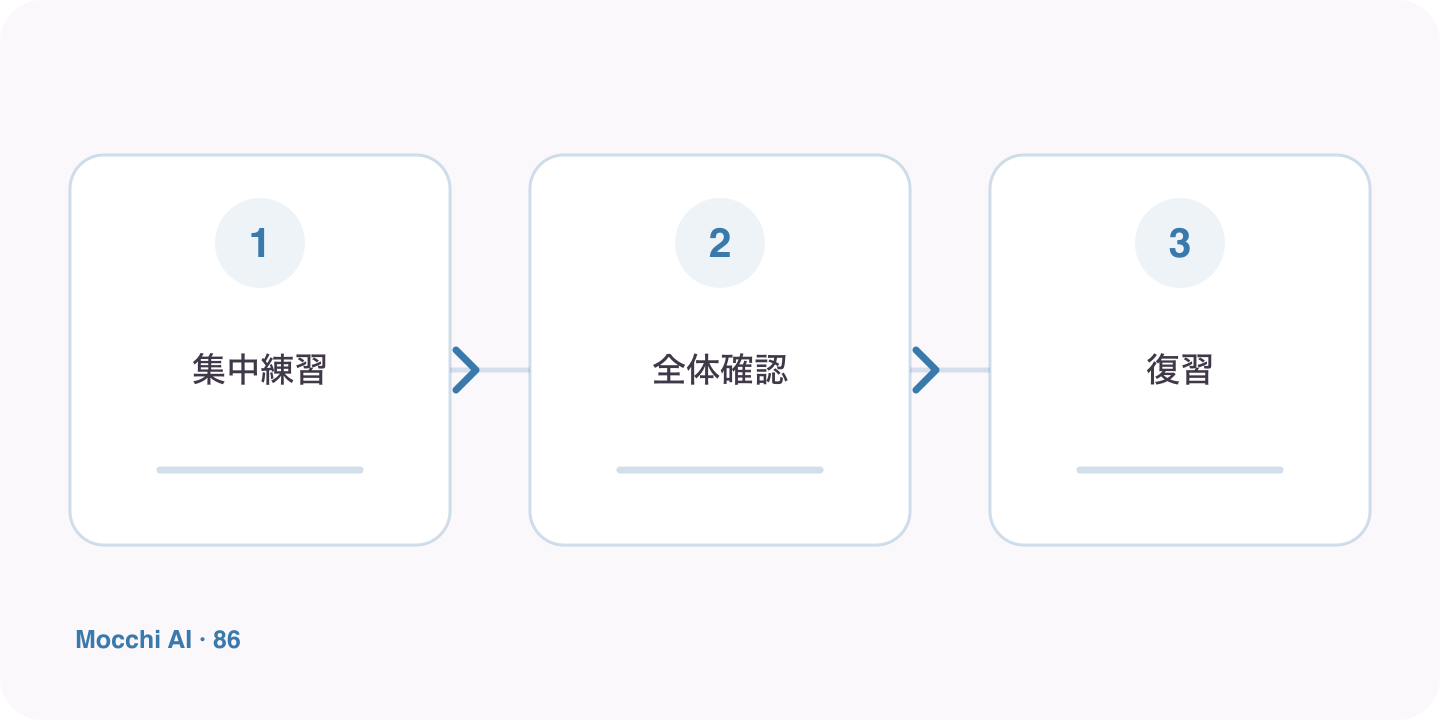
| Activity | Main use |
|---|---|
| Focused original set | Understand a specific decision |
| Broader exam-format practice | Inspect coverage and timing under stated conditions |
| Targeted follow-up | Practice the error pattern the attempt revealed |
Keep the answer review until the appropriate point
If the aim is independent performance, finish the selected set before reading explanations. If the aim is teaching, pause deliberately and treat later answers as supported by what you learned. Note the distinction. Mocchi can help interpret the result more accurately when you explain how the attempt was conducted.
Use the broader attempt to choose a smaller lesson
Group errors by the weak step rather than reviewing every item in the same way. Unknown vocabulary, misread instructions, and unsupported inferences need different practice. Bring one pattern to Mocchi with your original reasoning, then request a fresh example. This turns the larger activity into a useful guide for the next focused session.
Use official sources for the actual examination
Confirm real test structure and published examples with the JLPT's own materials. Keep tutor-generated questions labeled as original practice and treat score estimates cautiously. A strong routine combines focused explanations, appropriate broader practice, and review of new attempts. It does not depend on assuming that one short successful set reproduces every demand of the official exam.