

Start with a target and a current performance check
A target level says where you want to go, while current practice shows where the plan begins. Tell Mocchi about a recent reading, vocabulary, or grammar task and what went wrong. If you have not checked recently, ask for a small diagnostic exercise rather than assuming an old level label still describes every skill. Use the result to identify a few priorities before dividing the remaining weeks.
Do not fill the plan only with topics you have never studied. Earlier material that you recognize but cannot retrieve may also need time. A useful schedule balances new coverage with retention and gives you a way to see whether the difficult material becomes more dependable.
Translate the goal into a manageable learning decision
A broad request such as 'finish N3 grammar' hides the kind of work needed. You might need to understand a contrast, recognize a form in a passage, or choose it correctly in a question. Ask Mocchi to name the task for each priority. A plan becomes easier to review when a session ends with an attempt rather than a vague instruction to study a chapter.
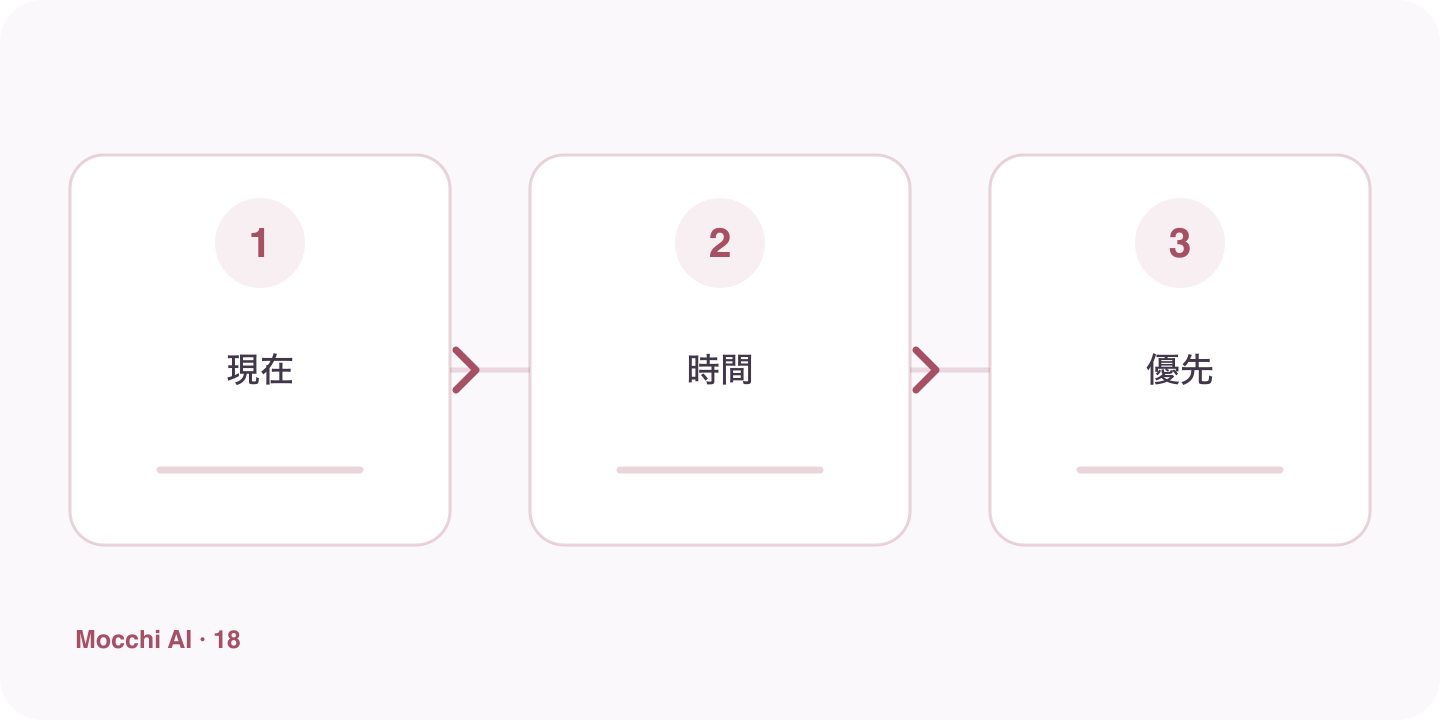
| Planning question | Useful evidence |
|---|---|
| What can I do now? | A recent attempted task and its errors |
| What time is available? | A realistic ordinary-week commitment |
| What changes next? | A priority linked to the weak step |
Reserve room for review and mixed questions
If every day is assigned new material, the plan assumes you will retain everything after one exposure. Leave time to retrieve earlier points and decide among alternatives in mixed practice. An answer can feel easy when you know the exercise is about one grammar pattern; it may be harder when the task does not announce which pattern is required.
Keep official exam facts outside the generated schedule
Use official JLPT information for the actual test structure, dates, and requirements relevant to your location. Mocchi's practice plan is a learning aid, not an official syllabus or a substitute for registration information. Avoid confusing broad language development with the specific demands of exam questions, and keep speaking or writing goals in the plan when they matter to you beyond the exam.
Review the first week before trusting the whole calendar
After several real sessions, compare the estimated workload with the time it actually took. Ask Mocchi to adjust future work while preserving completed tasks and the overall goal where appropriate. A plan that changes in response to evidence can remain useful; a plan that merely looks complete on the first day may become less relevant as soon as a difficult topic takes longer than expected.