

Describe the failure before proposing a solution
Tell Mocchi whether you forget the sound, confuse the meaning, reverse a similar word, or cannot tell what the prompt wants. These are different problems. A reading cue may help one while doing little for another. A short description of your actual attempt gives the tutor more useful information than simply saying the card is impossible.
Check relevance too. If the word does not support your current goals and appears rarely in your material, you may not want to prioritize it now. That is a planning decision, not evidence that all difficult vocabulary should be avoided.
Make the intended meaning specific enough to test
A card about 予約 should make the booking or reservation sense clear. If the prompt uses an overlapping gloss that could also suggest 約束, add a service-booking situation. Ask Mocchi to explain why the context selects the intended word. This gives you a fair retrieval target instead of a contest to remember which broad translation happened to be on the back.
| Japanese | Romaji | Meaning |
|---|---|---|
| ホテルを予約しました。 | Hoteru o yoyaku shimashita. | I booked a hotel. |
| 予約を確認します。 | Yoyaku o kakunin shimasu. | I check the reservation. |
Keep the example from becoming a second difficult lesson
A card meant to teach one word should not require several unfamiliar grammar patterns just to understand the example. Ask for a shorter sentence with familiar surrounding vocabulary. You can study the advanced construction separately. This makes the card's difficulty easier to interpret and keeps a useful example from hiding the target meaning.
Change the support according to the weak link
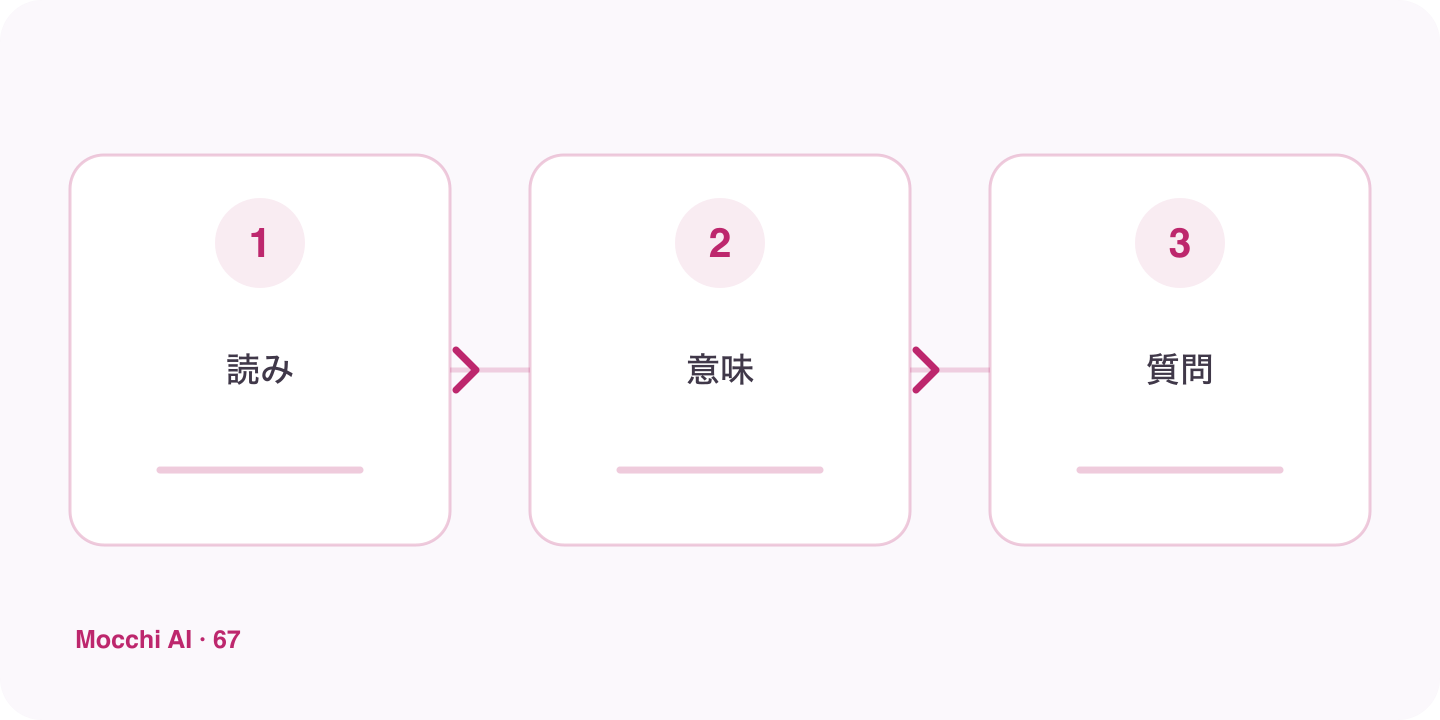
For a forgotten reading, connect the written word to its sound and try without annotation. For a confused meaning, compare two situations. For an ambiguous prompt, add the missing clue. Ask Mocchi for one targeted improvement rather than a large collection of memory techniques. The right fix should make the next attempt more informative.
Check the result outside the original card layout
Read or produce a fresh sentence using the word without relying on the old image or answer position. Explain the intended meaning and note the help required. If the link is clearer, return to normal review. If not, revise the diagnosis rather than declaring that more identical repetitions must eventually work. This keeps personalized vocabulary practice responsive to evidence from your actual attempts.