
Preserve the reasoning before reading the full explanation
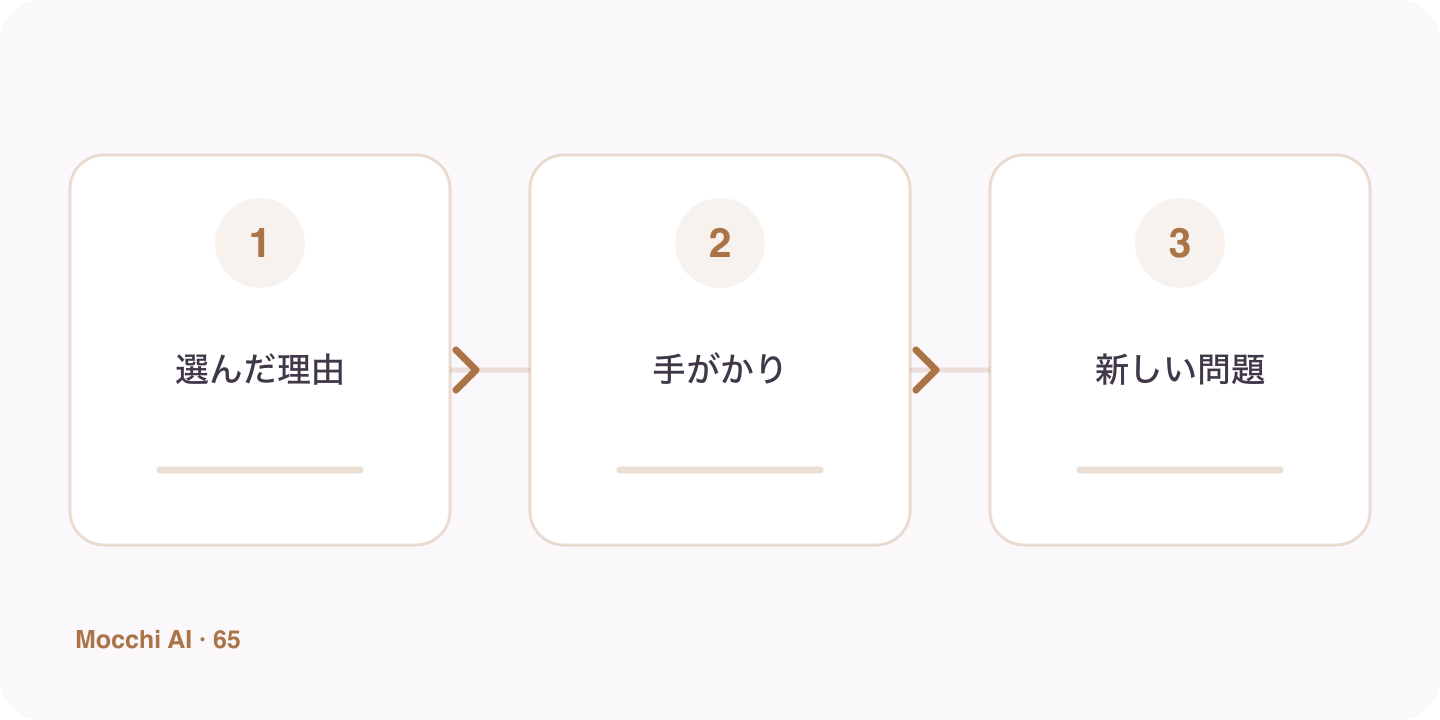
Write a short account of what you noticed and how it led to the answer. Did you match an English gloss, choose a familiar ending, or focus on one word while missing another? Tell Mocchi that reasoning. It can reveal the exact shortcut that needs adjustment and prevent the review from becoming a generic explanation of the whole grammar topic.
Keep the prompt visible as well. An answer cannot always be judged from the option alone because the intended meaning and surrounding context determine which choice fits. A useful review explains the relationship between the option and that particular task.
Find the clue that changes the decision
If the prompt describes a completed event yesterday, the time relationship matters when choosing a simple past report. 昨日、映画を見ました fits that intended message. Ask Mocchi which part of the prompt made the choice appropriate and why an alternative form would present a different event or require another context. Then vary the activity so the correction does not stay tied to the word film.
| Japanese | Romaji | Meaning |
|---|---|---|
| 昨日、映画を見ました。 | Kinō, eiga o mimashita. | I watched a film yesterday. |
| 明日、映画を見ます。 | Ashita, eiga o mimasu. | I will watch a film tomorrow. |
Compare the tempting option fairly
Ask whether the wrong option is malformed, changes the meaning, or simply lacks support in this context. If it could fit elsewhere, request one short appropriate scenario. This helps you keep useful Japanese available without treating every rejected quiz option as forbidden language. The distinction also makes the original error easier to describe accurately.
Test the revised reasoning with new details
Request another question that preserves the decision but changes the nouns, verbs, or situation. Explain the clue before checking the answer. If you still rely on the old sentence's appearance, reduce the task and compare a simpler pair. The point is to change the decision process, not merely remember which box was marked correct.
Finish with a short reusable note
Record the missed clue and one new example that now makes sense. At the next review, try before opening that note. Mocchi can use learning context to revisit recurring patterns, while your explanation of the original shortcut helps keep the follow-up focused. A wrong answer becomes productive when it leads to a clearer choice in another sentence, not when it disappears from a score summary.