
Decide When to Look Up a Japanese Word With Mocchi

The right time to look up a Japanese word depends on what you need from the text. Ask Mocchi to help you distinguish a word that blocks the main message from a detail you can revisit, then verify any important guess before treating it as knowledge.

Mocchi helps a learner decide whether an unknown Japanese word blocks the reading task or can be checked later
What you need to know

Decide When to Look Up a Japanese Word With Mocchi

Looking up every unfamiliar item can interrupt the paragraph so often that its meaning disappears. Refusing every lookup can be equally unhelpful when one word carries the request or changes the conclusion. Start with a reading purpose and assess the obstacle. You can sometimes continue for the main idea and return to details, while a crucial unknown deserves immediate attention. Mocchi can help explain the word in its actual sentence and choose a small follow-up practice task.

State what you need to understand from the text.

Check whether the unknown blocks that purpose.

Keep guesses provisional until verified.

Save useful words with the context that made them matter.

Choose the reading purpose before the lookup rule

Reading for the main idea, finding a deadline, and studying every sentence are different tasks. Tell Mocchi which one you are doing. A minor descriptive word may be safe to revisit during a first overview, while an unfamiliar instruction can prevent you from understanding what the text asks you to do. The reading purpose determines whether the unknown is central.

Use a short passage while learning this decision. If every line contains several unfamiliar words, the text may need more support or a different difficulty. A lookup strategy cannot by itself make any material appropriate for your present level.

Check whether the unknown changes the required action

A message containing 変更 means that something is being changed. If you miss that word while recognizing a time or place, you may follow an outdated arrangement. Ask Mocchi to explain the whole phrase in context and identify which detail is active after the change. This shows why an apparently small vocabulary gap can matter more than several unfamiliar descriptive words.
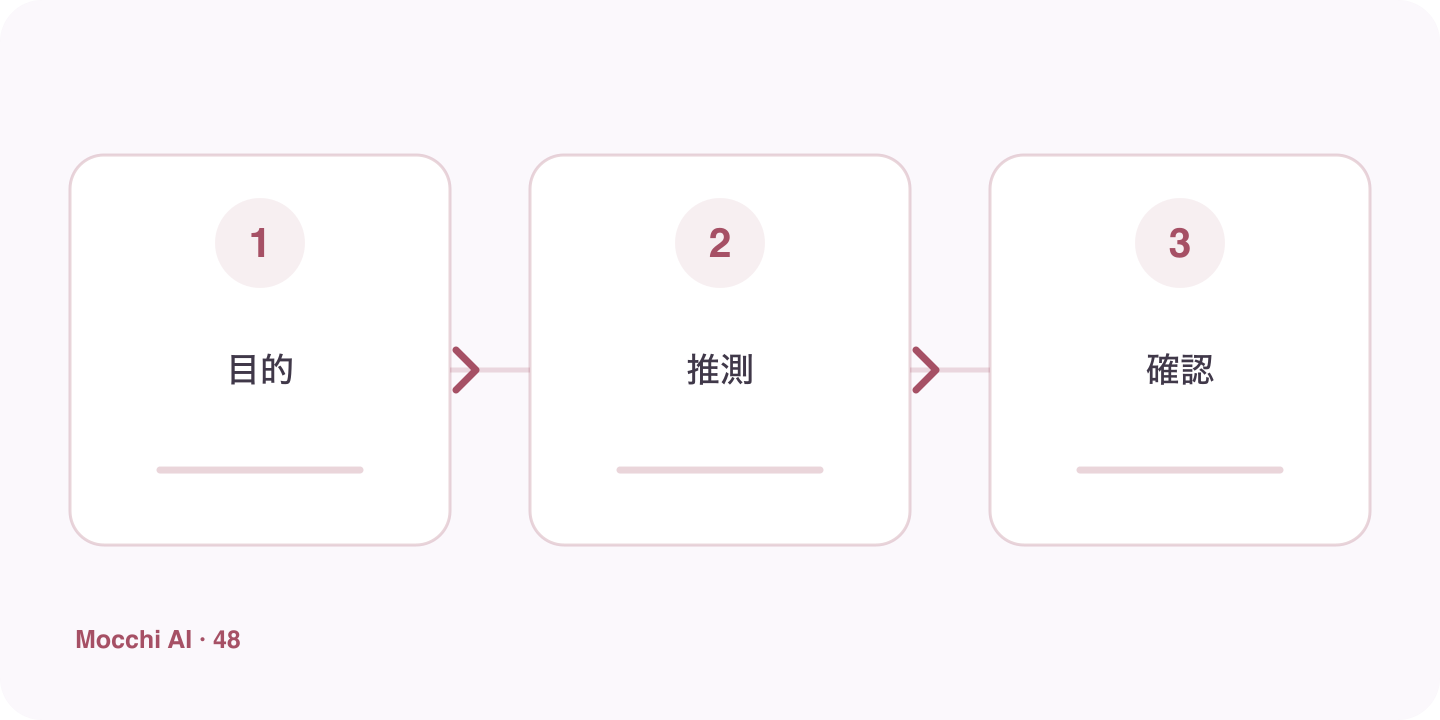
A reading goal leads to a comprehension check, a lookup decision, and verification of the word in context
Delay a lookup when appropriate, but do not confuse a plausible guess with a verified word meaning.
JapaneseRomajiMeaning
予定が変更になりました。Yotei ga henkō ni narimashita.The plan has changed.
新しい時間を確認してください。Atarashii jikan o kakunin shite kudasai.Please check the new time.

Explain your provisional interpretation before checking

Say what you think the sentence means and which part remains uncertain. Mocchi can then address the missing link instead of replacing your whole reading with a fluent translation. If the explanation changes the main point, note the word or relationship responsible. That comparison helps you learn from the lookup rather than simply moving past it.

Return the word to a fresh sentence

After understanding the original context, request another short example with familiar surrounding vocabulary. Read it without the first explanation open and check the intended sense. If the word has several meanings, keep today's sense separate and add others through their own contexts. This avoids turning a broad dictionary entry into a card whose expected answer is unclear.

Review the choice as well as the vocabulary

Ask whether delaying the lookup helped you retain the main idea or caused a misunderstanding. Use that observation to refine the next reading session. Mocchi can adapt support to the difficulties you report, while you retain the habit of distinguishing a verified meaning from a plausible inference. The goal is purposeful reading, not a contest to minimize or maximize the number of dictionary searches.

Key points

A practical way to improve

Choose a short original passage with one or two unfamiliar words. State the main point as far as you can, then identify which unknown prevents a confident answer. Ask Mocchi to explain that word in context and reread the passage. Check whether the meaning changes. Save only the vocabulary that supports your current goal, and ask for a fresh example rather than turning every unknown into an automatic card.

  1. 1

    Choose one clear goal

    Focus each session on a situation or skill you can actually use.

  2. 2

    Practice actively

    Say complete answers aloud instead of only reading or recognizing Japanese.

  3. 3

    Review and repeat

    Keep useful corrections and revisit the same skill until it feels natural.

FAQ

Frequently asked questions

Should I never stop for vocabulary during reading?

No. A word that carries the main request, contrast, or important detail may need immediate checking. The useful choice depends on your reading purpose, not on a rule that all lookup is good or all lookup is harmful.

Is guessing from context enough to learn the word?

A contextual guess is a working hypothesis. Verify important meanings and readings before storing them as facts, especially when a different sense would change the interpretation of the passage.

Should every looked-up word become a flashcard?

Not automatically. Choose words relevant to your goals or likely to recur, and keep their intended meaning clear. A selective set is easier to review usefully than an unlimited queue of isolated unknowns.

Keep reading purposeful without guessing blindly

Use Mocchi to choose a useful lookup and connect the new word back to the passage.