
Plan N2-Level Reading Practice Around Evidence With Mocchi

A useful N2-style reading plan develops how you justify an interpretation, not only how much text you finish. Ask Mocchi for practice that makes you trace references, notice contrast, and point to evidence before accepting an answer.

Mocchi traces a Japanese passage's contrast and supporting evidence before choosing an answer
What you need to know

Plan N2-Level Reading Practice Around Evidence With Mocchi

At this stage, a passage may contain mostly familiar vocabulary while its argument remains difficult to follow. A contrast, a changing referent, or a qualification can alter the writer's point. If you simply request harder passages, you may repeat the same reading habit on denser material. Build a plan around the reasoning step that fails: identifying the claim, following what a pronoun refers to, or distinguishing a main reason from a supporting example.

Name the reading decision that caused difficulty.

Use text evidence before judging answer options.

Track contrasts and references explicitly.

Separate slow decoding from mistaken interpretation.

Choose the reasoning problem before the next passage

Review a recent difficult answer and identify the step where your interpretation changed. Did you lose track of what それ referred to, overlook a contrast, or treat an example as the main claim? Bring that specific observation to Mocchi. A targeted exercise can make the weak step visible, whereas a general request for difficult reading may simply increase the number of unfamiliar parts.

Keep a distinction between speed and understanding. Taking longer to decode a sentence does not necessarily mean your interpretation is wrong. Finishing quickly does not prove that you followed the argument. Record both the answer and the reasoning so the plan can address the relevant issue.

A qualification can change the strength of a claim

便利だからといって、いつも最善とは限りません means that convenience does not necessarily make something the best choice every time. The sentence does not say that convenience is worthless. Ask Mocchi to compare the supported interpretation with an exaggerated alternative. This makes the qualification itself the learning target rather than letting familiar vocabulary carry you toward a stronger conclusion than the writer expressed.
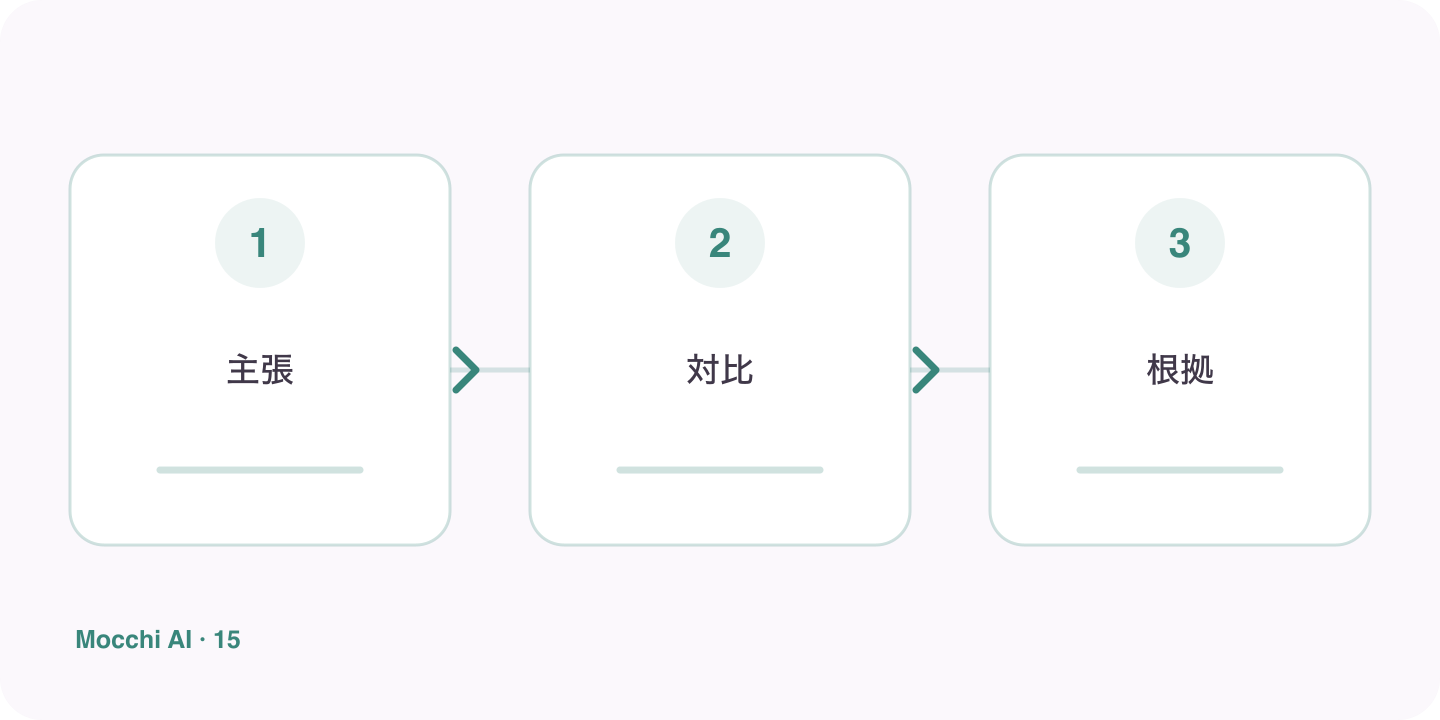
A claim, a contrast marker, and supporting evidence connect to a reading decision
A stronger reading plan asks which phrase supports the answer and which detail rules an alternative out.
JapaneseRomajiMeaning
便利だからといって、いつも最善とは限りません。Benri dakara to itte, itsumo saizen to wa kagirimasen.Just because it is convenient does not mean it is always the best choice.
条件によって、選び方は変わります。Jōken ni yotte, erabikata wa kawarimasu.The way to choose changes depending on the conditions.

Ask for evidence before the full explanation

After choosing an answer, identify the sentence or phrase that made it reasonable. If you cannot point to one, say that the answer was an inference and ask which clues would justify it. This habit helps separate an interpretation supported by the passage from an idea that merely sounds sensible. Mocchi can then explain the gap more precisely than it could from the selected option alone.

Explain why the tempting option fails

A wrong option may reuse a word from the passage while changing its scope, cause, timing, or subject. Describe that change in plain language. Do not stop at 'the other answer is correct.' Understanding why your first choice was attractive gives you a useful warning sign for the next passage, especially when the same kind of overstatement or reference error appears again.

Keep a weekly record of decisions, not just scores

At the end of a week, look for repeated reasoning categories in your notes. If contrast errors recur, use a few short contrast-focused texts before returning to longer mixed passages. If vocabulary is the main obstacle, review relevant words in context without pretending that a logic drill will solve the issue. A personal plan should reflect these observed bottlenecks and keep official exam practice separate from the broader work of becoming a more capable reader.

Key points

A practical way to improve

Choose one short argumentative passage and ask Mocchi to withhold the explanation until you answer. Give your interpretation and cite the phrase that supports it. Then explain why one tempting alternative is not supported. If your answer is wrong, identify whether the problem was vocabulary, reference, contrast, or the writer's main point. Use that category to choose the next small practice task.

  1. 1

    Choose one clear goal

    Focus each session on a situation or skill you can actually use.

  2. 2

    Practice actively

    Say complete answers aloud instead of only reading or recognizing Japanese.

  3. 3

    Review and repeat

    Keep useful corrections and revisit the same skill until it feels natural.

FAQ

Frequently asked questions

Should every session be timed?

Not necessarily. First make the reasoning visible without excessive time pressure. Add a time limit to comparable tasks after you can distinguish a slow but supported answer from a fast guess.

What if I know the words but still choose the wrong answer?

Check the relationships between ideas, including contrast, reference, and qualification. Ask which phrase supports the answer and which part of the passage contradicts or fails to support the alternative you chose.

Can Mocchi certify that I am ready for N2?

No. Tutor practice can reveal strengths and weaknesses, but it is not an official readiness certificate. Use official exam information and appropriate practice materials alongside your learning routine.

Make the reason behind your answer visible

Use Mocchi to practice reading decisions with evidence rather than treating a correct option as the end of the lesson.