
Write a Small Japanese Opinion Paragraph With Mocchi

A small Japanese opinion paragraph needs one clear claim and a reason that supports it. Ask Mocchi to help you check that connection before adding more vocabulary, formal expressions, or an impressive model paragraph you cannot yet reproduce.

Mocchi connects a learner's Japanese opinion to one reason and a relevant example
What you need to know

Write a Small Japanese Opinion Paragraph With Mocchi

Opinion writing can become difficult because you are deciding what to say and how to say it at the same time. Choose an ordinary topic and a modest claim first. Add one reason and, if useful, a concrete example. Mocchi can help identify a missing link and correct the language while keeping the strength of your opinion intact. The goal is a paragraph whose reasoning you can explain, not simply a more advanced-looking collection of sentences.

Choose a claim small enough to support.

Make the reason answer why the claim makes sense.

Use an example that actually illustrates the reason.

Keep wording and claim strength under your control.

Choose a claim that fits a short paragraph

A small preference is easier to support than a sweeping statement about all learners or every situation. Tell Mocchi what you think and the context in which you think it. For example, you may prefer short morning review on workdays without claiming that morning study is always best for everyone. A bounded claim gives the paragraph a clearer job.

Use an invented scenario when you prefer. The exercise needs a coherent opinion and reason, not personal details. Keep the topic familiar enough that you can judge whether the suggested examples actually support what you mean.

Connect the preference to a concrete reason

朝に復習するのが好きです states a preference for reviewing in the morning. 静かで集中しやすいからです gives a reason: it is quiet and easy to concentrate. Ask Mocchi whether the reason explains the preference in the intended context, then add a short example if the paragraph needs it. Do not replace a personal preference with a general claim that the method must work for everyone.
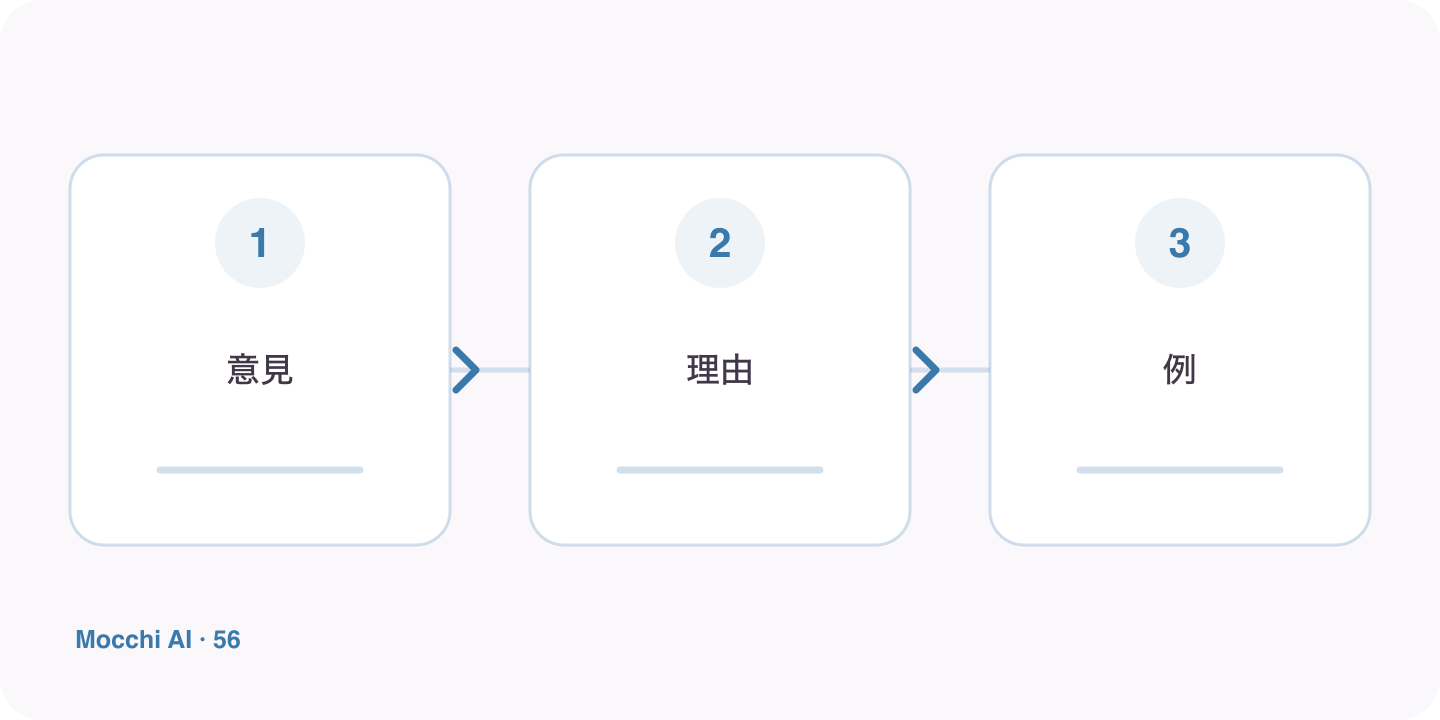
An opinion, a supporting reason, and an example are checked for a coherent relationship
A short argument is stronger when the reason actually supports the claim rather than merely sounding related.
JapaneseRomajiMeaning
朝に復習するのが好きです。Asa ni fukushū suru no ga suki desu.I like reviewing in the morning.
静かで集中しやすいからです。Shizuka de shūchū shiyasui kara desu.Because it is quiet and easy to concentrate.

Check whether the example supports the reason

An example should show the reason in action, not introduce an unrelated benefit. If the reason concerns concentration, a detail about having a quiet five-minute period is more relevant than a comment about liking a notebook's color. Ask Mocchi to identify which sentence supports which idea so the paragraph does not rely on a connector to hide a weak relationship.

Revise the argument before polishing vocabulary

Read the paragraph in plain language and ask whether its reasoning is understandable. Fix a missing connection or overstatement first. Then work on a grammar or word-choice issue that improves the same message. This order prevents an elegant rewrite from distracting you from a reason that still does not support the claim.

Try another topic to check the structure

Write a new short paragraph about a different ordinary choice before reopening the original model. Keep the claim modest, give a reason, and add only a relevant example. Ask Mocchi to focus on the connection you previously found difficult. This gives personalized writing feedback a practical follow-up rather than leaving you with one polished paragraph and no transferable process.

Key points

A practical way to improve

Choose an ordinary study preference and write one Japanese opinion sentence. Add a reason, then one brief example that supports that reason. Ask Mocchi to check the logical connection before correcting optional style. Revise the weakest link yourself and try a different topic later using the same small structure without copying the original wording.

  1. 1

    Choose one clear goal

    Focus each session on a situation or skill you can actually use.

  2. 2

    Practice actively

    Say complete answers aloud instead of only reading or recognizing Japanese.

  3. 3

    Review and repeat

    Keep useful corrections and revisit the same skill until it feels natural.

FAQ

Frequently asked questions

Do I need a controversial topic for opinion practice?

No. A study preference, a familiar activity, or an ordinary choice is enough. A manageable topic lets you focus on the Japanese and the connection between claim and reason.

Should I use advanced grammar to make the paragraph stronger?

Only when it helps express the intended relationship accurately. Clear reasoning in language you control is more useful than a difficult form added only to make the paragraph look advanced.

What if the tutor strengthens my opinion?

Point out the change and restate your intended scope. A preference for one situation should not become a universal claim unless that is what you actually want to argue.

Give your opinion one clear supporting reason

Use Mocchi to improve the relationship between ideas before making the paragraph longer.