

Read the connection, not just the expression
A reference word often carries meaning from an earlier part of the passage into the next sentence. If you treat it as an isolated vocabulary item, the paragraph can lose coherence even when every word is familiar. Tell Mocchi which link you cannot follow and include the surrounding sentences rather than asking about それ alone.
Use an original short example first. One clear reference is easier to investigate than a long passage with several competing topics. Once the reasoning is visible, increase the length and check whether you can keep the relevant idea available across another sentence.
Test an action as the proposed reference
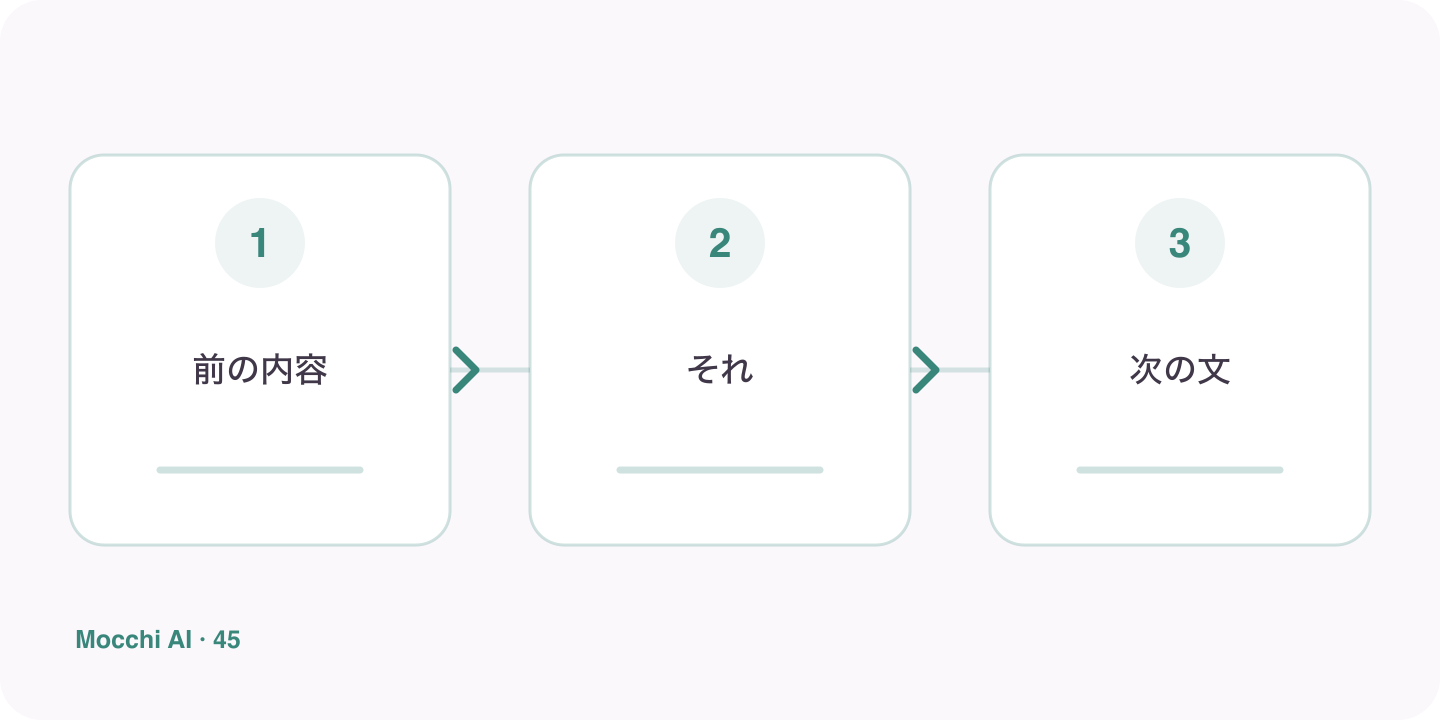
Consider 毎日、短い日記を書いています。それを続けたいです. The second sentence refers back to the diary-writing activity in context: the speaker wants to continue it. Ask Mocchi to compare that interpretation with a less coherent replacement and explain why the link works. The point is the relation between the statements, not a memorized translation of one reference word.
| Japanese | Romaji | Meaning |
|---|---|---|
| 毎日、短い日記を書いています。 | Mainichi, mijikai nikki o kaite imasu. | I write a short diary every day. |
| それを続けたいです。 | Sore o tsuzuketai desu. | I want to continue doing that. |
Replace the expression and reread the statement
State your proposed meaning explicitly in place of the reference. Does the sentence still make sense, and does it remain faithful to the preceding text? This check can reveal a reference that is grammatically possible but contextually unsupported. Ask Mocchi to respond to your reasoning rather than only naming the correct antecedent.
Use evidence to reject a tempting alternative
If another nearby noun attracts your attention, explain what the sentence would mean with that reference. Compare the result with the actual sequence of ideas. A wrong proposal can still be useful when you identify why it seemed plausible and which clue makes it fail. That clue becomes a specific review target instead of a vague complaint about long sentences.
Vary the type of reference during later review
Practice a new paragraph where the link concerns an object, a preceding statement, or an action. Keep the examples short until you can explain the connection reliably. Mocchi can choose follow-up reading around the reference problems you report, while your own replacement test makes the reasoning observable and transferable to unfamiliar texts.