
Keep Mocchi Review and Study-Plan Tasks Clear

Reviewing a Japanese weak point and completing a study-plan task are related but different actions. Tell Mocchi which one you want, attempt the relevant work, and check the plan record instead of assuming that opening a review automatically completes a roadmap activity.

Mocchi separates a Japanese review activity from the completion status of a planned study task
What you need to know

Keep Mocchi Review and Study-Plan Tasks Clear

A learner may review a grammar pattern from an unfinished task and feel that the task should now be complete. Sometimes the review supplied exactly the needed practice; sometimes it only explained the prerequisite. Keep the task's actual instruction visible. Mocchi can help you review, resume unfinished work, or adjust a plan, while a clear distinction between these actions makes the record more useful for choosing what comes next.

Name whether you want review, catch-up, or an adjustment.

Read the actual planned task before judging completion.

Keep opening an activity separate from doing its work.

Use the result to choose the next relevant action.

Name the action you want before beginning

Tell Mocchi whether you want to revisit a weak point, work through unfinished tasks, or change the future plan. These requests can lead to different next steps. A clear intention avoids a session that opens a task list when you wanted a small explanation, or discusses a grammar point when you wanted to resume a specific roadmap activity.

Keep the distinction practical rather than administrative. The purpose is not to spend more time managing checkboxes. It is to make the next learning action clear and prevent the record from implying work that you have not actually attempted.

Read the task's completion condition

A task may ask for a short reading, a set of answers, or an independent response. Reviewing an explanation can support that work without replacing it. Ask Mocchi what the activity expects and attempt the relevant part after the review. This keeps the plan connected to observable practice rather than treating a topic name as proof that every task involving it is finished.
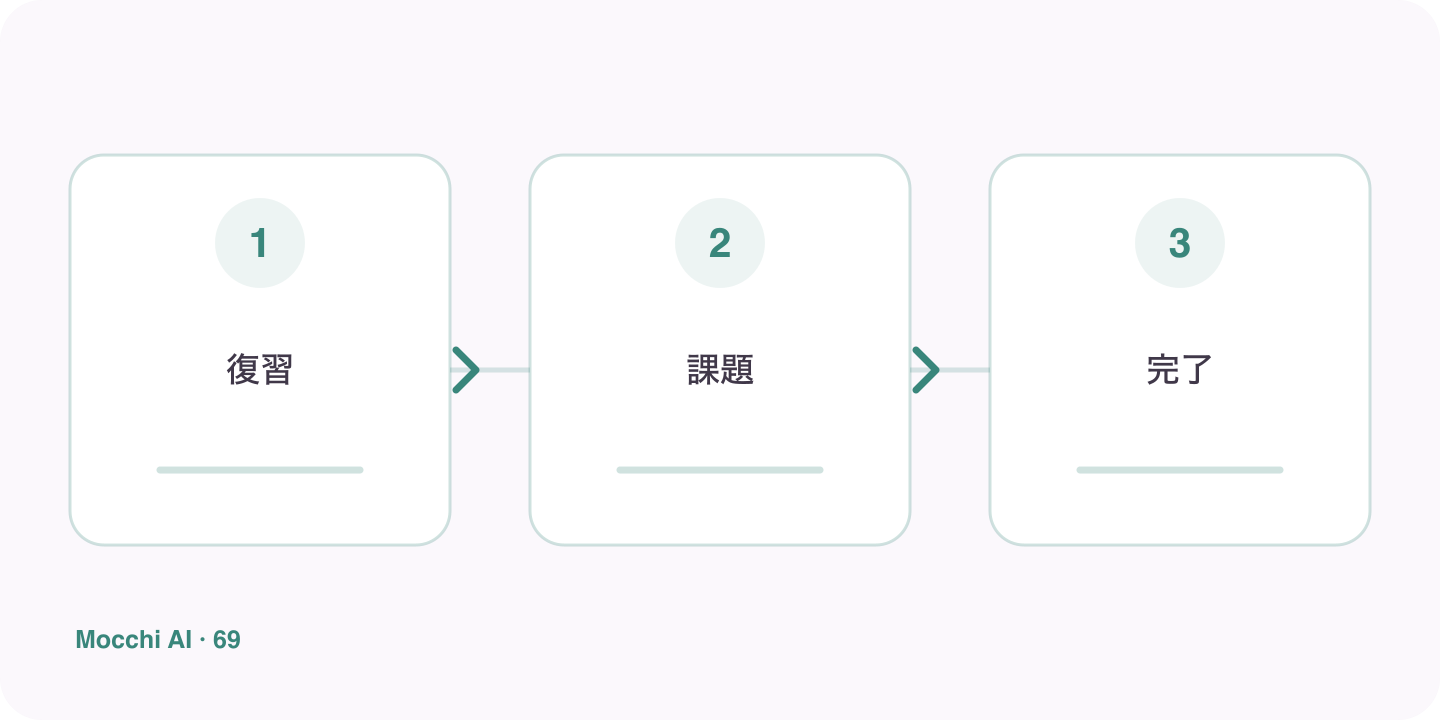
A weak-point review and a roadmap task connect to learning without being treated as the same recorded action
A review can help a planned task without automatically proving that the task's requested work was completed.
RequestWhat to check
Review a weak pointThe explanation and fresh attempt
Resume a taskThe task's requested activity
Adjust the planThe future workload and preserved completed work

Use review to remove the actual obstacle

If an unfinished task is blocked by one unfamiliar pattern, practice that pattern in a short example first. Then return to the task and see whether the original activity is now manageable. Tell Mocchi what still causes difficulty. This creates a useful connection between review and the plan without assuming that they are interchangeable.

Check status after the work rather than before it

Once you have attempted the activity, look at the plan record and clarify anything that does not match what happened. If the task remains unfinished because you only studied a prerequisite, keep the next step small and explicit. If the task no longer serves the goal, discuss an adjustment instead of pretending it was completed to make the list look tidy.

Leave a next action that matches your intention

End with a specific return point: another review example, the next part of the task, or a plan adjustment to discuss. Mocchi's personalized support is more useful when it knows which of those you want. An honest record can show both useful learning and unfinished work, giving you a realistic path forward without turning every missed checkbox into a reason to restart the whole plan.

Key points

A practical way to improve

Choose an unfinished planned task and identify what it asks you to attempt. Review one weak point with Mocchi, then return to the task and complete the requested activity if it still applies. Check the recorded status afterward. If your goal was only a short review, say so and leave the plan adjustment question separate rather than changing the roadmap as a side effect.

  1. 1

    Choose one clear goal

    Focus each session on a situation or skill you can actually use.

  2. 2

    Practice actively

    Say complete answers aloud instead of only reading or recognizing Japanese.

  3. 3

    Review and repeat

    Keep useful corrections and revisit the same skill until it feels natural.

FAQ

Frequently asked questions

Does opening a review prove I completed a plan task?

No. Opening or reading an activity is different from doing the work requested by a specific task. Check what was actually attempted and what the plan record shows.

Can review still be valuable if it does not complete a task?

Yes. It can clarify a prerequisite or make later work easier. Learning value and task status answer different questions, so you do not need to force every useful review into a completion checkbox.

What if I want to change the plan instead of catching up?

State that intention directly and explain what changed in your goal or available time. A plan adjustment is a different request from reviewing one topic or resuming an unfinished activity.

Make the learning action and the plan record agree

Use Mocchi to review what is difficult while keeping completed and unfinished work understandable.