
Choose Japanese Connectors With Mocchi by Meaning

Choose a Japanese connector after deciding how the ideas relate. Ask Mocchi whether you mean a reason, contrast, sequence, or addition, then compare a short pair of sentences before making the paragraph more elaborate.

Mocchi compares cause, contrast, and sequence before connecting two short Japanese ideas
What you need to know

Choose Japanese Connectors With Mocchi by Meaning

A list of connectors can make writing feel more organized while leaving the actual logic unclear. Two ideas do not become a cause-and-effect relationship merely because a reason marker appears between them. Start with the intended connection in plain language and use familiar vocabulary. Mocchi can help compare possible wording and show when a connector changes the message, while you retain responsibility for what the paragraph is meant to say.

State the relationship before choosing the connector.

Keep the surrounding ideas simple during comparison.

Check whether the wording changes the intended logic.

Use a fresh pair of ideas for the follow-up.

Explain the relation in everyday language

Before asking for Japanese wording, say what the second idea does: explains why the first happened, adds another event, or contrasts with an expectation. Tell Mocchi that relationship and show the sentences you tried. This gives the feedback a purpose beyond making the paragraph sound more advanced.

Keep the first pair short. If the ideas contain several causes, exceptions, and time changes, you may be trying to express more than one relationship at once. Separate them and practice the central link before deciding whether a longer combined sentence helps the reader.

Compare a sequence with an unexpected contrast

ご飯を食べて、出かけました presents a sequence of eating and going out. 雨でしたが、出かけました presents going out despite the rainy situation. Ask Mocchi to identify the intended relationship in each and then make a changed pair. The examples show why one broad English gloss cannot replace a clear account of how the events connect.
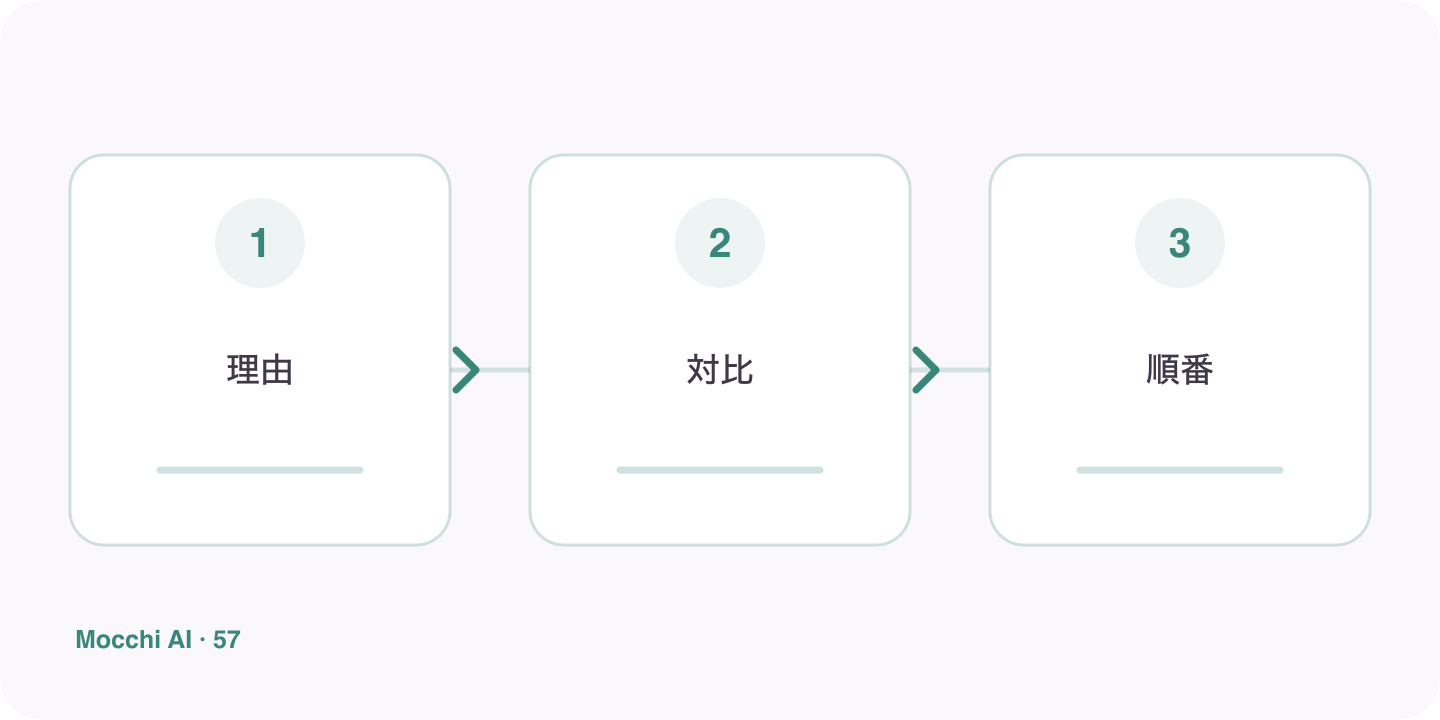
Two ideas are checked for their relationship and then joined with wording that preserves it
A connector expresses a relationship; it cannot create a sound argument between unrelated ideas.
JapaneseRomajiMeaning
ご飯を食べて、出かけました。Gohan o tabete, dekakemashita.I ate and then went out.
雨でしたが、出かけました。Ame deshita ga, dekakemashita.It was raining, but I went out.

Check the construction around the connector

A useful connector also needs the appropriate surrounding form. Ask Mocchi to explain the complete construction, not just the linking word. If a verb or adjective form is the weak step, practice it briefly before returning to the sentence relationship. This keeps a conjugation problem from being confused with a misunderstanding of the logic.

Do not let variation replace accuracy

Once a simple connection is clear, you may compare another way to express it. Ask whether the alternative changes tone, emphasis, or structure. Keep the original intention fixed during the comparison. A paragraph does not become better merely because every sentence uses a different connector, especially when some choices add relationships you did not mean.

Review with ideas from a new topic

Choose another ordinary situation and decide its relationship before writing. Apply the same questions without opening the first example. If the connector is correct but the ideas remain poorly connected, revise the content. If the relationship is clear but the form is unstable, ask Mocchi for a focused construction check. This makes the next lesson respond to your actual writing rather than to a generic list of linking expressions.

Key points

A practical way to improve

Write two simple Japanese sentences and tell Mocchi whether they express a reason, contrast, or sequence. Ask for a suitable connection and explain why it fits. Then change the relationship or one idea and compare the wording. Finish by joining another pair yourself before seeing a model, checking that the connector represents a relationship already present in your intended message.

  1. 1

    Choose one clear goal

    Focus each session on a situation or skill you can actually use.

  2. 2

    Practice actively

    Say complete answers aloud instead of only reading or recognizing Japanese.

  3. 3

    Review and repeat

    Keep useful corrections and revisit the same skill until it feels natural.

FAQ

Frequently asked questions

Should I avoid repeating a simple connector?

Not at the cost of clarity. Variation is useful when you understand the alternatives, but replacing a familiar connector with an unfamiliar one can change the relationship or tone.

Can I use any connector translated as but interchangeably?

No. Expressions with overlapping glosses may differ in structure, context, or nuance. Compare complete examples and ask what changes in the intended message.

What if the ideas do not really support the connection?

Revise the ideas or their order rather than expecting the connector to fix the logic. Ask Mocchi which part of the relationship is missing and make the smallest useful change.

Make the connection clear before adding the marker

Use Mocchi to match a connector to your intended relationship rather than decorate the paragraph with a list of forms.