

Tell the tutor which part is actually new
You may know the symbols but not the words, or recognize the words while missing the sentence relationship. Tell Mocchi what you can identify before asking for a full explanation. This gives the lesson a useful starting point. A blanket request to make everything easier can remove the very reading challenge you are ready to practice.
Keep the vocabulary controlled. One unfamiliar item is easier to investigate than a sentence where every word needs lookup. If the first example is too dense, request a shorter one with the same target rather than adding a long list of vocabulary before you can read a complete message.
Group the symbols into a familiar meaning
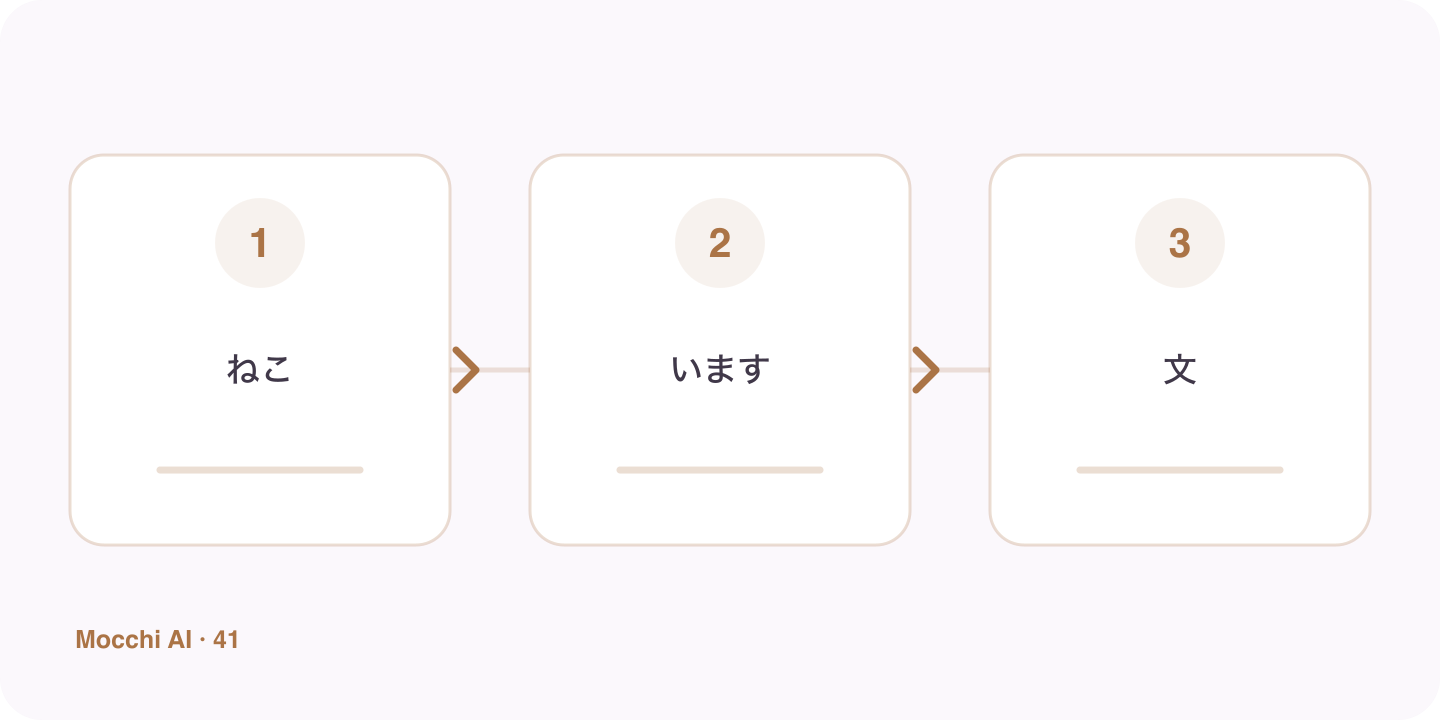
ねこがいます is a short sentence meaning that there is a cat. Identify ねこ and the rest of the expression before reading it as a message. Add a familiar location only after the shorter version is clear. Ask Mocchi to explain the parts and then remove the visible translation for a second attempt so the reading remains your own task.
| Japanese | Romaji | Meaning |
|---|---|---|
| ねこがいます。 | Neko ga imasu. | There is a cat. |
| へやにねこがいます。 | Heya ni neko ga imasu. | There is a cat in the room. |
Use a boundary explanation without depending on it forever
If you cannot see where a word ends, ask the tutor to group the parts briefly and explain their roles. Then read the normal unspaced sentence again. The grouping is a teaching aid, not a reason to assume that every future Japanese text will contain the same support. Small repeated encounters help the familiar words become recognizable inside new lines.
Read for the message after checking the parts
Once the symbols and words are understandable, ask what the whole sentence tells you. Is something present, is someone acting, or is a question being asked? Explain the message without merely reciting each word's gloss. This step helps connect the decoding work to comprehension and reveals whether a short grammar explanation is needed.
Change one detail and identify the remaining difficulty
Try another familiar animal, object, or location while keeping the sentence structure steady. If the new line is difficult, name the source: an unfamiliar kana, a missing word meaning, or uncertainty about the relationship. Bring that specific observation to the next Mocchi session. A personal reading routine becomes more effective when support follows the actual weak step rather than automatically increasing the sentence length.