
Decode a Small Katakana Menu With Mocchi AI

A small invented menu gives katakana practice a clear purpose: recognize an item and use it in a request. Ask Mocchi to check the written sounds and meaning before assuming that a borrowed-looking word behaves exactly like an English word you know.

Mocchi helps a learner read a small invented katakana menu and choose a clear Japanese ordering phrase
What you need to know

Decode a Small Katakana Menu With Mocchi AI

Katakana words can feel familiar and still be easy to misread. Long-vowel marks, small characters, and Japanese sound patterns may differ from the source-language pronunciation, while some borrowed terms have their own established meanings. Begin with a few clear items and read them in Japanese. Then practice choosing one, asking about it, or changing the order. The task stays small enough to be enjoyable while revealing exactly which part of the script needs review.

Start with a small invented menu.

Read long-vowel marks and small characters carefully.

Check the Japanese meaning rather than guessing from resemblance.

Use the item in a request you can change.

Give the reading task a small practical outcome

Instead of asking for every common katakana word, choose a task such as reading three items and ordering one. Tell Mocchi which written features you currently find difficult. The limited set gives you time to attempt each item and notice a recurring problem, rather than scanning a long list where familiar meanings hide uncertain reading.

Use a fictional menu for practice. It avoids confusing a learning example with current information about a real venue and lets the tutor control the vocabulary. You can later bring a short non-sensitive excerpt from a real menu and apply the same reading questions.

Read the written form before guessing the item

コーヒー contains long-vowel marks that are part of its Japanese spelling and pronunciation. メニュー contains a small ュ and a long-vowel mark. Ask Mocchi to explain the relevant feature, then read the complete word again. Keep the first lesson focused on recognizing the Japanese form rather than using the source-language word as a substitute for reading.
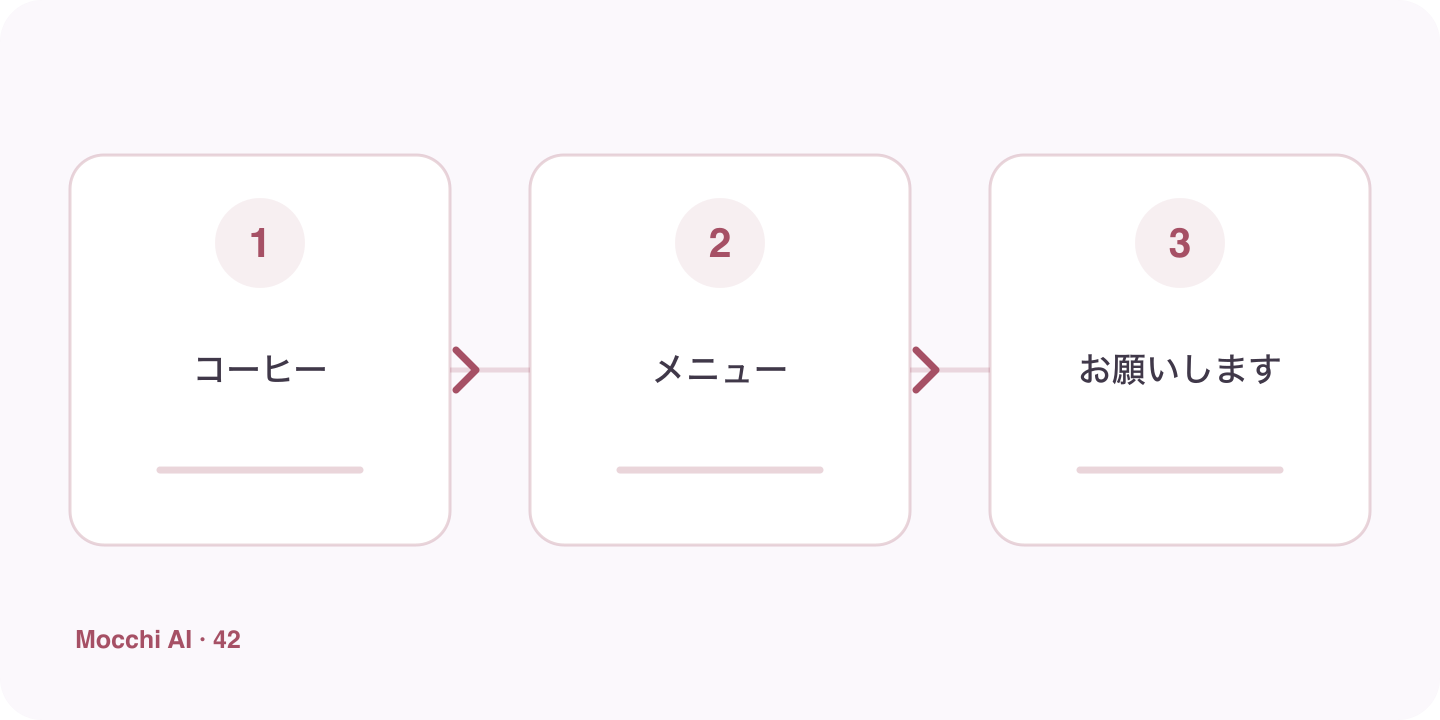
A katakana item is read, checked for meaning, and used in a short request with a changed choice
Read the Japanese word as it is written before assuming its sound or meaning from a familiar-language resemblance.
JapaneseRomajiMeaning
コーヒーをお願いします。Kōhī o onegaishimasu.Coffee, please.
メニューを見てもいいですか。Menyū o mite mo ii desu ka.May I look at the menu?

Check meaning after making a reading attempt

A guessed meaning can make an uncertain pronunciation feel correct. Read the word first, then compare the meaning and ask about any mismatch. If the term has a use that differs from the familiar-language word you expected, keep a short context note. This builds a vocabulary item in Japanese rather than a visual reminder of an English word.

Use a changed choice to avoid memorizing one request

After ordering one item, switch to another familiar option and make the request again. Ask Mocchi to check the item reading and the sentence separately. If the request is easy but the item is difficult, keep the grammar stable and review the katakana feature. If the item is clear but the sentence breaks down, practice the request frame before adding a follow-up exchange.

Move from the small menu to a broader scene

When the first items are reliable, add a short question or carry the vocabulary into an AI Sensei or Roleplay café situation. Bring one difficult line back to Mocchi for explanation. This keeps the reading practice connected to a useful activity without assuming that recognizing three menu items prepares you for every possible reply in a real café.

Key points

A practical way to improve

Ask Mocchi for a tiny fictional menu with three katakana items at your reading level. Read each item before opening its meaning and identify any long-vowel mark. Choose one item and make a simple request, then change the choice. If the reading is difficult, ask for a focused explanation of the written feature rather than a larger menu or a longer restaurant dialogue.

  1. 1

    Choose one clear goal

    Focus each session on a situation or skill you can actually use.

  2. 2

    Practice actively

    Say complete answers aloud instead of only reading or recognizing Japanese.

  3. 3

    Review and repeat

    Keep useful corrections and revisit the same skill until it feels natural.

FAQ

Frequently asked questions

Can I pronounce a katakana word exactly like its English source?

Do not assume so. Read the Japanese spelling and learn the established Japanese pronunciation. The source-language resemblance can help you remember, but it does not replace the written sounds.

Does a familiar-looking borrowed word always keep the same meaning?

No. Check the Japanese word in its context. A resemblance to a word you know can be a clue, not a guarantee that every meaning or use transfers unchanged.

Should I begin with a real menu full of unfamiliar items?

A real menu can be interesting later, but a small controlled example is easier for diagnosing script difficulties. Add more items once you can read and use the first set without depending on the translation.

Make katakana practice a small choice challenge

Use Mocchi to read a few items accurately and turn one into a request you can use.