
Move From Mocchi Reading Examples to Short Real Japanese Texts

Use Mocchi's controlled reading examples to practice a specific skill, then carry that skill into a short real Japanese excerpt with enough context. Keep the reading goal clear and distinguish a practice text from current information you may need to verify at its source.

Mocchi connects a controlled Japanese practice text to a short real-world excerpt with a clear reading question
What you need to know

Move From Mocchi Reading Examples to Short Real Japanese Texts

Original learning texts can control vocabulary, length, and structure, which helps you notice a particular reading decision. Real texts often add unfamiliar layout, assumptions, names, and changing information. The bridge is not to abandon support suddenly. Choose a small excerpt and apply one strategy you already practiced: identifying a request, tracking a reference, or finding a main claim. Ask Mocchi about the part that blocks the task rather than demanding an immediate complete translation of everything.

Know which skill the controlled example practices.

Choose a short excerpt with enough surrounding context.

Separate language interpretation from current factual verification.

Check one transferable reading decision at a time.

Name the skill before changing the source

If the original exercise taught you to find a request, keep that as the first goal in the new text. Do not simultaneously demand complete vocabulary knowledge, native-speed reading, and a polished translation. Tell Mocchi what you are transferring so the support can focus on the same decision under slightly less controlled conditions.

Choose a short excerpt that contains enough context to interpret the target phrase. A sentence copied without its question, heading, or preceding line may be harder to understand for reasons unrelated to your Japanese level. Include relevant context while leaving out private details and material that does not affect the language task.

Keep the reading question visible

For a message containing ご確認ください, the immediate task may be identifying what the reader should check. Find the object or information connected to the request before collecting every unknown noun. Ask Mocchi to explain the relevant phrase, then state the required action in your own words. This transfers a practical reading habit from a controlled example to a less familiar source.
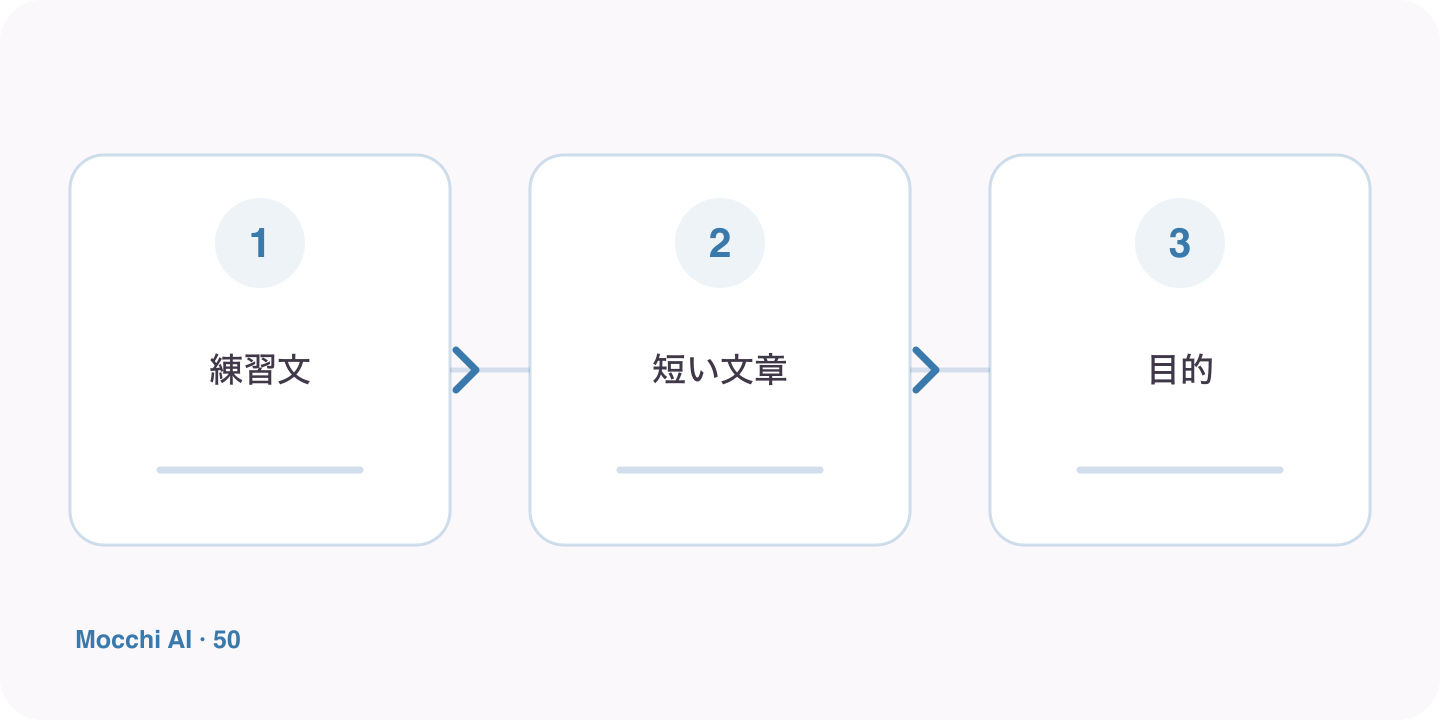
A familiar reading skill is practiced in an original example and then checked against a short contextualized excerpt
Carry one reading strategy into a new source instead of expecting a controlled example to reproduce every real-world difficulty.
JapaneseRomajiMeaning
内容をご確認ください。Naiyō o go-kakunin kudasai.Please check the contents.
変更があります。Henkō ga arimasu.There is a change.

Use your first interpretation as the starting point

Explain what you understood and which part you cannot connect. This lets Mocchi address the actual gap instead of replacing your entire attempt with a fluent translation. Compare your original interpretation with the explanation and identify the clue that changed it. That clue is the useful learning result, even if the excerpt contains other words you choose not to study today.

Verify practical facts outside the language exercise

An old screenshot or copied notice may be linguistically clear and still contain outdated information. If you need to act on a date, opening time, or instruction, check the current source directly. Keep that task separate from practicing Japanese interpretation. A correct translation does not by itself establish that the underlying announcement still applies.

Return to a controlled example when it helps

If the real excerpt introduces too many obstacles, ask Mocchi for a shorter original example that isolates the confusing structure. Practice the relationship there, then return to the excerpt and see whether it is clearer. Moving between controlled and real material is not a failure; it is a way to keep the task understandable while developing a skill that can survive new vocabulary and layout.

Key points

A practical way to improve

Pick a reading skill you practiced with Mocchi, such as finding a changed arrangement. Find a short appropriate real excerpt or use text you can safely share, removing private details. State the reading question and your first interpretation, then ask about the exact phrase that remains unclear. Check important current facts at the original source and finish by explaining which part of the earlier strategy helped.

  1. 1

    Choose one clear goal

    Focus each session on a situation or skill you can actually use.

  2. 2

    Practice actively

    Say complete answers aloud instead of only reading or recognizing Japanese.

  3. 3

    Review and repeat

    Keep useful corrections and revisit the same skill until it feels natural.

FAQ

Frequently asked questions

Are generated passages the same as real-world reading?

No. Controlled original examples can isolate a skill, while real texts add other demands. Both can be useful when you understand what the task is meant to practice and adjust support accordingly.

Should I paste a private message unchanged?

Remove identifying or sensitive details that the exercise does not need, and preserve only the context required to understand the language. An invented version can often test the same reading decision.

Can Mocchi confirm that a real notice is still current?

A language explanation does not automatically verify current facts. Check the original venue, service, or publisher when a real decision depends on dates, instructions, or other changing information.

Carry a reading skill beyond the practice example

Use Mocchi for focused support while keeping the source, context, and purpose of the real text clear.